Sept. 8, 2026
VCU engineering professor Ravi Hadimani receives Young Investigator Award for biomagnetics research
Share this story
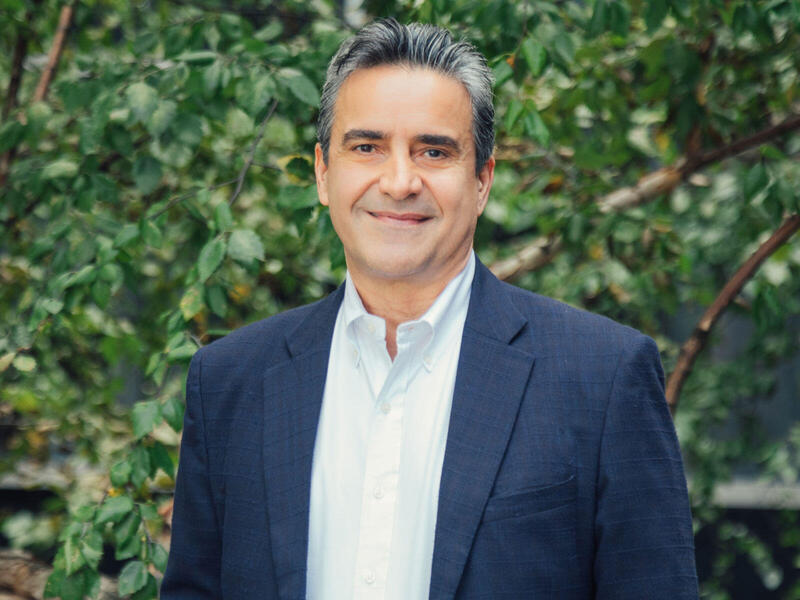
Ravi Hadimani, Ph.D., professor in the Department of Mechanical and Nuclear Engineering at Virginia Commonwealth University and director of the Biomagnetics Laboratory, recently received the Young Investigator Award at the 2026 International Symposium on Integrated Magnetics.
The award recognizes Hadimani’s contributions to the field of biomagnetics, particularly his research in transcranial magnetic stimulation technologies and validation methods for human and animal studies. The symposium, a satellite conference of INTERMAG supported by the Institute of Electrical and Electronics Engineers Magnetics Society, recognizes advances in magnetic technologies and their applications across engineering and medicine.
Hadimani’s recognition underscores the College of Engineering’s commitment to advancing interdisciplinary research with real-world impact.
“Receiving this award means a lot to me,” Hadimani said. “It is a great recognition of many years of work by my students, collaborators and research group. It also motivates me to continue working on new ideas and mentoring students. I am very thankful to the organizers of the conference, the IEEE Magnetics Society and to everyone who contributed to this achievement.”
Hadimani’s research focuses on developing magnetic technologies to advance brain stimulation and brain imaging. His laboratory has created innovative transcranial magnetic stimulation coil systems and realistic brain models that allow researchers to test and refine these technologies before they are used in clinical settings. By combining magnetic materials, computational modeling, artificial intelligence and experimental testing, his team is developing safer and more effective medical technology.
In addition to his research contributions, Hadimani has remained active within the IEEE Magnetics Society by supporting biomagnetics-focused programs, workshops and interdisciplinary activities that bring together researchers from multiple fields. His work has helped promote collaboration and expand awareness of biomagnetics as a growing area of research.
“I think this award also shows the quality of research happening at VCU,” Hadimani said. “We have many good collaborations between engineering, medicine and neuroscience, and students are a big part of our success.”
Looking ahead, Hadimani plans to expand his laboratory’s research while continuing to develop technologies with the potential to improve patient care.
“Next, we want to continue developing new brain stimulation technologies, improve our brain phantoms and translate some of this work into real products through our startup, RamPhantoms,” Hadimani said. “We are also building new research activities in robotics, AI and brain-computer interface technologies at VCU.”
This story was originally published on the College of Engineering website.
Subscribe to VCU News
Subscribe to VCU News at newsletter.vcu.edu and receive a selection of stories, videos, photos, news clips and event listings in your inbox.