Nov. 4, 2026
VCU historian’s new book navigates a pillar of Cherokee history: Water in southern Appalachia
Share this story
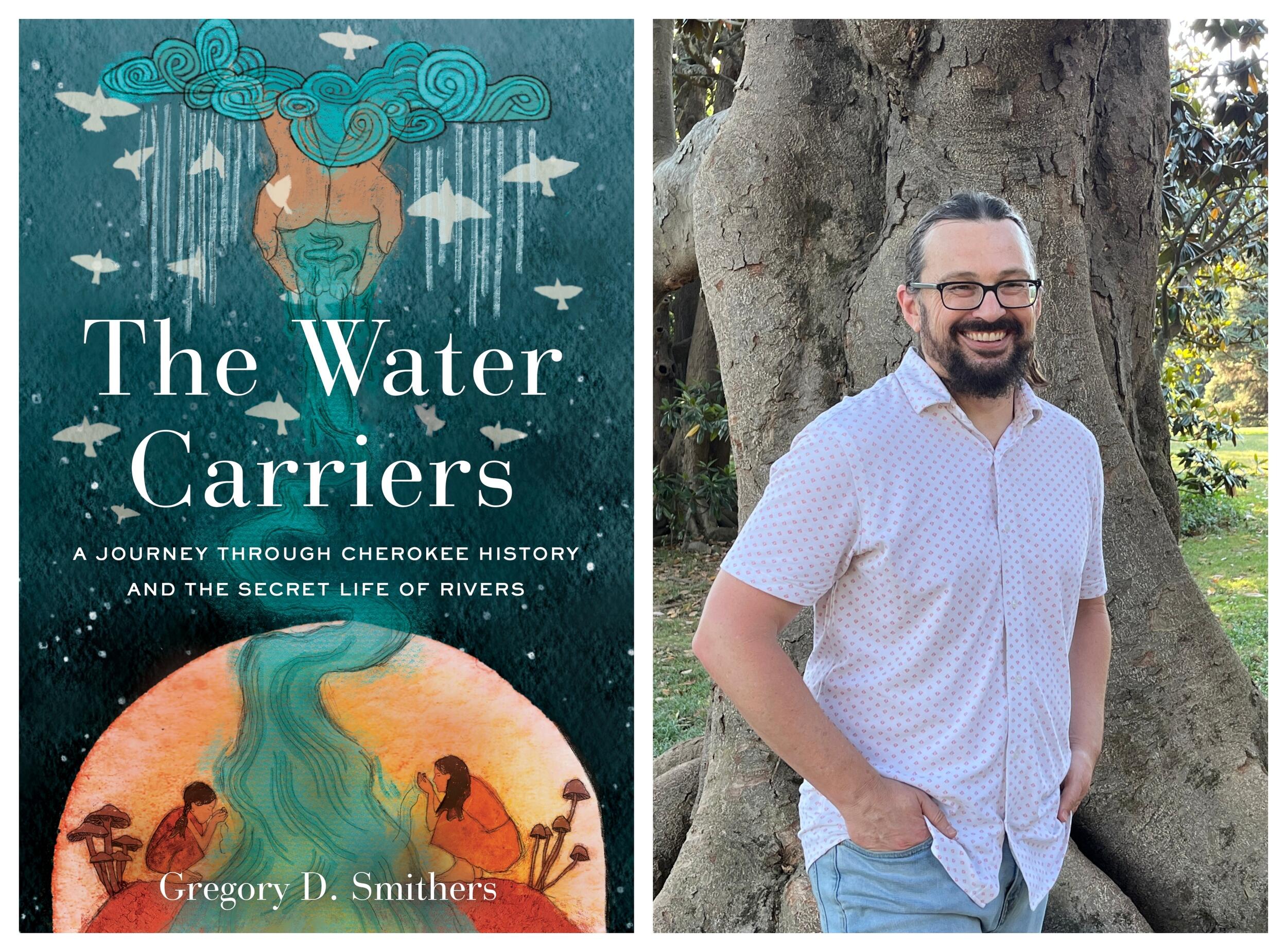
With his latest book, Virginia Commonwealth University historian Gregory D. Smithers explores the vast – and relatively unsung – story of water’s intersection with Cherokee history and culture in the southern Appalachian region.
Published this month, “The Water Carriers: A Journey Through Cherokee History and the Secret Life of Rivers,” spans hundreds of millions of years, from the earliest plant life to the beginnings of the Cherokees’ enduring relationship with the region’s waterways.
“‘The Water Carriers’ is a history of Indigenous stewardship of rivers – which Cherokees personify as Ganvhidv Yvwi, or Long Person – and riparian ecosystems,” said Smithers, Ph.D., professor in the Department of History in VCU’s College of Humanities and Sciences. “It’s a history that recognizes, as the Cherokees and their Indigenous ancestors have recognized for millennia, that life pulses along and within waterways and through interconnected ecosystems that water makes possible. The Cherokees have a term for these interconnections: ama gvnida – ‘water is life.’”
VCU News caught up with Smithers for more about his latest work and how southern Appalachia, which includes Virginia and neighboring states, has shaped the earth’s environmental history.
Give us a quick overview of “The Water Carriers.”
In “The Water Carriers,” I share histories of the diversity of life in southern Appalachia. They range from the first mosses and plants that colonized rocky outcroppings to the arrival of dinosaurs to Cherokee stewardship for watery places – and their ongoing efforts to address the challenges of climate change in the 21st century.
How did the idea for this book originate?
I’ve studied Cherokee history and culture for over two decades. But the impetus for this book came a little over a decade ago when I was chatting with Cherokee friends. We were talking about the centrality of rivers and water in Cherokee history and lamenting the relative absence of water stories in the historical literature.
Even today, there’s lots of nonfiction writing that focuses on Cherokee land use practices, the tragedy of the Trail of Tears in the 1830s, and Indigenous sovereignty. These are incredibly important topics, but what holds them together is water. In other words, I felt we were missing something important in the way historians talk and write about Cherokee history, culture, religion and politics. That something is water.
What is the significance of water in Cherokee history and tradition?
Water is central to Cherokee history. We often think about history and “tradition” as something that’s static and exists in the long-ago past. In truth, Cherokee “tradition” is about a lived (and living) history and culture. It’s as much about understanding how water flows through Cherokee history as it is about nurturing a future.
In a sense, waterways that flow and pulse with life connect the past with the present and future; ama flows through religious and cultural beliefs and enlivens interconnectedness of human and more than human life. In Cherokee history and culture, we see these interconnections in “going to water” ceremonies in which Cherokees cleanse body and soul by immersing themselves in free-flowing waterways.
What do you hope readers will take away?
The first lesson is the joy and wonder that one can still find along rivers and streams in southern Appalachia.
These emotions are vital to doing good and ethical scholarship, to connecting people to communities and in seeing the kaleidoscope of interconnections that water mediated in the past and continue doing so in our evolving present. Cherokee people and their Indigenous ancestors felt this joy and wonder, became conscious of it, and nurtured bodies of knowledge that guided them in caring for rivers and the more-than-human communities of plants and animals that they lived with.
Additionally, I hope readers see not only the beauty of southern Appalachia, but just how important the region is to the environmental health of eastern North America. Southern Appalachia’s river valleys are corridors of biodiversity where life thrives and fans out across a continent. And, as readers will learn, it’s also a place that has played a surprising role in shaping the earth’s environmental history.
Subscribe to VCU News
Subscribe to VCU News at newsletter.vcu.edu and receive a selection of stories, videos, photos, news clips and event listings in your inbox.