Oct. 13, 2026
VCU’s teacher residency program leads the way for teacher preparation in Richmond and across Virginia
Share this story
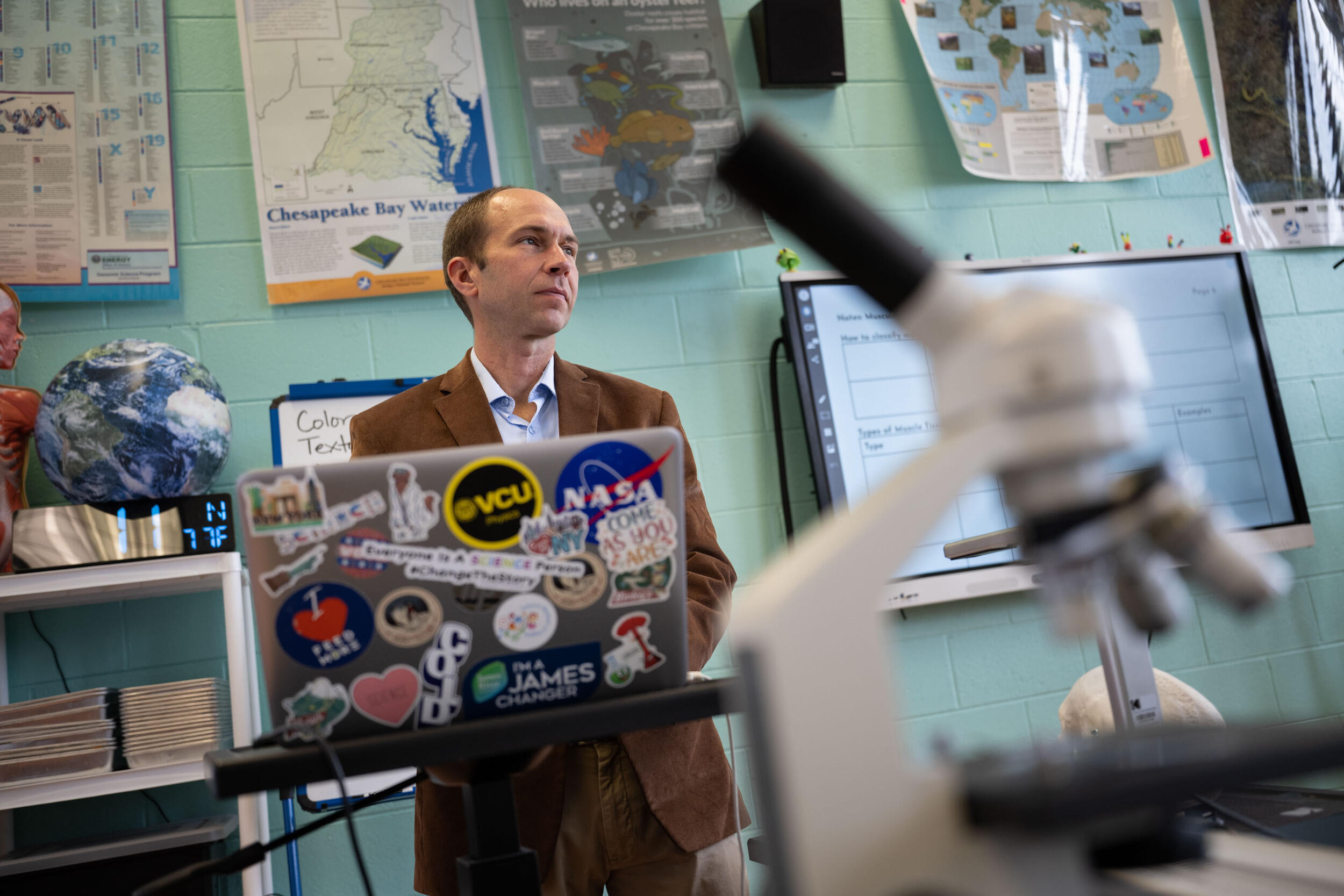
From his third-floor classroom at Franklin Military Academy in Richmond’s Church Hill neighborhood, longtime science teacher Matthew Wester has dedicated nearly two decades to teaching his students about subjects including anatomy, biology and physics.
Most of Wester’s students are high-schoolers – but with help from Virginia Commonwealth University, he also has worked over the past 10 years to develop another important cohort: the next generation of educators.
As a mentor with the VCU School of Education’s innovative, school-based RTR Teacher Residency program, Wester provides real-world guidance for future teachers as they prepare to take on a classroom of their own. The program recruits, trains and supports teachers for high-needs and hard-to-staff schools across Virginia. In exchange for RTR paying for their VCU degree, residents agree to work for three years in a high-needs school after they graduate.
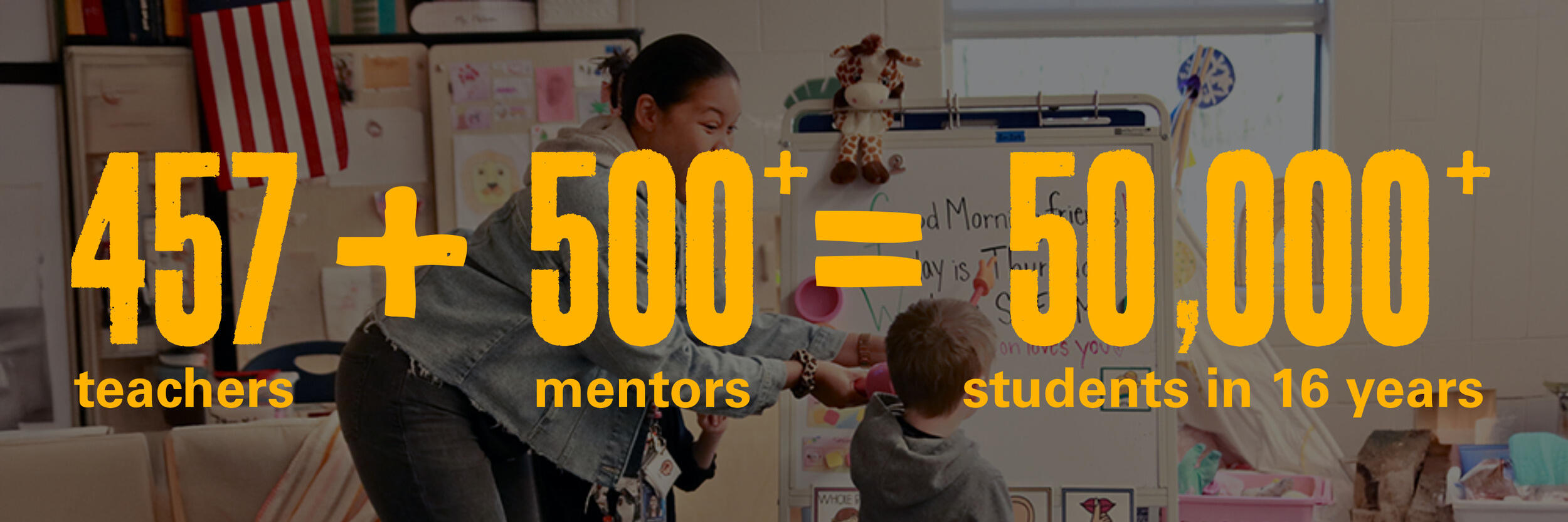
Since its creation in 2011, more than 450 teachers – and counting – have graduated from RTR. As of the 2025-26 school year, 119 of those graduates were working in Richmond Public Schools.
“[Teaching] is the kind of job where, when the first day of school hits, you just hit the ground running – and it can be a little bit of a sink-or-swim experience,” Wester said. “For people with the RTR program, they get to see the entire school year from start to finish, with really intensive supports around them.”
During their residency, which can span one or two school years, RTR participants are paired with veteran teachers like Wester, who mentor them in the classroom as they continue to work toward their undergraduate or graduate degree from VCU. The goal is to equip future educators with the knowledge, skills and experience to be effective as they begin their careers.
The support doesn’t end with the residency. Even after residents are in their own classrooms as the teacher of record, “they still have so many people they can go to for support, for guidance, for materials,” Wester said. “They go in knowing they’ve got a whole team behind them.”
Impact across the commonwealth
Now celebrating its 16th year, RTR Teacher Residency – and its community – continues to grow.
Its 29 partner school districts across Virginia stretch from Prince William County near the nation’s capital to Washington County on the Virginia-Tennessee border. The program serves urban, suburban and rural communities with student populations ranging from fewer than 700 to nearly 200,000.
With 29 partner school districts across Virginia, the program serves urban, suburban and rural communities.
RTR graduates have advanced to become school and district leaders and receive teaching awards and accolades. As part of an annual evaluation, the program found that 100% of principals rated its graduates as more effective at demonstrating content knowledge compared with “typical” new teachers.
“This is a way to have feedback that is constructive in a really supportive environment to help you grow,” said Kim McKnight, Ph.D., director of the Center for Teacher Leadership within VCU’s School of Education.
She said RTR’s model is rooted in combining the theoretical with on-the-ground work in the classroom – and it will soon be recognized by the National Center for Teacher Residencies as one of two programs in the nation leading the way for teacher residencies. This October, visitors from around the country will come to VCU for a firsthand look at RTR and its success.
“We’re very excited … to know that people are saying, ‘I want to learn from you,’” McKnight said.
Growing the next generation
As one of 61 residents enrolled in this year’s RTR cohort, Sarah Ryan spends four days a week at Lewis and Clark Elementary School in Caroline County, north of Richmond, where she is paired with veteran teacher mentor Larrissa Smith.
Throughout the day, Ryan observes Smith, watching her in the classroom, tagging along for one-on-one discussions with students and taking part in Individualized Education Program meetings.
“In the actual school, it’s a whole new experience – it’s real,” said Ryan, who is set to graduate with her bachelor’s degree in special education from the School of Education in May 2027.
Getting a chance to see what works – and what doesn’t – “really teaches me how to grow and be a better teacher,” she added. “You can read about it in a textbook or listen to the lecture, but to be actually involved in real time, it makes a whole bunch of difference.”
Before enrolling in the VCU School of Education, Ryan spent 20 years working in a local bank. She was inspired to pursue teaching by her 5-year-old grandson, who is nonverbal.
“It’s close to my heart because my grandson is special-needs,” she said. “I want to be there for students that need somebody to support them. I want to give the best opportunity to the students who can’t speak for themselves.”
That passion is key, Ryan’s mentor said.
“We really need people who want to be here, who are going to take the time and work through these courses and really take this job seriously,” Smith said. “We know it’s not a million-dollar job, but it means the world to the kids. When you do care and you take that opportunity to learn and do it well, the kids know.”
Providing new and expanded pathways for teachers
As RTR continues to expand, so do its available avenues to the classroom.
In addition to undergraduate and graduate degree pathways, the program offers a graduate certificate pathway for elementary teachers. Also, three school divisions working with RTR have begun to offer the Future Educators Academy program, which allows students to earn their associate degree alongside their high school diploma through dual enrollment. Following graduation, the students enroll at VCU while continuing to work in their own school division.
“What I love about it is it’s still the three-year commitment, but these high-schoolers have the opportunity to work in their own schools with their own teachers that they had,” McKnight said. “It’s growing the next generation of teachers and giving back to the community that gave to them.”
More than 500 veteran teachers have trained in RTR’s mentoring model, including many program graduates who have returned to help develop the next generation.
“We think about the new teachers coming in feeling really prepared – but the other part of it that we keep talking about is that these mentors and veteran teachers, many of them are close to retirement,” McKnight said. “When they leave, so goes their institutional knowledge.”
But through RTR’s mentorship opportunities, she said, that knowledge stays in the classroom, passed down from one teacher to the next.
Seeing the impact just down the hall
Since becoming an RTR mentor, Wester has worked with eight residents – a program record. Wester doesn’t seek such recognition, but he said it’s “nice to see that your work is making some kind of impact in a tangible way.”
He doesn’t have to travel far to see that impact in action, either: His former resident and now Franklin Military Academy colleague John Nunez has his own classroom just down the hall, where he teaches life science. Nunez was a member of the program’s sixth cohort, earning his bachelor’s degree in biology from VCU in 2016 followed by his master’s in teaching in 2017.

Mentorship has “really made me think about my approach to teaching,” added Smith, Ryan’s mentor at Lewis and Clark Elementary School in Caroline. “I’m not the same teacher I was, even from last year. We’ve made a lot of changes together, and it’s helped me shift into more of a leadership role, which is something I’ve personally wanted. And so I think everyone benefits in some way from the program.”
Notably, those beneficiaries include the students.
“The kids have a really neat opportunity, too,” Smith said. “They get to see a teacher learning and a teacher growing, just like students but in a different way. And I think that’s been very motivating for some students. They ask her questions about why she wanted to become a teacher, and it gets them thinking about their careers and how it’s OK to learn as an adult.”
Building a lasting community
Beyond placing teachers in hard-to-staff schools, RTR wants to keep educators in the profession. A priority is providing a support system that continues long after the program’s completion.
Just about every teacher comes in on the first day with nerves, Smith said: “You get your first classroom and you think you’re ready and that first day, those kids are looking at you and you’re like, ‘What am I doing?’” But with the RTR program, that experience comes early – and in a safe space, with a mentor close at hand.
Even after 10 years of teaching, RTR is still a source of community for Nunez, the life science teacher at Franklin.
“I can lean on people who did the program with me in the same year, or in later years,” he said. “And [with] those that lead RTR, I feel like I have that support.”
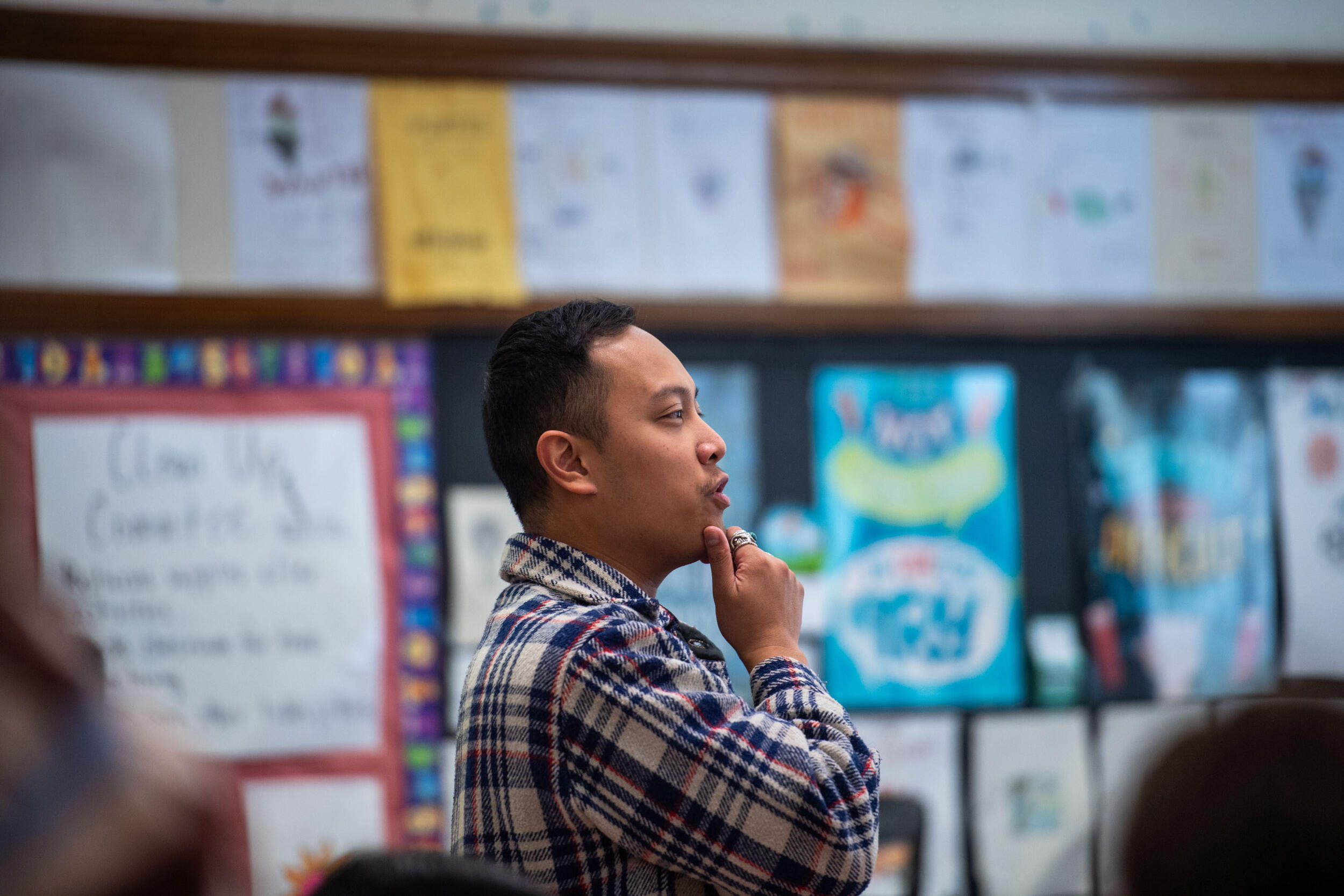
That community is important for veteran teachers as well.
“There are really so many things that I like about RTR,” Wester said. “Even beyond the residents, it has allowed me to keep in touch with and form relationships with other teachers that aren’t in my building. … It’s been one of the major avenues that I’ve had to make connections to teachers, to the other schools.”
Teaching can be a challenge, he noted, but it’s also enormously rewarding.
“The first couple years, I wouldn’t wish on anyone – but once you get your feet underneath you, it honestly is very fun if you find yourself in a supportive environment where you have colleagues that care about you and students that you connect with,” Wester said. “I don’t think that I could work anywhere else at this point.”
Each issue of the VCU News newsletter includes a roundup of top headlines from the university’s central news source. The newsletter is distributed on weekdays. To subscribe, visit newsletter.vcu.edu/. All VCU and VCU Health email account holders are automatically subscribed to the newsletter.
Subscribe to VCU News
Subscribe to VCU News at newsletter.vcu.edu and receive a selection of stories, videos, photos, news clips and event listings in your inbox.