Sept. 3, 2026
How VCU and the community work together to bring about positive change
Share this story
In 2017, Virginia Commonwealth University professor Anita Nadal and her Spanish language students began collaborating with the Virginia Museum of History and Culture to provide bilingual support for Richmond-area immigrants preparing for the U.S. citizenship test.
“The classes have helped individuals in the community navigate the intricacies of what it means to become a citizen in the United States, and our VCU students assisted them and made them feel welcomed,” said Nadal, an assistant professor of Spanish in the School of World Studies and a faculty fellow for community engagement in the College of Humanities and Sciences.
As of today, the collaboration between VCU and VMHC, and classes in the community, has helped more than 200 people become U.S. citizens. It also has led to special relationships formed between VCU students and new citizens from around the world. And it has provided VCU students with community-engaged experiences that helped set them on the path to careers as attorneys, nonprofit leaders and more.
Nadal’s work with Richmond-area immigrants is just one example of how community engagement — the collaborative process where VCU and community partners co-create solutions to societal issues — is central to VCU’s mission, and has been since its founding in 1968.
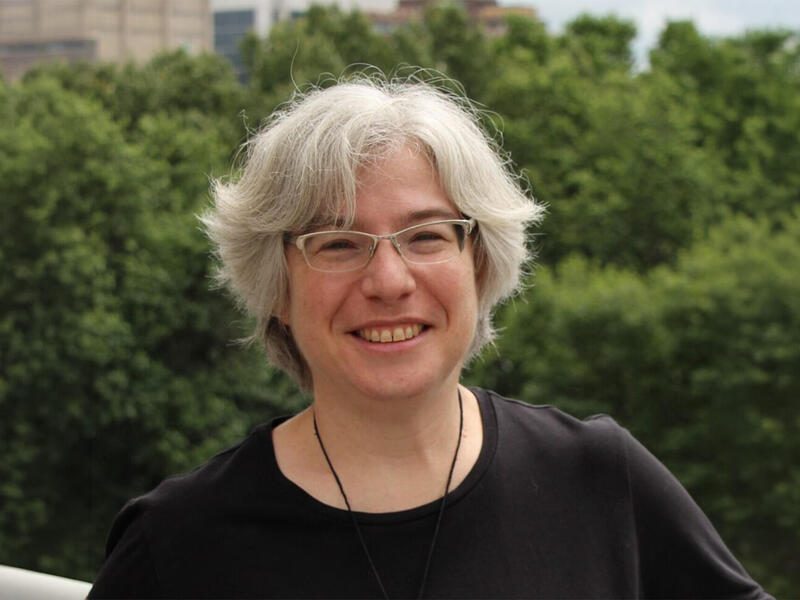
“Community engagement is the pathway through which we connect the work that we do at an academic institution to real community impact, to making a difference,” said Maghboeba Mosavel, Ph.D., vice provost, community engagement. “We do this through engagement with our partners and communities and through the relationships embedded in that engagement. Without community engagement, it would be challenging for any academic institution to do this work. That is why community engagement is part of who we are. It is how we came about, and it is how we endeavor to fulfill our mission.”
Importantly, Mosavel said, community engagement works both ways, benefiting both VCU and the community.
“VCU brings research, students, expertise and resources into our partnerships,” she said. “Our communities also bring tremendous knowledge, strengths, resources and opportunities that benefit VCU and our students.”
A national leader in community engagement
Earlier this year, VCU was one of 80 public, top-tier (also known as R1) research universities to receive the 2026 Carnegie Community Engagement Classification, a national designation that recognizes an institution’s commitment to advancing community-engaged teaching, research and service. VCU was one of the first universities in the country to receive this designation when it was launched in 2006. VCU was reclassified in 2015 and has now received its second reclassification.
As part of the Community Engagement Classification process, VCU undertook an intensive, yearlong self-study to assess how the university engages with communities.
It found that community engagement is meaningfully integrated throughout VCU’s curriculum, with community engagement a focus of 971 undergraduate courses, 349 graduate classes, 373 faculty members and 71 departments.
It additionally found a community-engagement emphasis across 466 active VCU student organizations and 102 community and civic service organizations.
The study also found that 40% to 50% of IRB-approved research projects included community partners, and that 29 out of 38 VCU centers conduct community-engaged work.
VCU also recently launched Collaboratory, a database of VCU’s community partnerships that is designed to track and showcase the university’s institutional impact on local, regional and national levels. It currently includes 603 activities involving 622 community partners, 2,056 faculty and staff, and 5,779 students. Education and health are the two areas with the largest number of partnerships. This likely represents only a portion of VCU’s community-engaged work, as the database is still growing.
An economic impact report published in March also illustrates the impact of VCU employees and volunteers. It estimates that the known hours of university employee volunteers generated the equivalent of $909,100 in impact to the Richmond regional economy and supported 14 jobs in fiscal year 2023-24.
Place-based community engagement
VCU’s Division of Community Engagement operates two centers that serve the Richmond community, meeting people where they are.
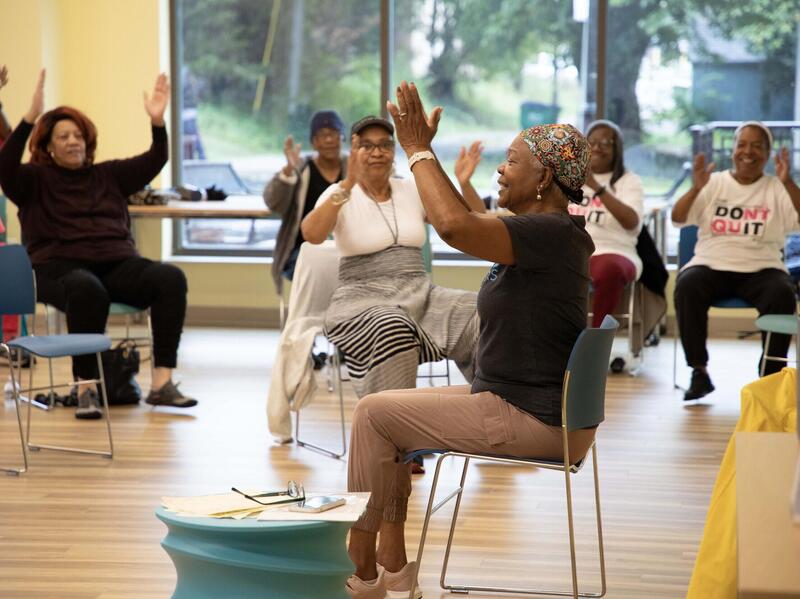
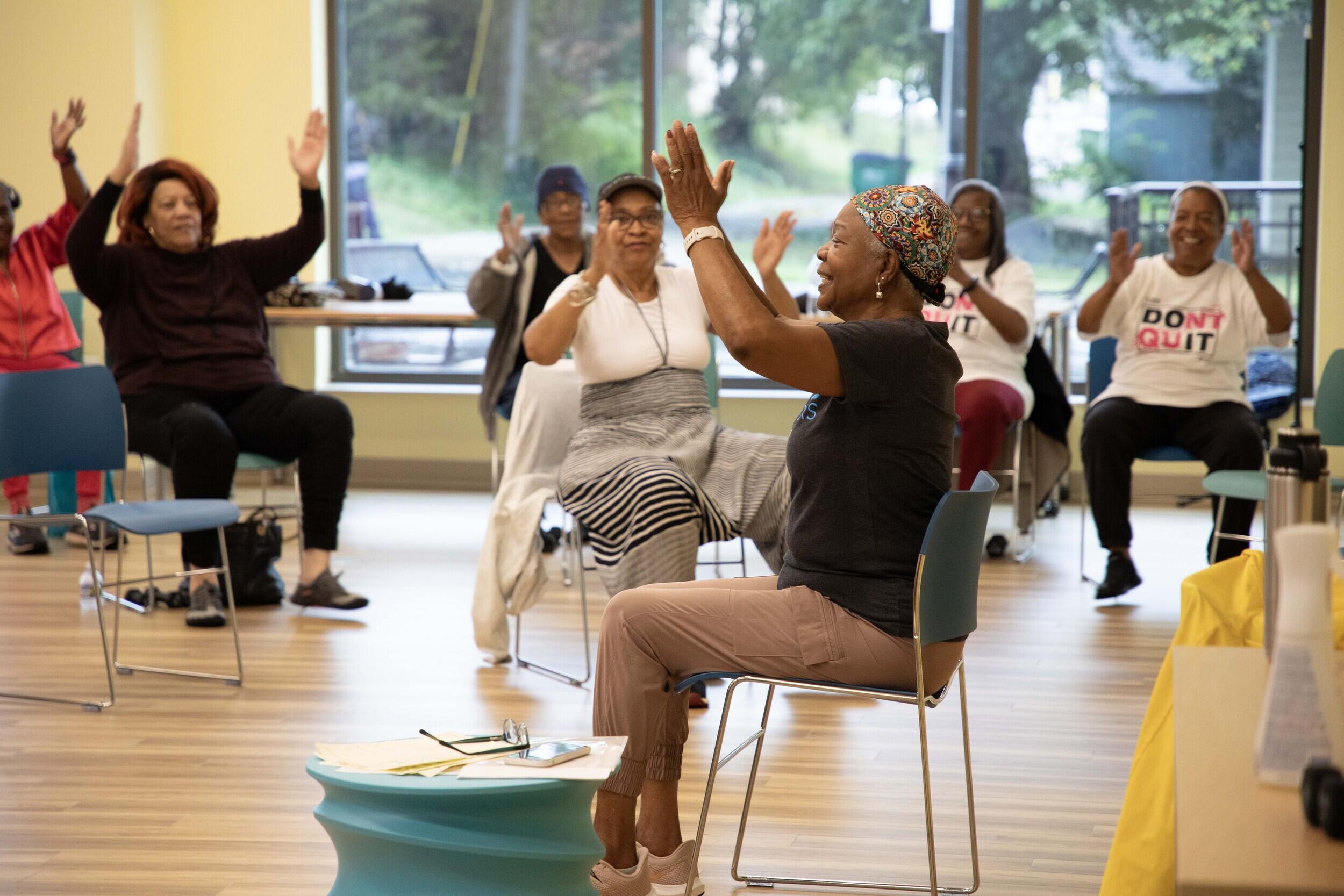
The VCU Health Hub, which opened in 2019 in Richmond’s East End, operates in partnership with VCU Health, providing activities that promote individual and community health and well-being. This year, it has served 2,700 community members, hosted more than 150 programs and events, and engaged more than 431 students with experiential learning.
The Mary and Frances Youth Center, located on VCU’s Monroe Park Campus, has served as a hub for youth programming, partnership and leadership development in the Richmond region since 2007.
The center provides year-round opportunities for youth through after-school programming including summer camps, while continuing to build partnerships with local schools and homeschool organizations to expand access to engaging, sports-based positive youth development programming during the school day.
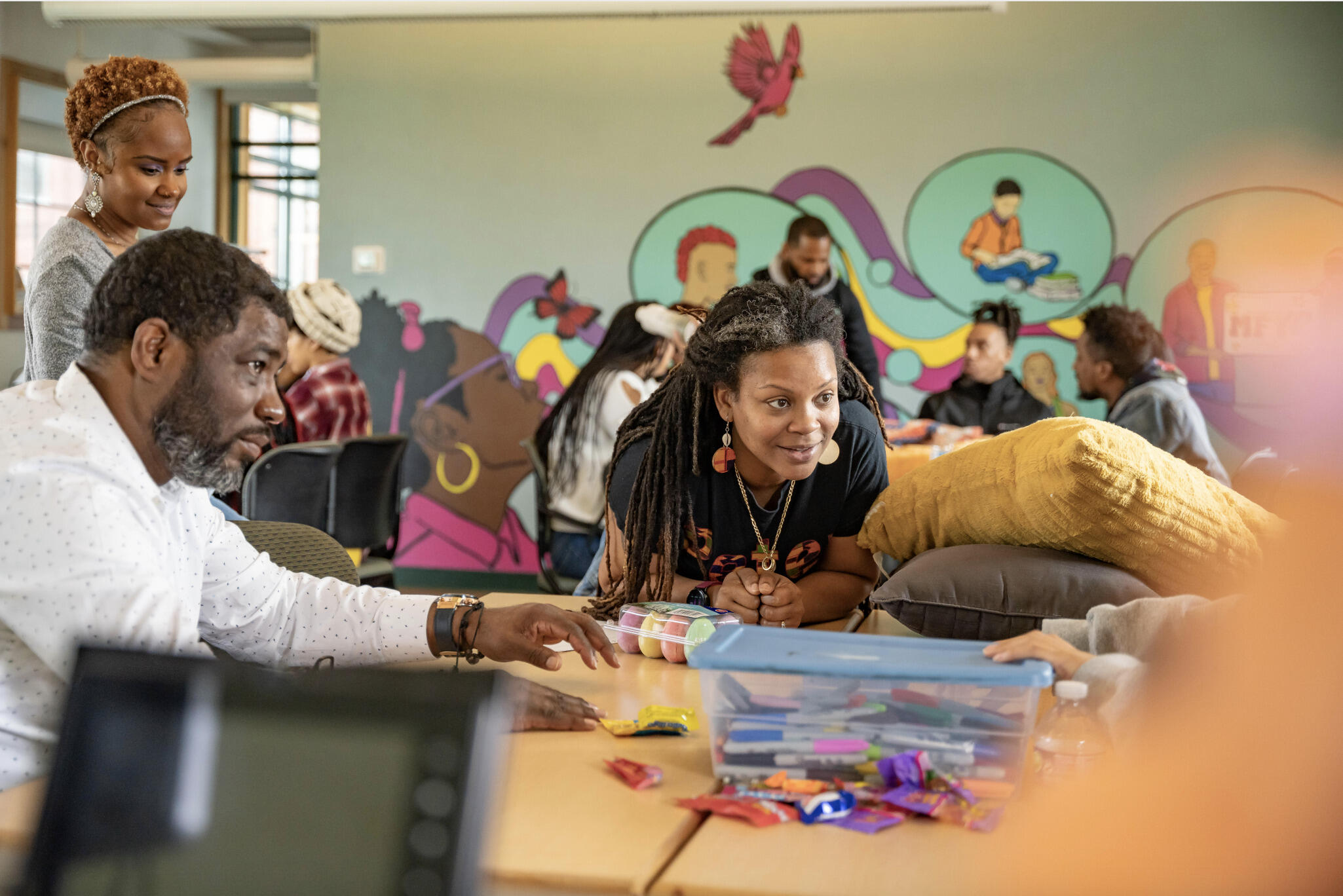
The center also offers the VCU Advanced Certificate in Youth Development Management, a first-of-its-kind professional learning experience for youth development professionals and leaders that was established in response to an identified community need.
The Mary and Frances Youth Center is “not only impacting the lives of young people, it is impacting the lives of the families and adults who support young people,” said Misti R. Mueller, Ed.D., executive director of the center.
Between January and July 2026, the center served 1,076 community members, hosted 70 community-based programs, added 57 new community partnerships and provided meaningful engagement experiences for VCU students 635 times.
In the Richmond community
Beyond the place-based Health Hub and Mary Frances Youth Center, VCU operates a number of initiatives in the community.
One example is the Mobile Health and Wellness Program, which offers services at nine locations across metro Richmond and surrounding areas. An interdisciplinary collaboration led by the VCU School of Nursing, the program brings services to participants at or near their place of residence and is centered on assessment, chronic disease monitoring, wellness coaching and care coordination.
Another is Middle of Broad, or the mOb studiO, which is part of the School of the Arts and provides VCU students with hands-on experience in community-engaged design. Guided by faculty and professional mentors, students collaborate with regional clients on meaningful projects. The studio’s projects have included creating signage concepts for the James River Park System, developing retail strategies and garment collections for Carytown merchants, designing rainwater collection systems for Richmond neighborhoods and rethinking community engagement in participatory budgeting.
“I see community engagement as one of the ways VCU achieves societal impact. It connects our research, teaching, learning and service with community priorities and opportunities,” Mosavel said. “Community engagement is integrated across the university and across disciplines. It includes partnerships not only with communities and neighborhoods, but also with schools, government, businesses, industry, nonprofit organizations and many other stakeholders.”
Regional impact
Mosavel’s community-engaged research is an example of VCU’s impact outside Richmond, as well.
Launched in 2012 as Wellness Engagement Petersburg, the initiative now known as WE Project aimed to combat obesity, which was identified by residents as a priority area. A hallmark of the initiative for more than a decade has been capacity-building and grassroots engagement of residents – or Wellness Ambassadors – as agents of change within their own community.
One example of long-term impact is the academic-community partnership between Mosavel at VCU and the Rev. Dwala Ferrell, then CEO of Pathways Inc., which resulted in the founding of the Petersburg Wellness Consortium in 2013. Today, the PWC is a 501(c)(3) and remains a community member-led coalition focused on health and wellness in Petersburg.
“Community engagement is integrated across the university and across disciplines. It includes partnerships not only with communities and neighborhoods, but also with schools, government, businesses, industry, nonprofit organizations and many other stakeholders.”
Maghboeba Mosavel
Co-led with Jessica G. LaRose, Ph.D., professor and chair in the Department of Social and Behavioral Sciences in the VCU School of Public Health and a member of the Cancer Prevention and Control research program at VCU Massey Comprehensive Cancer Center, their most recent initiative, WE Project 2.0, is investigating whether “house chats” (informal group meetings) led by Petersburg residents could work as a community-led approach to promote health. Initial findings are promising. Across numerous recent data dissemination events in Petersburg, the program was associated with modest reductions in weight, waist circumference and fasting glucose.
Another important project is the Chickahominy TRUTH (Trust, Research, Understand, Tell, Heal) Project, which aims to better understand structural and individual-level contributors to cancer risk through evidence-based approaches informed by community intelligence. Chickahominy Tribal Leadership and VCU Massey have partnered to understand the cancer risk perceptions and experiences of Charles City County residents by conducting interviews and complimentary water testing in the homes of interested and eligible residents.
RTR Teacher Residency is yet another program making an impact in Richmond and beyond. The program, part of the VCU School of Education, prepares teachers for high-needs school settings in 29 partner school districts across Virginia. Pre-service teachers, called residents, spend the school year working alongside a mentor teacher, gradually taking on more teaching responsibility. In exchange for RTR paying for the VCU academic degree, residents agree to teach for three years in a high-needs school after graduation from RTR. The program has prepared more than 400 teachers for high-needs schools.
“I think the strongest community engagement is relational, not transactional. It is about building relationships based on mutual respect, mutual benefit and recognizing the strengths and assets that already exist within communities,” Mosavel said. “VCU is an urban university and we are part of Richmond. Our students, faculty and staff benefit every day from what Richmond and the region have to offer.”
Subscribe to VCU News
Subscribe to VCU News at newsletter.vcu.edu and receive a selection of stories, videos, photos, news clips and event listings in your inbox.