Aug. 19, 2026
Meet-a-Ram: Isra’a Nour’s humanitarian work is rooted in her VCU anthropology and biology courses
Share this story
Meet-a-Ram is an occasional VCU News series about the students, faculty, staff and alumni who make Virginia Commonwealth University such a dynamic place to live, work and study.
Wanting to serve in a field that helped others, Isra’a Nour arrived at Virginia Commonwealth University with plans for a career in medicine. But an Introduction to Anthropology course inspired a different path of service.
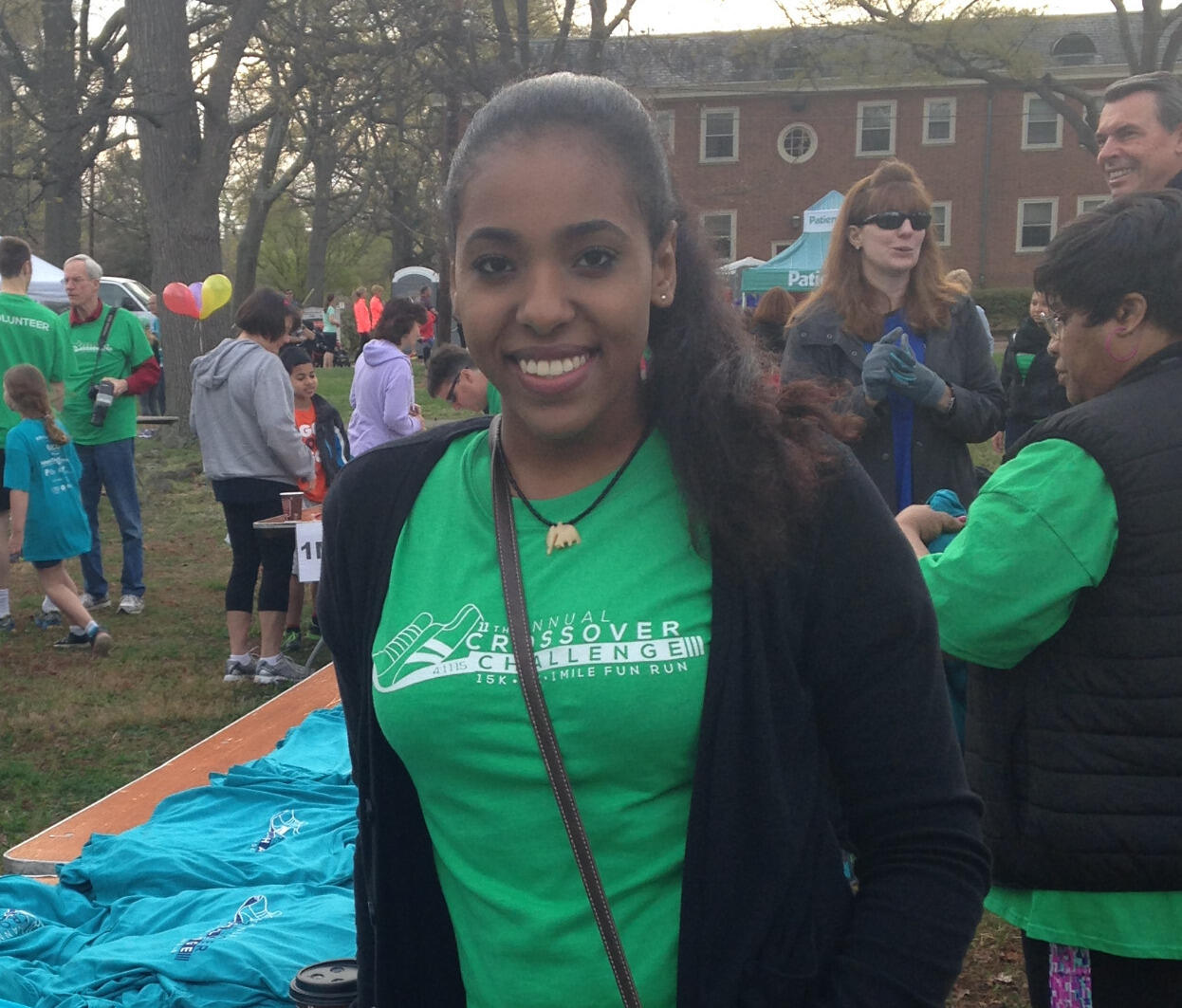
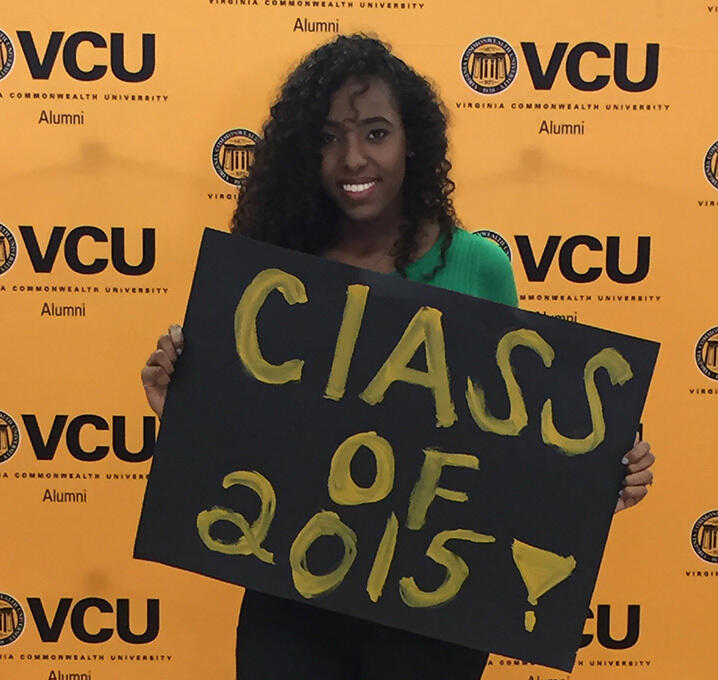
Nour graduated in 2015 with degrees in anthropology and biology from the College of Humanities and Sciences, and she immediately turned her education into action by working in humanitarian aid programs in Sudan, where she taught English and supported vulnerable children and families affected by the decades-long authoritarian dictatorship. Those efforts led to her current work in Washington with the Open Society Foundations, a nonprofit philanthropic organization focused on human rights, equity and justice.
Here, Nour shares insight into her academic and career journeys, with VCU remaining a strong foundation in her pursuits.
What drew you to VCU?
I knew the reputation of VCU Medical Center, and by the time I graduated high school, I had completed more than 600 volunteer hours at Sentara Potomac Hospital in Woodbridge. That gave me the confidence to apply to VCU as a biology major with a pre‑medicine concentration. My sister, who graduated from VCU in 2013, was also an encouraging factor.
Everything changed, however, when I walked into my ANTH 103: Introduction to Anthropology class taught by Christopher A. Brooks, Ph.D. I found myself captivated by the questions anthropology asks – how people live, think, evolve and organize their worlds. Anthropology classes quickly became the highlight of my time at VCU.
What is your favorite memory from VCU?
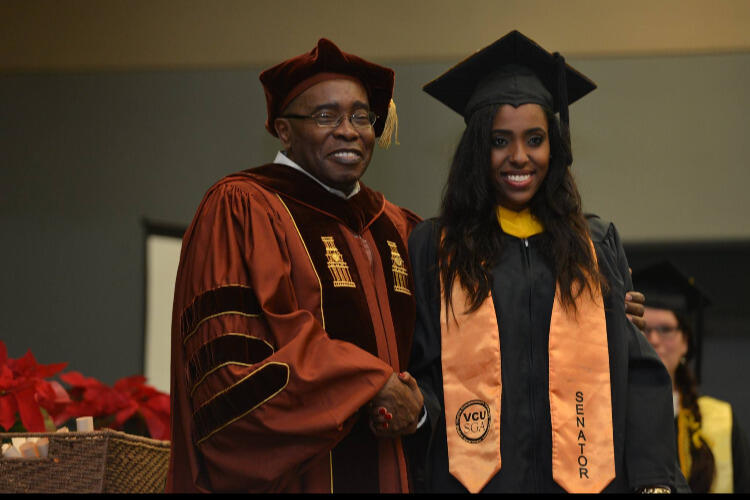
As a shy sophomore and junior, one of my favorite memories was serving for two years as a senator in the Student Government Association, where I was the deputy chair of the Community Life Caucus. Stepping into that role gave me the chance to debate and advocate for the rights and needs of my fellow students, and it was my first real exposure to decision‑making spaces. It deepened my appreciation for voting and democracy, and it showed me how powerful it can be when everyone feels they have a voice.
That experience also pushed me far outside my comfort zone. I had to break out of my small friend group, campaign across campus, post my face everywhere and ask people to vote for me.
What inspired your post-graduation career path?
After graduating from VCU in 2015, I found myself at a crossroads. Should I continue on the pre‑medicine track I had prepared for nearly my entire life – or step into the path that aligned more closely with my strengths and heart? Ultimately, I chose the latter.
In 2016, I moved to Sudan to teach English in the University of Khartoum’s English Department through a U.K.‑based NGO, the Sudan Volunteer Programme. That experience opened doors I could never have anticipated.
I was soon recommended for a Child Protection Volunteer role with UNICEF Sudan, where I had the opportunity to travel across the country supporting programs that protected vulnerable children, strengthened family and community‑based care systems, and improved access to essential services.
One of my most treasured memories is from my time visiting an internally displaced persons camp in North Darfur, where I met some of the bravest and brightest young girls I’ve ever encountered. Their strength clarified the kind of work I wanted to dedicate my life to – particularly, work that uplifts, protects and advocates for those who deserve far more than the circumstances they were born into.
Tell us something about your current work.
After returning stateside, I decided to apply to an open role at Open Society Foundations. I was a policy analyst on the U.S. Foreign Policy Team covering sub-Saharan Africa. I’m now a program manager on the Rights and Economic Renewal in the U.S. Team based in Washington.
I spend most of my days acting as the main point of contact for grantees and partners across states. I’m constantly identifying emerging leaders and organizations that can strengthen power locally, and I support them through the full grantmaking process.
A big part of my work is translating our broader strategy into concrete, coordinated actions that support state-based organizing and advocacy work.
How did your VCU studies prepare you for your professional work?
Studying anthropology and biology at VCU shaped the way I think and work in ways I still feel to this day.
Anthropology taught me how to truly listen, how to understand people through the lens of their cultures, histories and lived experiences. It made me curious about how communities function, how power shows up in everyday life and how people make meaning out of the world around them.
Biology strengthened the other side of my brain. It gave me the tools to analyze data, understand complex systems and approach problems with structure and clarity.
Bringing both fields together has been a huge advantage in my policy and program management work. Anthropology helps me stay rooted in empathy and context, while biology helps me measure outcomes, assess progress and spot risks or unintended consequences. My VCU education taught me how to connect people and systems and to value both the stories we hear and the data we measure.
What’s your why?
Even when I imagined myself becoming a physician, the root motivation was always the same: I wanted to help, uplift and advocate for people, especially those who are marginalized or overlooked. That desire to stand with communities and expand access to dignity and opportunity has been the through‑line in my journey.
The path eventually shifted from medicine to international development to international relations to state and local power-building, but the intention never changed. At the core, I believe that humanity deserves a just and fair world. As a mother, a wife and a member of a community, I feel a profound responsibility to contribute to a world where humans can live with dignity, opportunity and safety.
A longer version of this Q&A originally appeared on the College of Humanities and Sciences website.
Subscribe to VCU News
Subscribe to VCU News at newsletter.vcu.edu and receive a selection of stories, videos, photos, news clips and event listings in your inbox.