Sept. 2, 2026
Breaking the stigma: Future physicians learn to provide compassionate care to patients with eating disorders
Share this story
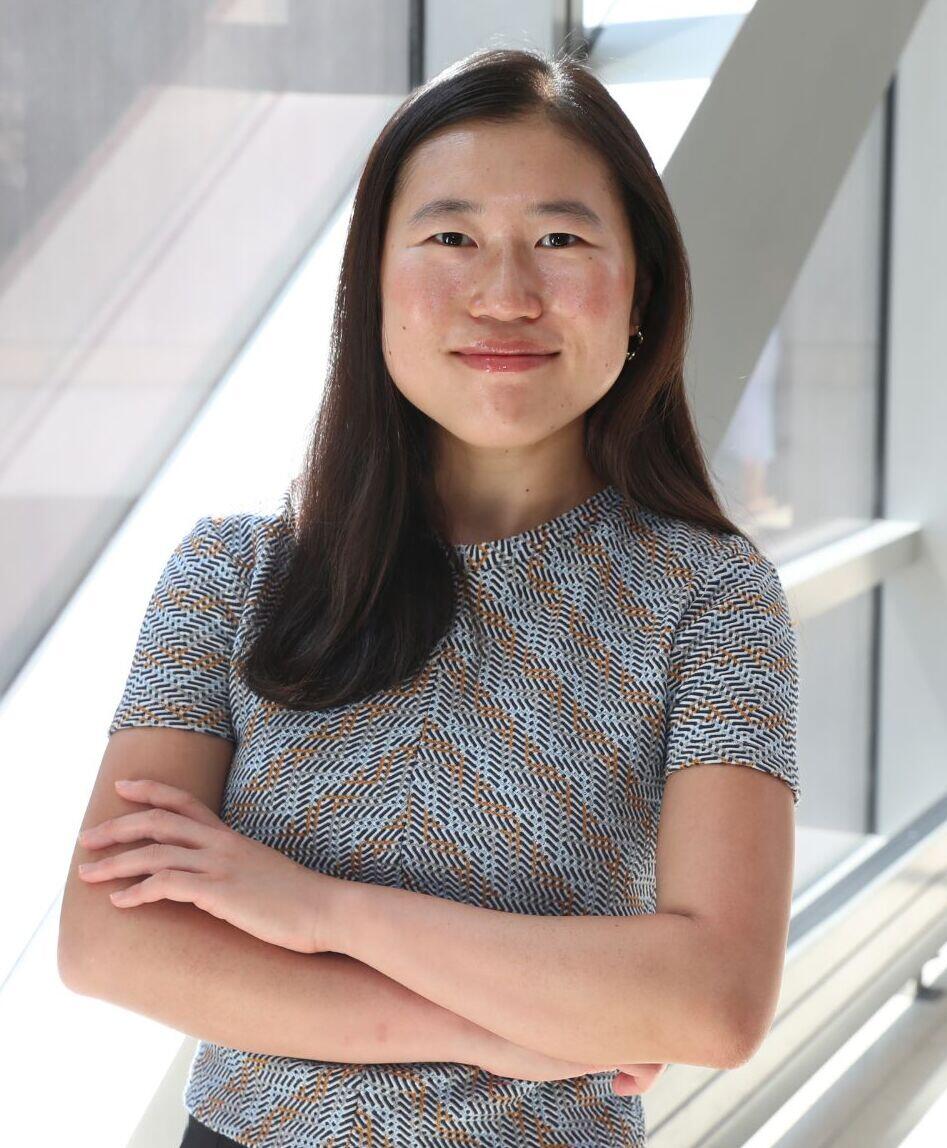
Jean Wu, M.D., will never forget the reaction from her family doctor during an appointment when she was about 12 years old.
“I specifically remember my parents taking me to the doctor, who appeared visibly concerned, but uncertain what to do next,” said Wu, now a third-year psychiatry resident at VCU Health. “The response was essentially ‘You’re below where you’re supposed to be and you need to eat more.’ What were we supposed to do with that?”
Wu, like an estimated 9% of the U.S. population, was experiencing an eating disorder. Despite the lack of guidance from her physician, Wu’s family and teachers helped her get into therapy and after about a year she was in recovery. When she became a student at the Virginia Commonwealth University School of Medicine in 2020, that experience helped her recognize gaps in medical training that leave many doctors feeling unprepared when it comes to working with patients with eating disorders.
“As a child, the confusion I saw in a trusted professional left a deep impression on me and inspired my work in the eating disorder space. I’m able to have a functional life, which I’m incredibly grateful for, especially since learning about how persistent and fatal eating disorders can be,” Wu said. “Thousands of people die from an eating disorder every year, they’re one of the most fatal psychiatric illnesses, yet it is astounding that we receive such minimal training on these conditions.”
While a medical student at VCU, Wu decided to help close some of those gaps by creating the Eating Disorders for Medical Professionals elective. Through the online, asynchronous course, medical students learn the intricacies of the psychiatric conditions and how to achieve better outcomes for eating disorder patients.
“There is so much shame and stigma associated with eating disorders that people often don’t tell their providers when they’re struggling,” Wu said. “Being a provider that a patient trusts and feels safe with can help open that door and get them the help they need."
A more holistic approach to eating disorder diagnosis and treatment
After Wu spent nearly two years consulting with experts, writing content and reviewing lessons between classes and clinical rotations, the elective was approved by the Curriculum Council as a fourth-year elective.
Students begin the nine-module course by learning the distinctive eating disorders listed in the fifth edition of the Diagnostic and Statistical Manual of Mental Disorders, the authoritative guide practitioners use to classify and diagnose psychiatric conditions. Identifying the conditions that fall under the umbrella of an eating disorder is often an eye-opening lesson on an evolving topic, according to Kathryn L. Jones, M.D., Ph.D., an associate professor in the Department of Psychiatry and instructor of the Eating Disorders for Medical Professionals elective.
When Jones was a medical student from 2008 to 2012, the fourth edition of the Diagnostic and Statistical Manual of Mental Disorders listed only two fully recognized eating disorders: anorexia nervosa and bulimia nervosa. Both disorders had rigid diagnostic criteria that excluded many patients from a proper diagnosis. For example, patients had to experience amenorrhea, or absence of at least three consecutive menstrual cycles, to be diagnosed with anorexia nervosa, which limited diagnosis to post-puberty and pre-menopausal women and girls.
“That prevented, and continues to prevent, a lot of people from seeking and receiving help because they didn’t perfectly fit the criteria for one of the two disorders,” Jones said. “We’ve come a long way in recognition and treatment, but those longstanding misconceptions still persist, even among medical professionals.”
Today, the number of diagnosable eating disorders listed in the Diagnostic and Statistical Manual of Mental Disorders, which was published in 2013 and revised in 2022, has increased to eight and updates the diagnostic criteria for anorexia nervosa and bulimia nervosa. The additions include avoidant/restrictive food intake disorder, which is characterized by avoiding food due to sensory sensitivities, a lack of interest in food or a fear of aversive consequences, such as choking or vomiting; and other specified feeding or eating disorder, a diagnosis for eating behaviors that cause significant stress but do not meet the strict diagnostic criteria for specific disorders.
Jones added that now, care teams strive for a more holistic approach to eating disorder diagnosis and treatment. For example, instead of focusing primarily on physical markers like weight or body mass index, they discuss how the patient feels about their relationship to food, eating and their body — this, and other strategies are highlighted in the elective.
“Directly asking about eating disorder symptoms can reduce any shame-based barriers,” Wu said. “The course teaches how to navigate this conversation with a patient in a sensitive way.”
Unlearning misconceptions about eating disorders
In addition to exclusive diagnostic criteria, experts believe that longstanding cultural conceptions of who is at risk for eating disorders have prevented some patients from seeking and receiving help. For decades, the belief was that eating disorders only affected skinny, white, affluent girls, creating what is known as the “SWAG stereotype” that continues to permeate in popular consciousness, Jones said, despite evidence of the contrary.
“People with medical training aren’t immune to cultural narratives and pressures,” Jones said. “Eating disorders do not discriminate, and people of all races, ethnicities, economic levels, genders and ages can have one. Changing what we believe about these conditions takes purposeful education.”
For eating disorder educators like Wu and Jones, breaking through the noise of misinformation and misconceptions means highlighting the harm these stereotypes cause. In early course modules, students hear from eating disorder patients representing a range of backgrounds on their experiences getting medical care, a purposeful choice Wu made to center voices that have been historically locked out of the conversation.
“People can be in larger bodies and be experiencing atypical anorexia nervosa and eating disorders can present differently in men. There really isn’t one ‘look’ for who develops an eating disorder,” Wu said.
Medical student Amanda Adolfo said meeting some of those patients during her third-year clinical rotations in pediatrics, family medicine and psychiatry made her realize that she “didn’t feel like she had the background to identify eating disorders, let alone treat them.”
Adolfo first connected with Wu in the Department of Psychiatry’s Translational Research on Eating and Affect (TREAT) Lab, where a team of faculty, residents and students study “risky and reward-related decision-making in individuals with eating pathologies.”
Now an M4, Adolfo is measuring how Wu's elective impacts students like her who are interested in learning more about the topic. Using pre- and post-course surveys, she compares students' knowledge and attitudes toward eating disorders before and after taking the class.
“So far, the early trend is showing that students are starting off with lower levels of confidence in their ability to identify or work with patients with eating disorders, and that those levels increase after taking the elective,” Adolfo said. “Having this curriculum helps challenge the stigma around these diseases.”
Adolfo has also received positive feedback about the final assignment of the elective: a freeform project for students to reflect on their experience working with the material. Students are encouraged to approach the assignment from any angle, and Jones said she has seen a range of submissions, including poems and personal essays reflecting their own relationship with food.
“I’ve been really wowed by what students have turned in. It’s been deeply moving to see how this elective has changed how they see patients and how they see their own experiences with food represented in the course,” Jones said. “I think that’s the ultimate goal — to put eating disorders on physicians’ radars not only for patients, but for ourselves as well.”
Expanding the impact
While psychiatrists like Wu and Jones treat eating disorders most frequently in their day-to-day work, the prevalence of the disorders means that physicians of all specialties will likely encounter a patient with one, diagnosed or undiagnosed, at some point in their career.
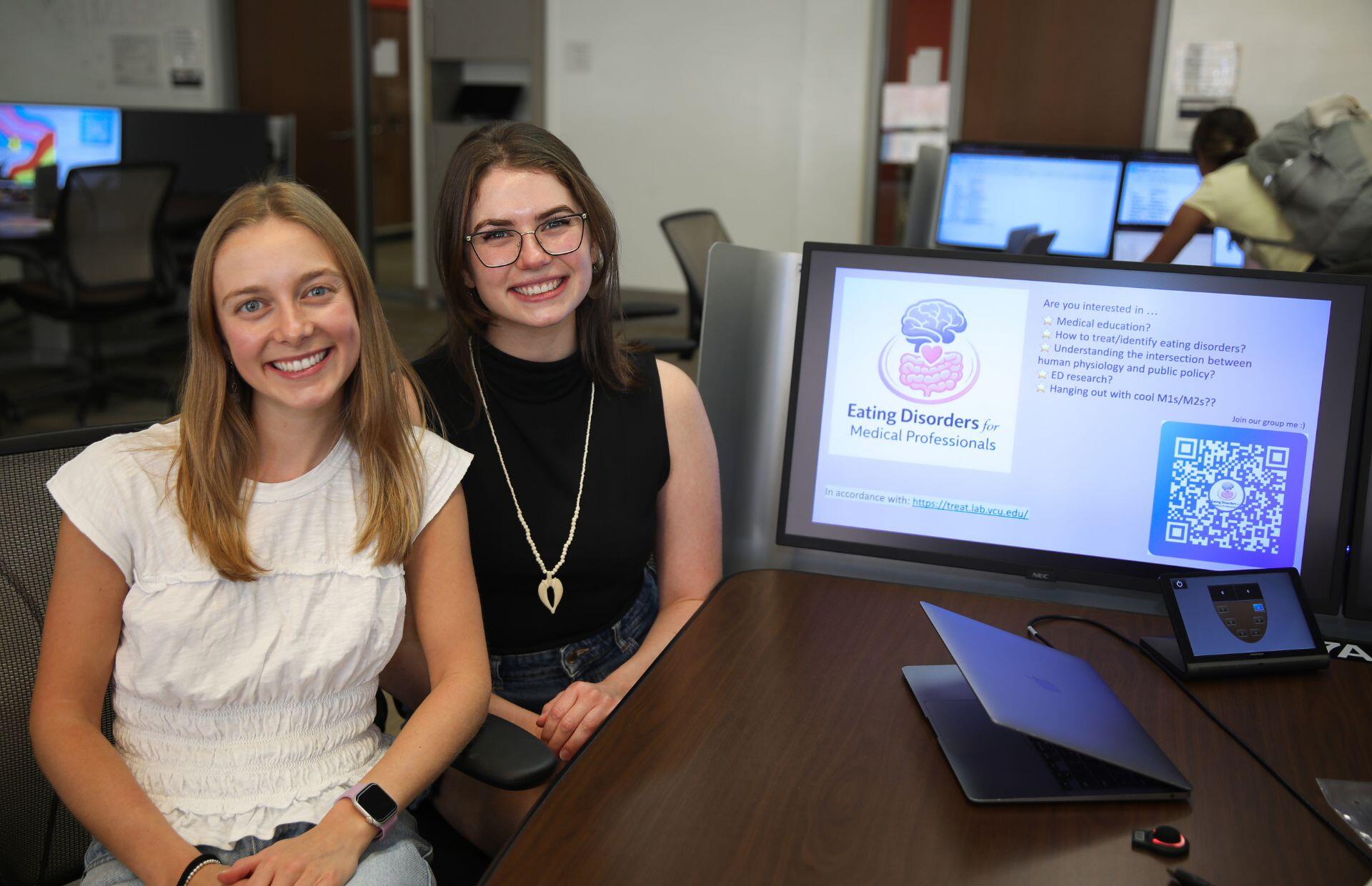
For Audrey Goldsmith, that possibility inspired her to reach out to Wu for guidance on creating an opportunity for preclinical medical students not yet eligible for the elective to engage with similar material. Goldsmith, now a second-year medical student at VCU, founded the Eating Disorders for Medical Professionals student interest group last fall, which aims to promote eating disorder education across all levels of medical training.
“I felt like eating disorders were kind of pushed to the background of a lot of our lessons,” Goldsmith said. “I wanted to give us the option to learn about this topic in a more longitudinal way.”
The group offers lunch lectures on different topics related to eating disorders, such as a recent discussion on eating disorders in food insecure populations, a demographic once thought to be less susceptible to the conditions. It also helps connect students with eating disorder research opportunities, like those in the TREAT Lab, of which Goldsmith is also a part of.
Goldsmith is interested in pursuing a surgical specialty, but, like Wu and Jones, believes that expanding eating disorder education beyond psychiatric programs can help reduce stigma in medical settings. For example, Goldsmith believes that letting patients choose if they are told what their weight is could help make the doctor’s office a more welcoming environment.
“There are so many ways that being a doctor can impact someone’s life and helping someone have a good experience might make them feel more comfortable in medical settings,” Goldsmith said. “For people that do need help but feel too ashamed to get it, that could make the difference.”
This story was originally published on the School of Medicine website.
Subscribe to VCU News
Subscribe to VCU News at newsletter.vcu.edu and receive a selection of stories, videos, photos, news clips and event listings in your inbox.