Sept. 17, 2026
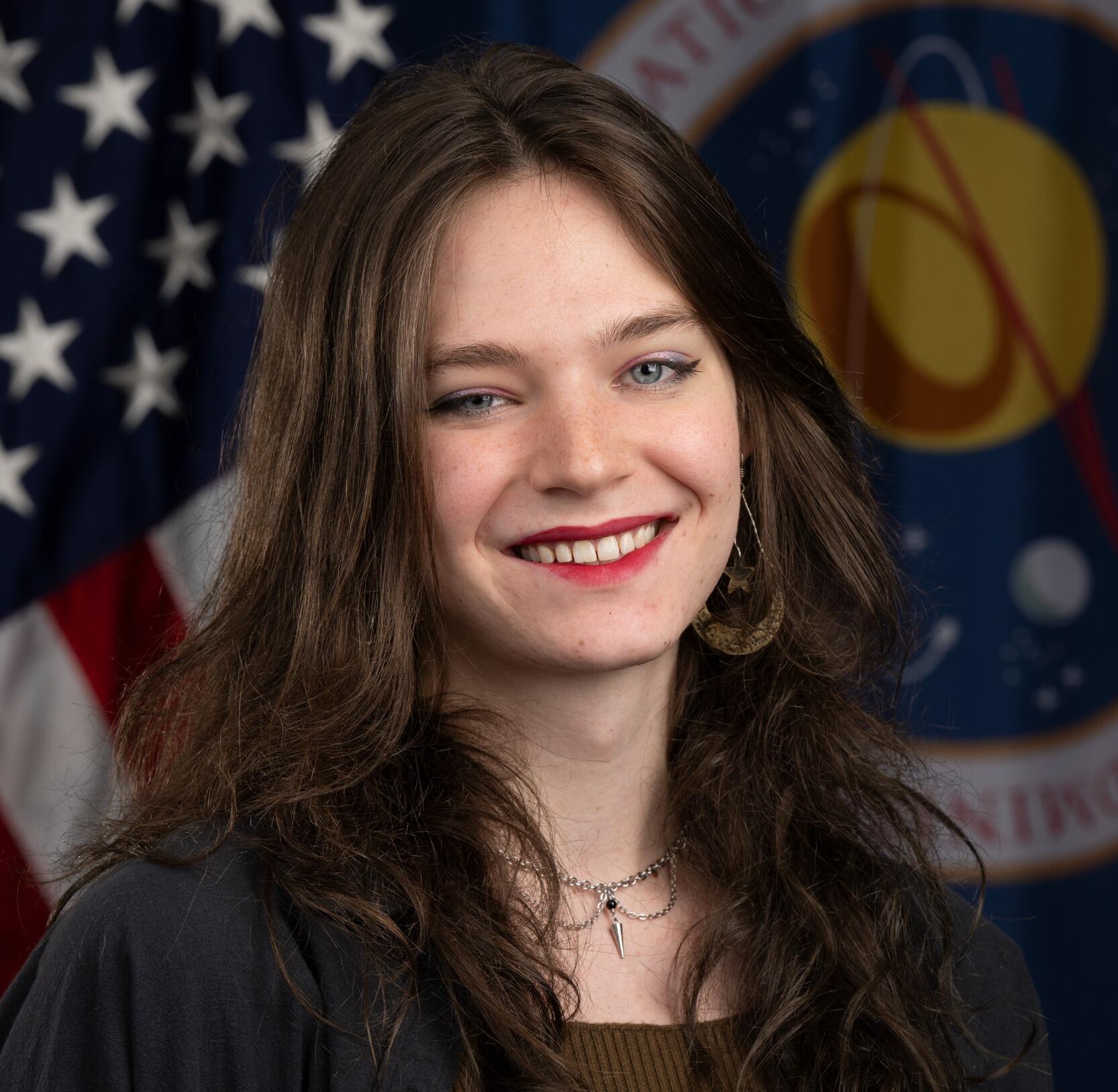
Marcelle Jones learns from NASA engineers at the Langley Research Center
Share this story
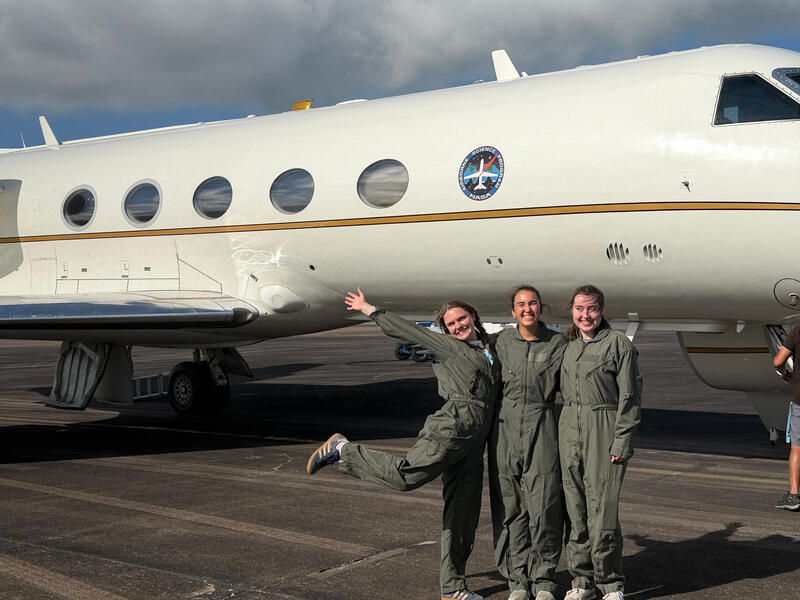
Marcelle Jones grew up in Chesterfield County and came to Virginia Commonwealth University for its affordable education and interesting research opportunities. As a senior mechanical and nuclear engineering student in the College of Engineering, Jones has been involved with undergraduate research and industry internships, including a recent summer internship at NASA’s Langley Research Center in Hampton, Virginia.
“For a long time, I thought I’d end up in computer science, since I really enjoyed programming and building my own little websites, games and desktop applications,” Jones said. “Early in high school, though, I discovered my interest in working with hardware and designing physical systems. I got into engineering through Arduino and woodworking projects I did after class, and I settled pretty quickly on mechanical engineering once I came to VCU. It allows me to design machines that can achieve goals I’m interested in and keep me at the systems level of thinking where I work best.”
During her freshman year, Jones added a nuclear energy concentration to her degree path, allowing her to focus on how these power systems can be integrated with other fields, particularly aerospace, leading her to a passion for space nuclear propulsion. That excitement led Jones to NASA’s Langley Research Center where she worked under the Structural and Thermal Systems branch to design the conceptual architecture for a lunar nuclear reactor capable of providing efficient and continuous power to a permanent human settlement on the moon.
“My initial task was to design and evaluate systems for a lunar base through finite element analyses and mathematical modeling,” Jones said. “My mentor at NASA allowed us to pick whichever systems interested us the most, so I proposed a fission surface power system, which is a major priority for NASA’s Moon Base initiative.”
The work Jones produced was meant to be showcased at a student conference, but other NASA team members believed it could be a good fit for publishing in an academic journal. She has been working with Lane Carasik, Ph.D., associate professor in the Department of Mechanical and Nuclear Engineering, to revise and co-author the paper before submitting it for publication.
“My professional expectations for this internship were greatly exceeded with the possibility of my work being published,” Jones said. “Beyond those goals, I was able to talk with several engineers who have careers I’m interested in mirroring. They shared lots of important advice about graduate school and my overall career path, and I left this internship with more certainty about my future direction and strong appreciation for space nuclear systems.”
Getting to see large-scale design testing up close was another impactful experience Jones had at NASA, while touring the anechoic chamber, which is a room designed to dampen sound waves so almost none are reflected from the walls. In NASA’s acoustics testing facility, Jones experienced the kind of environments equipment is assessed in.
“There was almost no echo whatsoever in the room,” Jones said. “If you stood in there long enough, you’d start to hear your own blood flowing around your ears. Honestly, it was pretty relaxing. And it got me thinking about the lesser-considered effects that come into play when you’re designing extremely precise and complex systems for aerospace. Considering only acoustic behaviors, I was amazed at the deeply specialized knowledge of these engineers.”
During her time at VCU, Jones has explored several internship opportunities, including working at the Thomas Jefferson National Accelerator Facility, Phlow and the Virginia Microelectronics Center.
“Every position I’ve held exposed me to a radically different professional environment,” she said. “At NASA, I experienced a very unique workplace that emphasized producing good work and solving difficult problems over everything else. The attitude of engineers and scientists there was deeply influenced by this drive for knowledge and understanding. My internship experiences make me feel more prepared to enter a professional setting and navigate the unique challenges and culture that come with each workplace experience, and I’m excited to see where I end up next!”
In 2026, Jones applied to more than 200 summer internships, and the NASA offer was the only one she received. Applying early, often and extensively is the advice Jones recommends to any students looking for workplace experience before graduation. Eighty-one percent of mechanical and nuclear engineering students at the VCU College of Engineering are offered full-time employment as a result of their co-curricular experiences. An internship is required by the Department of Mechanical and Nuclear engineering to help students build their professional network and prepare them to join the workforce.
“The job market is hard to time or predict, so try and put your foot in every door you have available,” Jones said. “Don’t be afraid to apply for positions you don’t think you’re the best fit for or that make use of knowledge you don’t have yet. These are learning opportunities to grow at a much faster pace than a university can cram into you, so take full advantage of them. Once you get that internship, talk to as many people as you can, and set up individual meetings with people on career paths you want to pursue or avoid. Your internship experience is an inflection point in your education, so get as much advice, feedback and guidance as possible. Also, make good connections with people, as they can serve you well in the future through reference letters or job prospects. Keep track of every bit of contact information you’re able to get, and don’t be afraid to reach out after the internship.”
After graduation, Jones plans on pursuing graduate school for either a Ph.D. or master’s in space nuclear propulsion. Her ultimate goal is working full-time with NASA or a private contractor developing hardware designs for space exploration.
Subscribe to VCU News
Subscribe to VCU News at newsletter.vcu.edu and receive a selection of stories, videos, photos, news clips and event listings in your inbox.