Sept. 9, 2026
Ray Ifanga sharpens his worldview at VCU
Share this story
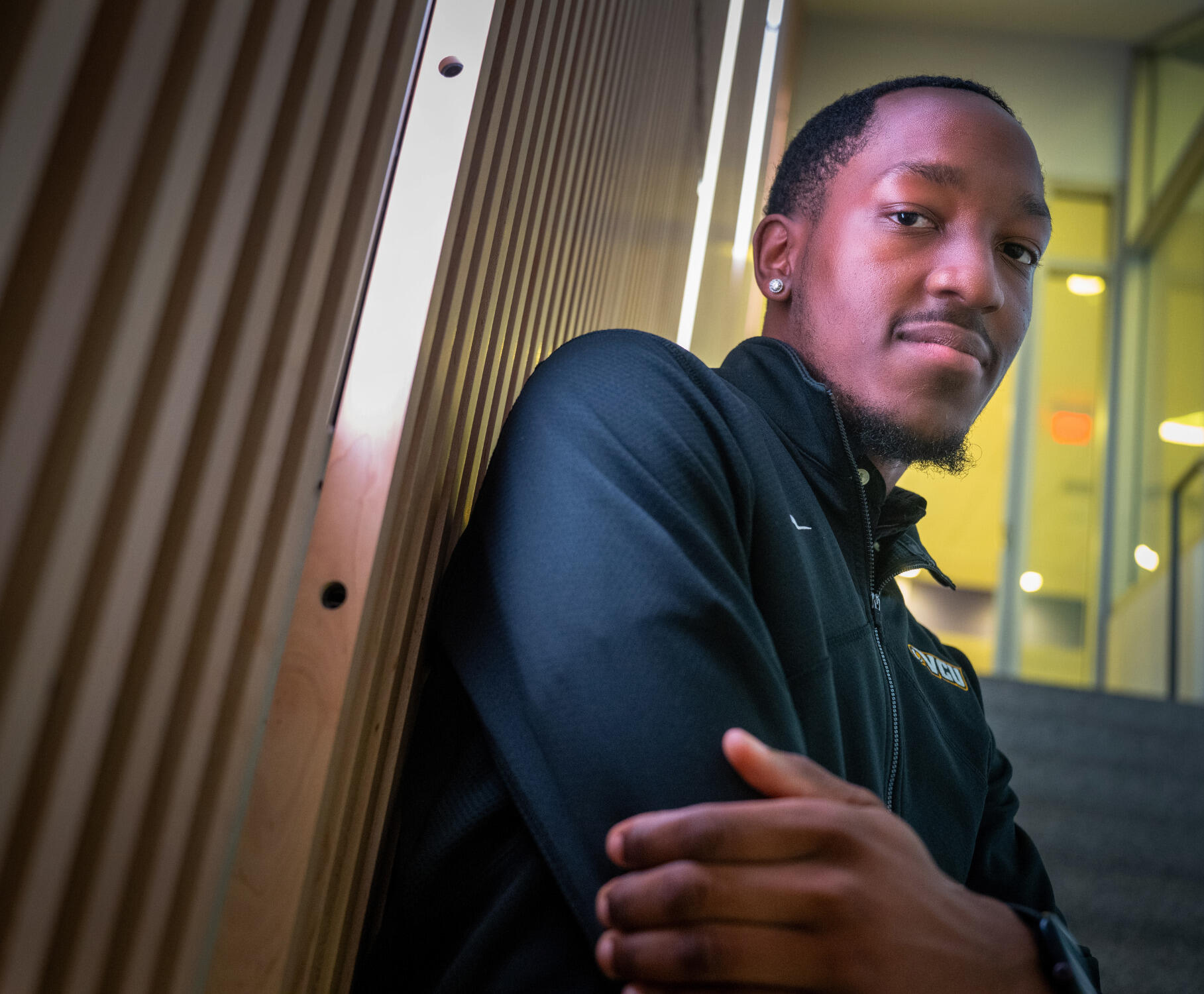
Virginia Commonwealth University junior Ray Ifanga wants to be “in the room where it happens,” per the song from the musical “Hamilton.”
“That’s where decisions are being made, especially decisions that affect Black communities and other communities I care about,” said Ifanga, who is double-majoring in political science and African American studies in VCU’s College of Humanities and Sciences. “That is a big part of why I’m drawn to law, civil rights and advocacy. I don’t only want to talk about change from the outside. I want to have the education and experience to enter those spaces, advocate for my communities and have a role in shaping those decisions.”
While VCU wasn’t his first choice for college, Ifanga now says attending the university was the “best decision I ever made.” It’s where many of his threads – a global upbringing, an interest in law, a commitment to serving Black communities – have been woven together.
Ifanga was shy and reserved when he arrived on campus, but today, the outgoing junior is known for being personable and community-oriented.
“I genuinely enjoy meeting people, building connections and being involved in different spaces on campus, which is definitely a shift from how shy and reserved I was when I first came to VCU,” he said.
His cultural education started early and has shaped his perspective. Ifanga’s mother worked for the State Department, and his family moved around the world. He was born in Paris and spent part of his childhood there as well as in the Democratic Republic of Congo and in Ashburn in Northern Virginia.
“In Congo, I went to a diverse school with people from around the world,” he said. “I was exposed to more cultures there than I have been here in the U.S. I got to see how people from different places live their lives.”
Ifanga wanted his college experience to reflect such diversity, and he ultimately – and gratefully – ended up at VCU. He initially pursued a mass communications major but, with law school in mind, switched his focus to political science with a concentration in civil rights.
“My family and friends always told me I would be a good lawyer because I’ve always loved to argue,” Ifanga said. “I always questioned why things were the way they were.”
After taking classes through the Department of African American Studies, he developed a stronger connection to the diasporic Black community in and outside of the U.S. – which has been reflected in Ifanga’s classwork, undergraduate research and community engagement.
“He is driven, passionate and compassionate,” said Lisa Winn Bryan, Ed.D., assistant professor in the Department of African American Studies. “He is concerned about the university and the world. He always thinks about how he can help.”
Assistant professor Grace Gipson, Ph.D., said she “immediately saw a star in the making” when she first met Ifanga.
“I knew that he was a student who I would want to work with in the future and serve as a guide and mentor,” she said. “I would quickly learn and see how Ray has an eager spirit about him, where he is constantly trying to improve upon himself while gaining new knowledge.”
Gipson and Ifanga are now working on a research project – “Beyond the Expected Black Man: Perceptions of Black Masculinity” – as co-principal investigators. It examines how Black masculinity has historically been shaped through racial stereotypes, societal expectations and existing dominant ideas about gender and sexual identity.
“Ultimately, the project considers how dominant narratives surrounding Black masculinity have been preserved, challenged and remembered over time,” Gipson said.
Gipson said Ifanga’s leadership, creative thinking and follow-through are strengths that serve him and her.
“Ray is a student who plays a major role in confirming why I do what I do as a professor,” Gipson said.
This past summer, Ifanga served as an orientation leader. Being able to welcome incoming students and help them find their place at VCU felt like a “full-circle moment” for him, he said.
Ifanga has also been a member of the Activities Programming Board, the NAACP chapter at VCU and Black Minds Matter since his freshman year. His leadership roles have broadened his footprint and impact at VCU.
Such engagement is a reflection of how VCU has brought out the best in him, Ifanga said.
“When I moved in, it hit me that I was not at my best. There were so many organizations and opportunities and communities,” he said. “That helped me come out of my shell. It awakened the ‘Ray of sunshine.’ Now I want to help other students here.”
Subscribe to VCU News
Subscribe to VCU News at newsletter.vcu.edu and receive a selection of stories, videos, photos, news clips and event listings in your inbox.