Oct. 26, 2026
Expanded opioid care in Virginia contributes to steep drop in overdose deaths and $1.3B in reduced costs
Share this story
Preventable overdose deaths fell by 43% in Virginia in 2024, thanks in part to expanded access to evidence-based opioid care. New data led by Virginia Commonwealth University shows that this progress in expanded, accessible care also delivered $1.3 billion in economic stability to communities across the state.
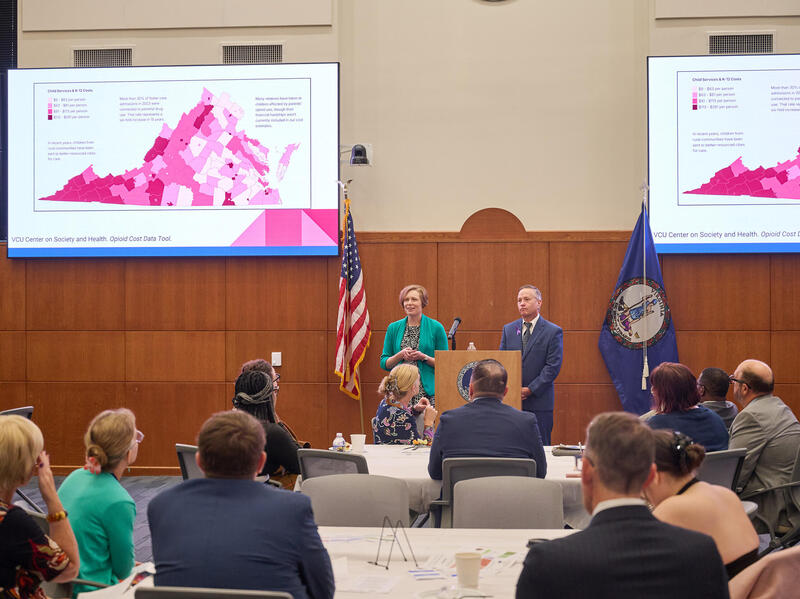
The findings reflect the latest round of data estimated for the Virginia Opioid Cost Data Tool, developed through a partnership between the VCU Center on Society and Health and the Virginia Department of Health. The tool is the nation’s only platform offering a localized, multi-sector view of the opioid crisis’ felt economic impact at a city and county level.
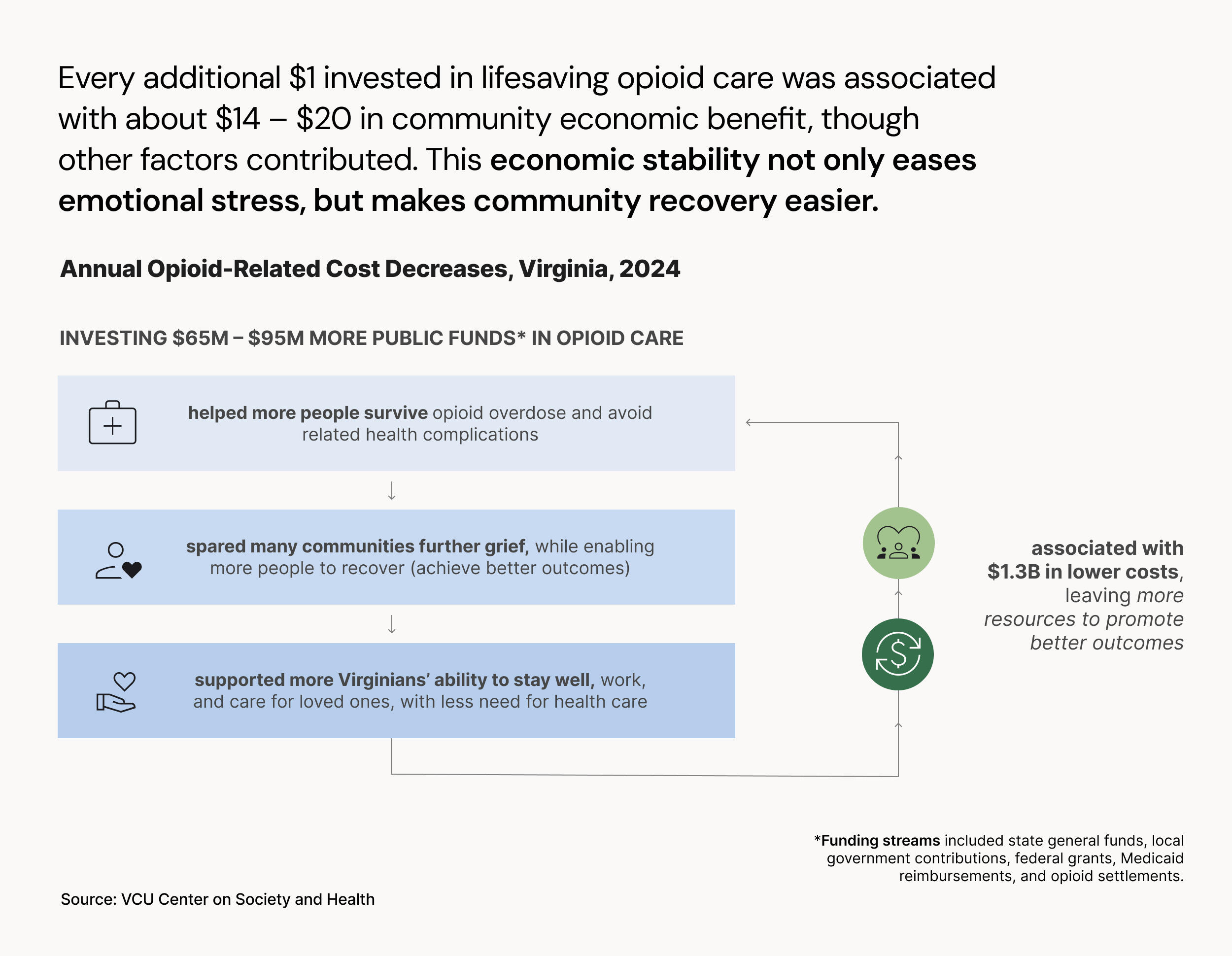
The updated data show that as lifesaving opioid care expanded in Virginia, many communities faced less heartache and less financial stress. Estimated opioid-related costs fell by $1.3 billion, about 14 to 20 times the added public funding for opioid care, though other factors also contributed.
To date, this research collaboration has helped guide more than $160 million in Virginia Opioid Abatement Authority grant awards, helping direct resources to the communities with the greatest economic need.
“Protecting people’s health also protects their communities’ financial resources, and that can support more healing,” said Derek Chapman, Ph.D., director of the VCU Center on Society and Health and a professor at VCU’s School of Public Health. “We hope these data continue to spark conversations about what is happening on the ground and why, especially between decision-makers and recovery community leaders with lived experience. Let’s learn together where strategies are creating better outcomes and where people need more support.”
How better opioid outcomes translated into lower economic costs across communities
The $1.3 billion in economic relief generated across Virginia stems from positive ripple effects in three core sectors in one year:
- $812 million in preserved earnings: A healthier, supported workforce prevented steep losses in people’s ability to stay well, earn a living and support their families.
- $369 million in reduced healthcare costs: Expanded access to treatment decreased emergency medical interventions and reduced rates of co-occurring conditions, such as HIV, hepatitis B and C and tuberculosis.
- $115 million in reduced strain on family and school support services: Estimated costs fell for Child Welfare Services and specialized K–12 educational support services.
Overall, these positive state-level economic trends benefited affected people, their families and communities, as well as taxpayers more broadly.
Two measures, though, moved in the wrong direction: Earnings lost to incarceration rose by $8.4 million, and estimated public spending on opioid-related arrests and incarceration rose by $9.3 million.
Urgent need to address persistent inequities in access to opioid care
Despite statewide progress, access to care remains unequal across geographic and demographic lines. The ripple effect of economic stress can further add to communities’ pain, rather than helping them heal from the trauma they have experienced.
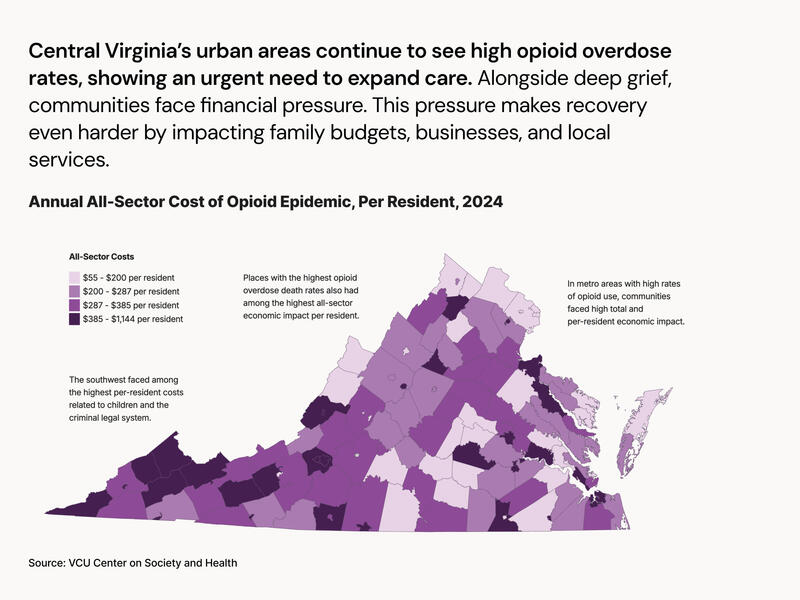
- Where overdoses remain highest: Opioid overdose death rates remain highest in Central Virginia metropolitan areas and rural Southwest Virginia. These areas also saw the highest economic impact per resident.
- Racial disparities: In 2024, Black Virginians saw the largest decline in opioid overdose deaths, at 47%. Even as the gap narrowed, overdose death rates remained nearly twice as high for Black Virginians as for white Virginians, reflecting unequal access to care and resources. In communities disproportionately affected by overdose deaths among Black residents, the average per-resident economic impact was nearly double the state average.
- Maternal and infant health: 420 infants were hospitalized with Neonatal Abstinence Syndrome — a 10% increase over the previous reporting period. Parents enrolled in Medicaid and those living in rural areas were most affected, emphasizing the need for enhanced pre- and postnatal healthcare access. Evidence-based approaches to family-oriented recovery could potentially provide an estimated $588 million in savings for families, businessesand public budgets.
Inequities translated into economic impact, as well, with:
- The least-insured communities: Health-related costs did not fall as significantly in communities with the lowest rates of health insurance.
- Income-based differences: Earnings lost to incarceration were three times higher among communities in the poorest quartile, compared to the state average.
Protecting progress and scaling up opioid care
The project team notes that more action is needed to close gaps in opioid outcomes, and Virginia is poised to do so. In response to unfair and preventable differences across race, Virginia’s Opioid Abatement Authority has launched a targeted funding initiative, Operation STOP!, specifically supporting cities and counties experiencing disproportionate overdose rates among Black residents.
While the data reflects significant progress, researchers warn that systemic threats — such as potential reductions in Medicaid access — could compromise gains and prevent Virginians from receiving lifesaving care.
“This partnership between the Virginia Department of Health and the VCU Center on Society and Health has facilitated a more holistic understanding of the human and economic impact of the opioid crisis in Virginia,” said Lauren Yerkes, Virginia Department of Health epidemiology program manager. “Communities across the commonwealth can use this thoughtful analysis to direct resources toward overdose prevention and substance use treatment — and ultimately save the lives of Virginians.”
For localized county and city data, special policy briefs and actionable resources, visit the Virginia Opioid Cost Data Tool.
Need help or local support?
- In case of a medical emergency or suspected overdose: Call 911 immediately. Virginia’s “Safe Harbor” law provides affirmative defense protections for individuals who call 911 or seek medical help during an overdose.
- Harm reduction services: Find local resources and naloxone access on the VDH Comprehensive Harm Reductionmap.
- Treatment and recovery options: Explore local evidence-based care through Virginia’s publicly funded Community Services Boards .
- Help with emotional distress, loss, or grief: Call or text 988 from anywhere in Virginia to receive immediate, 24/7 support for grief, loss and bereavement.
Subscribe to VCU News
Subscribe to VCU News at newsletter.vcu.edu and receive a selection of stories, videos, photos, news clips and event listings in your inbox.