March 2, 2026
‘It just has to stop’: Why VCU is accelerating pedestrian safety action
Share this story
The data and community sentiment are clear: Pedestrian safety remains a critical issue in Richmond. Leaders, students and community members at Virginia Commonwealth University are embracing ongoing work to address the issue near VCU’s two downtown campuses and beyond.
From personal accountability to institutional investment, VCU, VCU Health and the city of Richmond are examining and implementing methods to calm traffic, improve conditions for pedestrians and cyclists, and alter dangerous driving habits.
“We lost a dear friend in [longtime Valentine director] Bill Martin. We’ve lost too many students to vehicular traffic accidents, I’ll call them. So, we’re partnering with the city. We know that we have to do this together with the city,” said VCU President Michael Rao, Ph.D. “This is a really important thing we have to deal with. We will. We cannot stand to lose one more life or see anybody get hurt because of a car or any kind of vehicle. It’s a shame, and it just has to stop. Period.”
Engineering, education, evaluation, enforcement
Speaking recently to the VCU Board of Visitors and VCU Health Board of Directors, public safety leaders from the academic and medical enterprises highlighted the urgent need to promote and accelerate work to improve conditions, particularly following several fatalities involving pedestrians in Richmond in recent months.
“We must do all we can to prevent another pedestrian tragedy in our city and on our campuses – we owe this to our citizens, our students, our patients, our collective workforce and their families,” said Meredith Weiss, Ph.D., senior vice president for finance and administration. “Now is the time for VCU and the city of Richmond to act with the highest sense of urgency and to continue to innovate – bringing new ideas, evaluating the data and adapting our strategies to achieve [safety strategy] Vision Zero. Lives depend on us.”
A formal partnership between VCU and the city of Richmond related to pedestrian safety has been ongoing for more than three years.
“We are appreciative of the city’s efforts and collaboration over the past three years, making VCU and VCU Health a safer place for pedestrians. However, there is a lot of additional work that needs to be done – it’s clear our community wants to see results,” said John Venuti, associate vice president for public safety and emergency services for VCU and VCU Health. “Dr. Rao and Mayor Avula have directed us to take bold, aggressive action enhancing pedestrian safety on both campuses.”
From retimed traffic lights and improved pedestrian crossing signage to curb extension and turn hardening, dozens of projects have been completed to make VCU’s Monroe Park and MCV campuses safer. View a comprehensive list here.
VCU and city leaders are actively working on a host of additional improvements in the coming months, including:
- Increasing pedestrian crossing times at key intersections.
- Speed feedback signage.
- Curb extensions at eight new intersections.
- Red light camera enforcement devices.
- Bike lane extension on West Franklin Street.
- The East Leigh Street streetscape project through the MCV Campus, including signal improvements and protected pedestrian/bike paths.
Leveraging transportation and enforcement data, public safety leaders reiterated to the VCU boards that a holistic approach to pedestrian safety, including infrastructure investment, is needed to make streets safer for all travelers.
“Our data clearly show exactly where we have high volumes of vehicular traffic and potential vehicle-pedestrian conflicts,” said Clarence T. Hunter Jr., chief of VCU Police. “That information lets us target enforcement and safety efforts where they’ll make the biggest difference.”
Operation Safer Streets
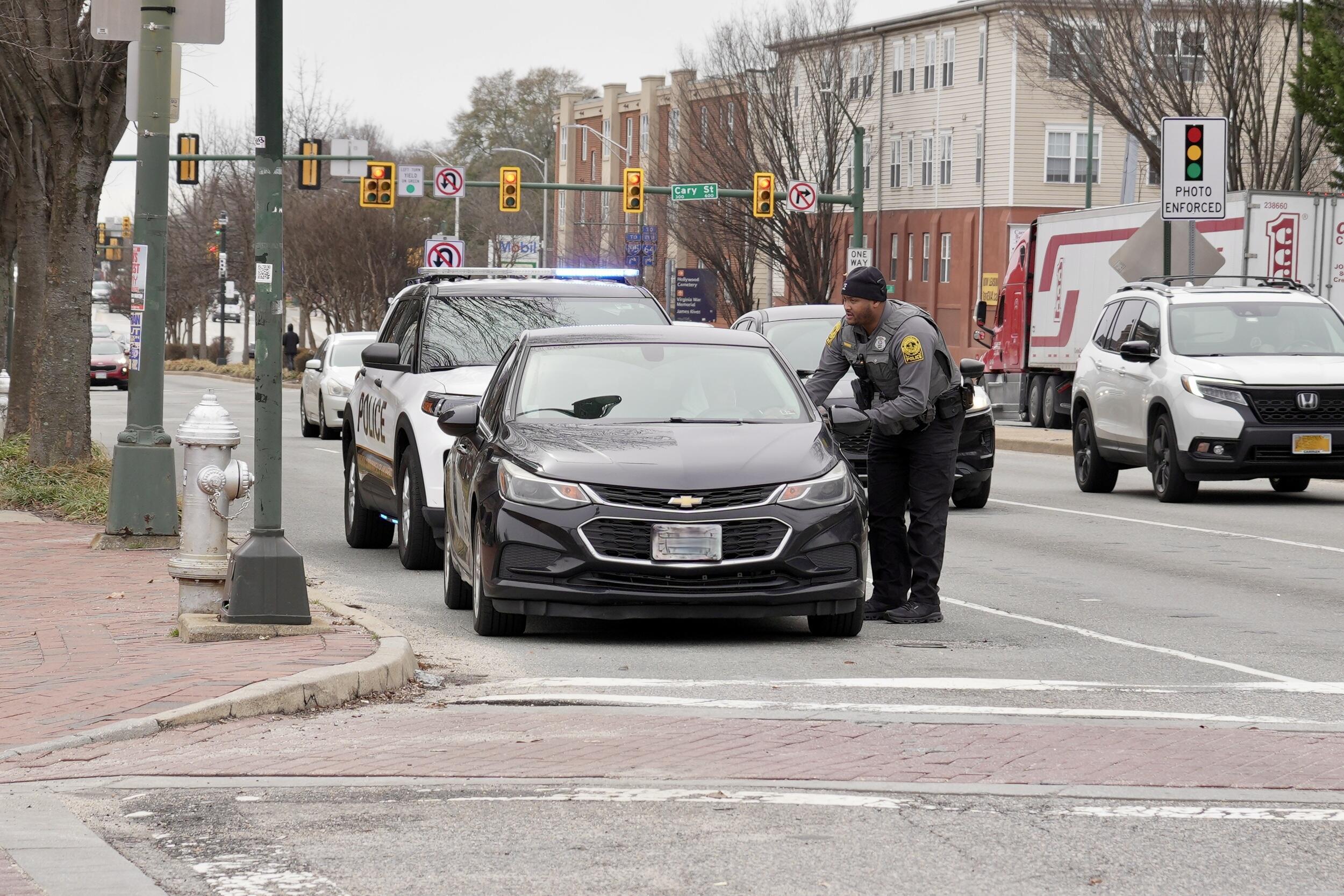
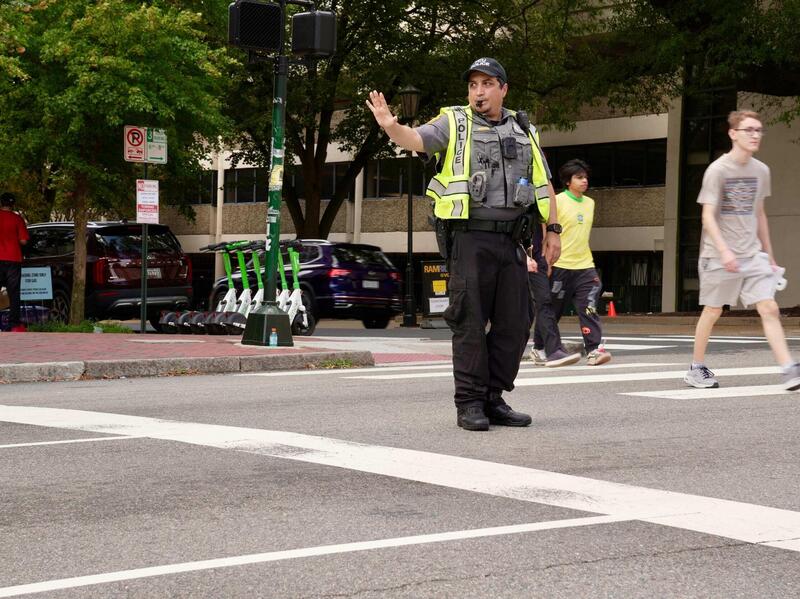
VCU’s campuses represent a unique challenge for travelers in the city, according to Lt. Edgar Greer of VCU Police. The sheer volume of foot traffic at all times of day, all year, raises the potential for vehicle-pedestrian conflicts.
Since early January, VCU Police have intensified traffic enforcement near both downtown campuses through Operation Safer Streets, a targeted program that leverages visible enforcement, community education and driver accountability
“By doubling our traffic division, highlighting pedestrian safety and making it even more of a focus than it already was, the return is going to come back,” Greer said. “The return is we’re changing driving habits. That’s the biggest key.”
In the first six weeks of the operation, VCU Police officers initiated 1,117 traffic stops and issued more than 890 summons. Those totals include:
- 324 speeding violations.
- 142 violations for failure to obey highways signs.
- 106 red light violations.
Beyond tracking stops and tickets, VCU Police are analyzing geographic data to pinpoint where certain types of traffic violations occur most often. Insights from this initial 90-day operation will inform the department’s traffic enforcement plan moving forward.
“We’re focusing on vehicles coming to and leaving our area. If they’re speeding, we don’t want to wait until they get to the core campus,” Greer said. “We’re pushing our officers out because we want [drivers] to slow down and not come through our campus doing 93 mph, like we caught one driver doing. … We’ll know exactly where we need to focus because that’ll help us with our attempt to change habits around here.”
Officer Kynneath Moss has been with VCU Police for six years and was assigned to the traffic division in January. He said he sees patterns of dangerous driving behavior in specific areas near both campuses. For example, speeding is a bigger issue along Belvidere or Leigh streets, while failure to obey posted signage is a major problem closer to the core of the Monroe Park Campus, such as along West Grace and East Broad streets.
The goal is to not have to write so many tickets, Moss said. Still, he thinks increased enforcement will serve as a deterrent for drivers.
“Think of it like that other person – a pedestrian, cyclist, driver – is your loved one. If there’s an officer out there that’s preventing them from getting hurt, that hits home with you,” he said.
“Heads Up, Rams!”: More than a hashtag
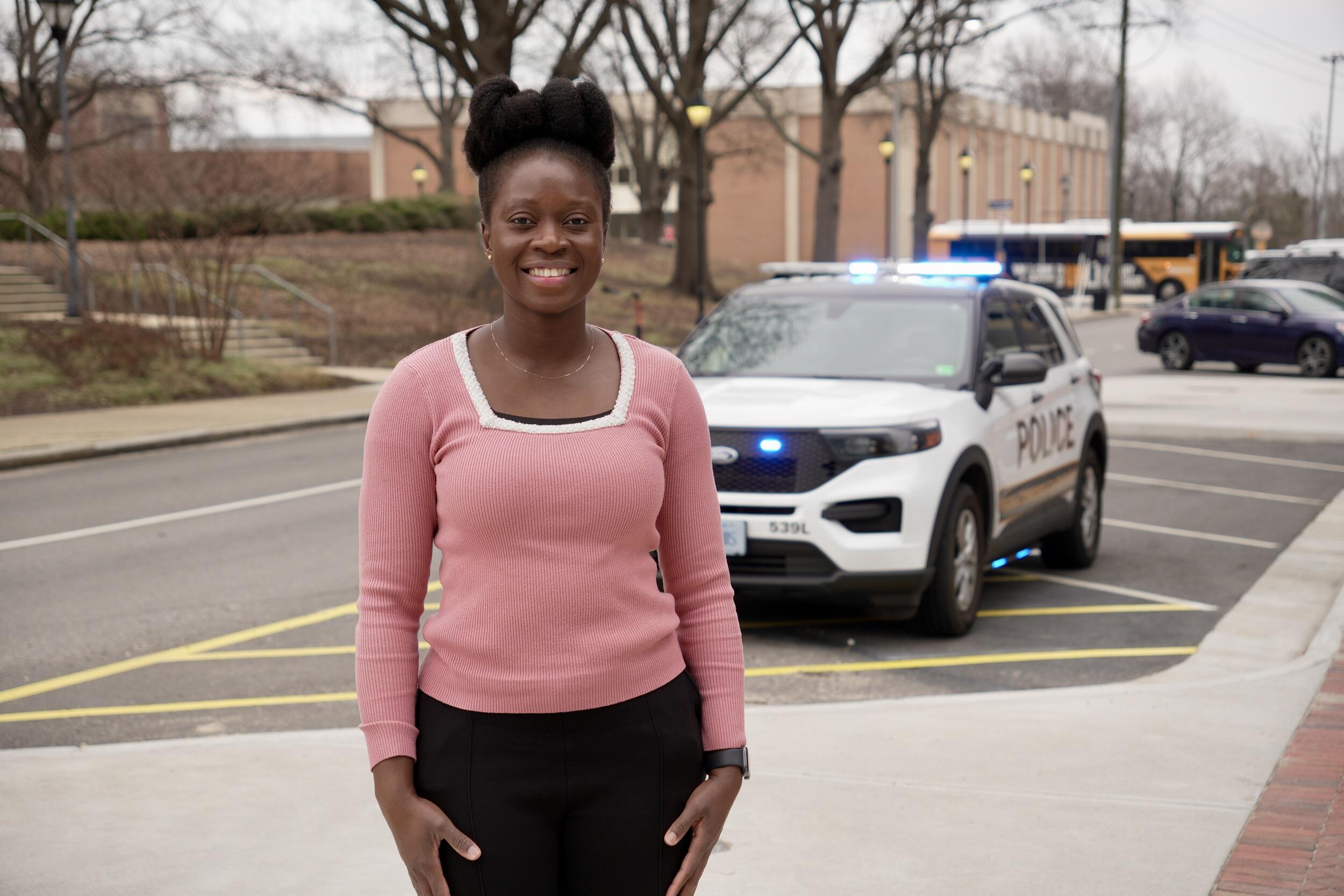
While learning to drive in Nigeria, Olajumoke Babatunde was taught to assume all other drivers on the roadway were “mad” – and not the emotional definition of the word.
Through lived experience and her time at VCU, the doctoral student in the School of Pharmacy has taken a personal interest in pedestrian safety.
Babatunde, a member of VCU Police’s Student Voice Committee, recalls a recent moment while walking through the Monroe Park Campus with a friend, where she delivered a key message to one of her fellow students.
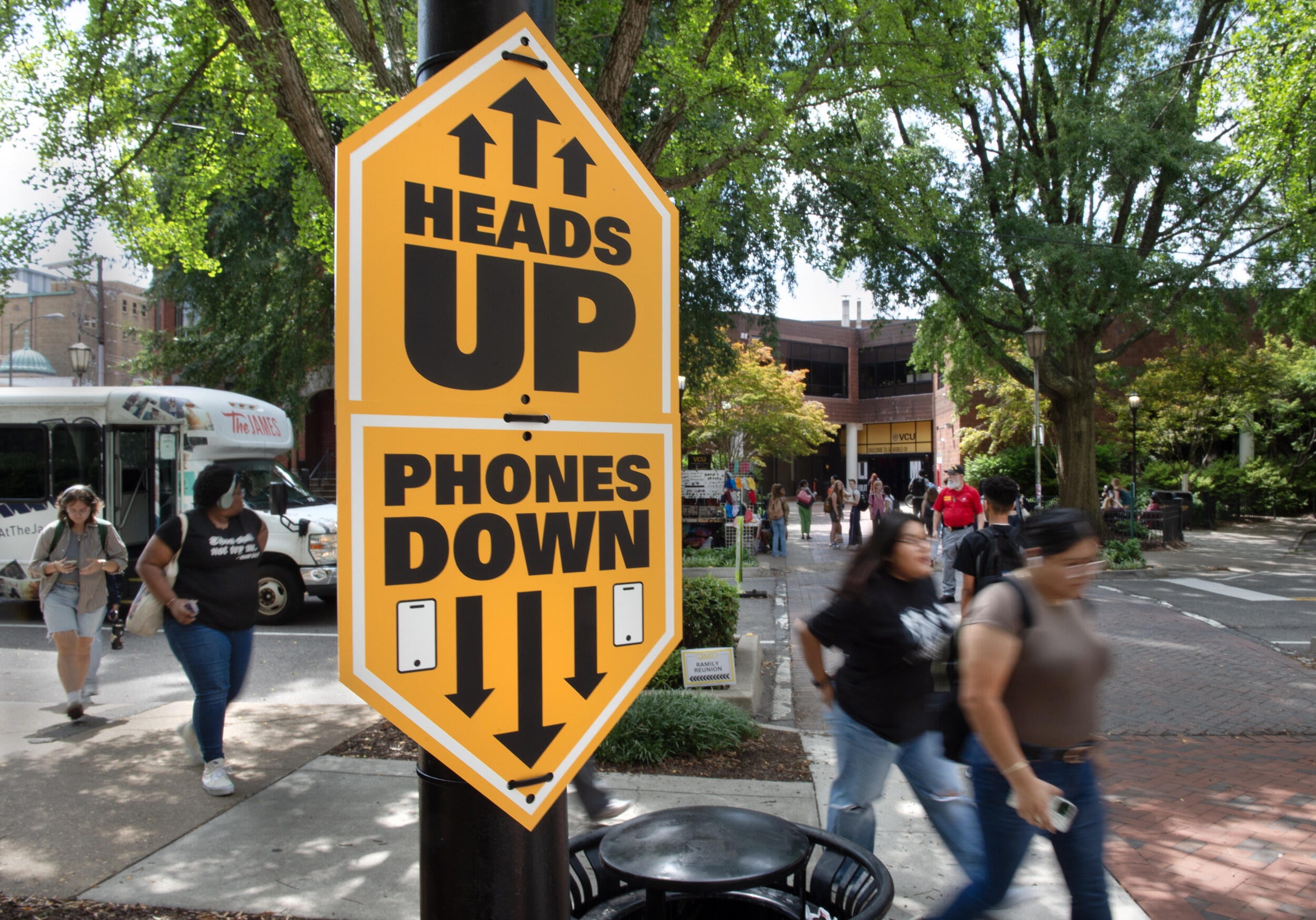
“We saw two students crossing the road, and they were on their phones. Then I just said, ‘Heads Up, Rams’ – and she put her head up and smiled,” said Babatunde, who was citing the name of a VCU safety education initiative.
“If we could tell people to keep their heads up, try to keep your phone away – just for 10 seconds while crossing the road – that would be very helpful in saving lives,” she said.
Transportation options are available
VCU provides a network of bus services to connect its two campuses and remote parking lots.
The newest addition, RamsXpress, which launched in August 2025, offers direct, point-to-point transit between the Monroe Park Campus at Cabell Library and the MCV Campus at the Larrick Student Center (Monday through Friday, 7 a.m. to 7 p.m.)
VCU recently transitioned to its independent RamsXpress service, but students can still utilize the broader GRTC bus network at no charge.
For students using off-site parking, the RamRide shuttle service connects remote facilities such as the A, I and O lots to central campus locations.
“It’s important for us to prioritize the safety of the VCU community and offer transportation options which allow students and staff to feel supported with both traditional and alternative transportation efforts,” said Josh Stone, executive director of VCU Parking & Transportation.
Safety and alternative commuting options are also prioritized through specialized programs, including the free RamSafe night/morning point-to-point service, the RamBikes campus hub for cycling, Zipcar rentals for short-term needs, and citywide e-scooter and bike-share integrations.
To learn more about VCU’s pedestrian safety efforts, including a 2023 study into pedestrian safety near campus, the One VCU Masterplan site is updated regularly. Contact policedept@vcu.edu for questions or concerns related to pedestrian safety at VCU and VCU Health.
Subscribe to VCU News
Subscribe to VCU News at newsletter.vcu.edu and receive a selection of stories, videos, photos, news clips and event listings in your inbox.