Aug. 27, 2003
2003 VCU Convocation Honorees
Share this story
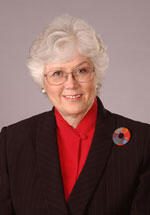
When Dr. JoAnne K. Henry, Theresa Thomas professor of nursing, joined VCU in 1978, she came to an institution that was in some ways relatively new. Only 10 years before, VCU had been created through a merger of the Richmond Professional Institute and the Medical College of Virginia.
"Over the years, there has been a growing cohesiveness among the faculty and between the campuses," she said about one of the major changes in the development of the university. "I was attracted to VCU because of its urban mission," she added. "I knew that I could grow personally and professionally here."
In supporting her nomination for the Distinguished Service Award, one of her VCU colleagues pointed out that "JoAnne embodies an interdisciplinary spirit. She understands that our community is not neatly organized according to discipline." She also is widely recognized for her skill in translating academic knowledge for those who need it most.
"The role of the faculty is about developing knowledge and then bringing that knowledge to students and to the field - the users of new knowledge," she says, referring to nurses, agency heads and elected officials responsible for health policy. "The central element of university service is not 'doing good' but knowledge work."
Dr. Henry, who holds undergraduate and master's degrees in parent-child nursing and public health and a doctorate in higher education administration, has been able to exercise that belief through her roles as director of the VCU Community Nursing Organization and director of the University Office of Health Policy and Research. She has developed new models of nursing practice and community partnerships for the community's most vulnerable populations. And she served on the steering committee that established the Carver-VCU Partnership, which has gained national recognition as a model university-community partnership.
Faculty are sometimes criticized for serving the community for as long as the grant is funded. Dr. Henry's many university and community admirers like to point out that she develops programs that are sustainable beyond the grant period. She has attracted about $700,000 to date in support of the School of Nursing's outreach activities - among them the Child Health Linkages project, which places nurse practitioner faculty and students in Richmond public schools to identify children with health problems. Started in 1996, this project is now part of Richmond's Communities in Schools program.
Her service to the community also encompasses numerous non-funded efforts to improve health care for those unable to afford it. For example, she provided the leadership that enabled the Craig Health Center at St. Joseph's Villa to become a viable health organization for people underserved by the health system. She also was the founding president of the Board of Directors for the Children's Health Involving Parents (CHIP) program of Richmond. The organization is now a model home-visiting agency serving more than 650 desperately ill children and their families.
These are only a few of the many examples of how Dr. Henry has been the catalyst for the application of new nursing knowledge - and that of other schools and programs on VCU's Richmond campuses - to student learning, personnel development and health care. Over the years, she has become an invaluable adviser to the university, the community and the state legislature on health policy - to the extent that Gov. Mark R. Warner recently named her chair of the Governor's Advisory Council on the Future of Nursing in Virginia.
"There are two major issues facing state governments now," Dr. Henry says. "The first is the nursing shortage. We could double the enrollment in every nursing program and school in Virginia tomorrow and still have a shortage."
The second issue is figuring out a long-term solution to paying for health care. "Long ago, health care was a service institution," she continues. "Now it's a business with complex organizational and fiscal issues. We are now at a point where we need to figure out a way to bridge the service, public aspect of health care to the business that it has become." As founding director of the Virginia Partnership for Nursing, Dr. Henry has been influencing that challenge directly through the creation of partnerships between nursing associations and the corporate world.
Repeatedly, Dr. Henry has been honored over the years for her service to the community and the profession, including being named the YWCA Woman of the Year for Health in 2000, one of the Virginia Nurses Association's 99 Outstanding Nurses in Virginia in 1999 and VCU Woman of the Year in 1999.
In nominating Dr. Henry for the Distinguished Service Award, her dean, Dr. Nancy F. Langston, noted: "I have had the privilege of working in six different university-based nursing programs and with hundreds of faculty, and I have never witnessed a person more committed to service to advance the health and welfare of individuals, groups and society."
In reflecting on the meaning of this award to her, however, Dr. Henry gave credit to her colleagues: "No one does this alone," she says.
The award is more important to her as recognition of the students and faculty of the School of Nursing and the many partners in the community: "Our nursing school was founded out of a service mission. Sadie Heath Cabaniss, the school's founder, integrated the provision of health care into the education of students. We've gotten a little more organized about it over the years, but that spirit has remained constant throughout the school's development."
Dr. Henry also believes that the Distinguished Service Award says a
great deal about VCU's commitment to service as equal to teaching and
research. "The Distinguished Faculty Awards program not only recognizes
individual excellence in teaching, research and service; it also recognizes
the importance of all these aspects of the faculty member's role in the
future of our urban mission."

When Dr. Earl F. Ellis Jr., professor of pharmacology and toxicology, came to VCU in 1977, aspirin was used to relieve pain, fever and inflammation. Dr. Ellis was the first to show that a dosage the size of a baby aspirin could help prevent blood vessel contraction associated with heart attack and stroke. He said it is still somewhat theoretical, but low-dose aspirin is now part of the cardiologist's arsenal of treatments.
"What low-dose aspirin does is inhibit formation of 'bad guy' prostaglandins
that cause these platelets to stick together, without harming the 'good
guys,'" he explained. The latter are prostaglandins that help prevent
platelets from aggregating as well as dilate the artery. This is a case
where less is more: "Too much aspirin, and synthesis of the good
prostaglandins is blocked, too."
Most of Dr. Ellis' research at VCU has focused on brain injury and control
of brain blood flow. Sitting on a shelf in his office is what at first
glance looks like some sort of sculpture. It is actually a replication
of the arachidonic acid molecule - a fatty acid in the body - fashioned
with neon tubing (it lights up). "I saw this in a vendor's booth
at a conference and just had to have one!" he said.
"In brain injury, arachidonic acid, the precursor of prostaglandins,
is released," he explained. The metabolism of arachidonic acid liberates
a cell-damaging oxygen free radical. Oxygen free radicals have been implicated
not only in brain trauma but also in such neurodegenerative diseases as
Alzheimer's and Parkinson's. Dr. Ellis noted, "We were the first
to show that brain damage could be reduced by oxygen radical scavengers
and antioxidants" - things that act like vitamin E.
"I've done a lot of this work with Hermes Kontos and John Povlishock,"
Dr. Ellis said, referring to the recently retired vice president for health
sciences and the chair of the Department of Anatomy and Neurobiology,
respectively. In fact Dr. Ellis came to VCU because of Dr. Kontos. "He
was the hotshot in the physiology of brain blood flow, and I was interested
in the brain's microcirculation." He also enjoys being part of the
multidisciplinary Commonwealth Center for the Study of Brain Injury, the
largest center of its kind in the nation.
Among Dr. Ellis' many other firsts are the development of techniques that
help other researchers. He went against established dogma in suggesting
that the laser Doppler, typically applied to the skin, could be used to
measure blood flow in the brain. Since 1989, when he introduced the technique,
more than 800 papers have been published by other scientists using laser
Doppler technology to assess the brain's microcirculation.
"A lot of effects on brain tissue can't be studied in vivo"
- in the whole animal - he said, referring to another technique he pioneered
for studying brain tissue damage. The device is an inexpensive lightweight
plastic tray that can fit in the palm of a hand. It contains six wells
with flexible elastic bottoms, and when brain cells are cultured in them,
the bottoms can be stretched to mimic the "brain stretch" that
is caused by trauma, such as the acceleration and deceleration of the
head during a car accident. Dr. Ellis' reviewers were skeptical of this
novel idea as well, but it is now employed in brain injury research laboratories
in the United States and Europe.
"Earl's significant contributions have helped put your university
on the map," wrote one of his colleagues in recommending him for
the University Award of Excellence. And it is not surprising
that Dr. Ellis has attracted more than $13 million in research and training
grants, published more than 110 papers and been appointed to the editorial
boards of national and international journals. He is one of a handful
of recipients of the prestigious Jacob Javits Award from the National
Institute for Neurological Disease and Stroke and has earned an Established
Investigator Award from the American Heart Association.
One of Dr. Ellis' colleagues in the School of Medicine described him as
a "succinct and elegant" lecturer - a teacher who knows how
to "paint a picture."
Medical students in his pharmacology course would agree. The classes of
1992, 1993, 1995, 2001, 2003 and 2004 voted him Outstanding Teacher. The
class of 1995 also honored him with the Excellence in Teaching award for
his course on autonomic pharmacology. That same year he received the Dean's
Award for Educational Leadership. In 2000 Dr. Ellis received the Outstanding
Faculty Award from the State Council of Higher Education for Virginia
for excellence in teaching, research and service.
Dr. Ellis also teaches pharmacology for VCU's dental hygiene and pharmacy
students and, since 1992, has taught an undergraduate pharmacology course
on the Academic Campus. In addition to his commitments to VCU, he also
is a popular lecturer at area high schools. In 1997 he was selected to
direct VCU's M.D./Ph.D. program - "an enormously important and enormously
time-consuming commitment" commented another VCU colleague. The program
enrolls 30 students in a course of study that takes between six and seven
years to complete. Most of them become research faculty.
"These kids," as he calls VCU's M.D./Ph.D. students, "are
the groundbreakers. They're our hope for the future." To Dr. Ellis,
significant research is that which ultimately benefits someone - a patient,
a colleague, a student. These students will become the backbone of academic
medicine.
In recognizing excellence across the entire mission of teaching, research
and service, the University Award of Excellence pays tribute to those
who ensure the future of academe.
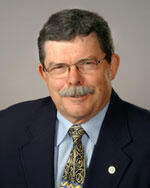
"I just finished reading 'Seabiscuit,'" said Professor Lester Van Winkle, referring to the story of jockey Red Pollard and the racehorse Seabiscuit, which has recently been made into a movie. "I'm a better man for it."
That's how Van Winkle frames the value of art in our lives. "Without
Monument Avenue, Richmond would be just another town," he says by
way of another example. "And it doesn't cost you anything to enjoy
it."
Professor Van Winkle, however, would rather talk about the "kids"
- VCU's sculpture students. "They are a magical lot with a compulsion
to make things," he said. "They are aggressive. They want to
get ahead, and their curiosity is palpable.
"Most of them succeed in anything they try after college, whether
it's medicine or cooking or writing or art," he continues. "They're
multitalented."
And these students have a tendency to fill the seats of the best graduate
schools in the country. "Our kids have been in every major graduate
school. We've had two senior classes where every single student who applied
got into the graduate program of their first choice," Van Winkle
said. "Other graduate schools are always soliciting us for our students,"
he adds, although he said there is a rumor going around that the Chicago
Art Institute has decided to accept only one VCU sculpture graduate per
year because they are dominating the program.
The goal of the sculpture faculty is to leave students "with something
in their head and something in their hand," Professor Van Winkle
said. Moreover, in a class devoted to a creative subject, there are no
right or wrong answers, only "better or worse answers."
That explains why the critique is so essential to teaching art. VCU's
critiques are "legendary," Professor Van Winkle said. "Get
a group of alumni together, and what they'll talk about are critiques."
Among the most legendary are Lester Van Winkle's. He is known for what
his colleagues and students call "Lester's Laws." Examples include
"Never let your story be more interesting than your art"; "There
is nothing negative about space"; and "Always assume the viewer
is more informed than you are." Not for nothing are Professor Van
Winkle's critiques considered "condensed and diagnostic" according
to his colleagues.
To him, effective teaching is about bringing out the best in all students,
not just those with the most obvious talent. "Chuck Rennick once
told me that any jerk can get by with the best work of his best students,"
he said, referring to the late Professor Rennick who was chair of sculpture
in 1969 when Professor Van Winkle joined VCU. "But those who really
teach bring the back of the class up."
In fact, the traits he admires most in his students are less about talent
and more about their commitment to discipline. "A lot of people think
art school is about sitting around emoting," Professor Van Winkle
said. "Actually, it's a lot of hard work."
His dedication to helping students persevere in translating their vision
into an object is a reason he is regarded as the quintessential studio
teacher, particularly in the wood shop and the foundry. There, commented
one of his colleagues, "students directly confront the battle between
artistic intent and the laws of nature. Of all the visual arts, the discipline
of sculpture is most critically poised against gravity, material imperative
and entropy."
After he completed his bachelor's degree in art with a minor in history
(another lifelong interest of his, particularly the writings of Douglas
Southall Freeman), he went on to the University of Kentucky for his master's
degree. "I entered college in 1963 and never left."
Professor Van Winkle easily could have made his mark on the strength of
his art alone. During the past three decades, he has built up an extraordinary
body of work that has been exhibited in galleries in Richmond, Washington,
D.C., New York City, Ankara SP, Turkey, and Lima, Peru, among other cities.
His work can be found in the public collections of the Virginia Museum
of Fine Arts and the National Collection of American Arts, to name only
two, as well as in 70 private collections, including those of Sydney and
Frances Lewis and retired White House correspondent Helen Thomas.
But he likes being in higher education. "Universities are places
of adventure," he said. "Why would I want to be anywhere else?"
From serving on the College Art Association's Excellence in Teaching Art
Committee to the thousands of dollars in grants he has attracted, Professor
Van Winkle's involvement in art has come mostly out of the university
setting.
He is uncomfortable taking credit for the Distinguished Teaching
Award, noting that it really is about his colleagues and what
they have built over the past three decades and more. "We knew, back
in 1969, that Yale wasn't that much better than us, and that we had the
tools to become quite special," he said.
Yale's sculpture program is still highly regarded, ranked second by U.S.
News & World Report - right behind VCU. He credits the faculty and
their own perseverance, generous spirit and belief in common goals over
the years to building the number one ranked sculpture program in the country.
And there is another factor: the new School of the Arts Building on Broad
Street. In 1969 sculpture classes were conducted in carriage houses, garages
and basements all across the Academic Campus. "Thank God for President
Trani," he says about the new building that brings sculpture, crafts,
and painting and printmaking students together in one location - "in
a place they can call home," he said.
What is most important to Professor Van Winkle is the fate of his students.
"When they're successful, when they get shows, when they get a piece
in the Whitney Museum - that's what makes my day. That's validation."
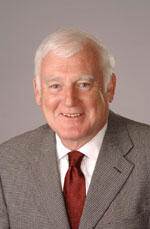
Dr. Nicholas P. Farrell, a specialist in inorganic chemistry, can be found giving talks at national and international conferences focused on treatments for cancer. "Breakthrough" is a word used sparingly on the subject of treating cancer, but it tends to come up around Dr. Farrell and his lab.
Just over 30 years ago, cisplatin, a mononuclear platinum compound that
attacks the DNA of cancer cells, entered the mainstream of cancer chemotherapies.
"Platinum damages the DNA of cancer cells," Dr. Farrell explains.
"Cancer cells can't repair that damage as well as healthy cells can."
He calls this action "preferential killing." It is how platinums
are understood to prevent cancer cells from replicating themselves and
spreading.
"The problem is that resistance to cisplatin comes up rather quickly,"
Dr. Farrell says. The conventional wisdom held, however, that only the
mononuclear structure of cisplatin worked on cancer DNA. Dr. Farrell respectfully
disagreed, believing that polynuclear platinum compounds might be more
effective, especially with regard to overcoming resistance to cisplatin.
Scientists scoffed, but they aren't scoffing now. Dr. Farrell's discovery is now in Phase I and II clinical trials as a potential treatment for pancreatic, lung and ovarian cancers and melanomas. "So far, their DNA hasn't learned to overcome it," he said.
"Science is actually extremely conservative," he explained. In his letter of support for Dr. Farrell's nomination for the Distinguished Scholarship Award, Fred Hawkridge, chair of the Department of Chemistry, noted, "The persistence and conviction necessary to get a scientific community to embrace a new scientific view while abandoning an existing view are enormous."
Now Dr. Farrell is much sought after for his expertise. Students and scientists flock to his lab from Germany, Japan, Australia, Israel, Sweden, the Czech Republic, China and Venezuela, among other countries, not to mention American universities, cancer centers and organizations like the National Cancer Institute.
Since 1998 he has attracted $1.8 million in funding from the National Science Foundation, the American Cancer Society, the National Institutes of Health and Boehringer Mannheim Italy (now Novuspharma) for his work on "non-classical platinums," a term he coined. He had a $1.5-million NIH grant renewed for another five years. That is a record for the chemistry department.
He is a pioneer in other respects as well. He established the first Gordon Research Conference dedicated to metals in medicine, which was held in July 2002. He is currently chairing the 9th International Symposium on Platinum Compounds in Cancer Chemotherapy to be held this coming October in New York City.
Dr. Farrell came to VCU in 1993 as associate professor and in 1996 he was promoted to professor. "I decided to come here because VCU was very focused on bridging the two campuses," he said. "And bridging disciplines is very appealing to me."
It was actually the leadership of the Massey Cancer Center who recruited him to VCU. He is a member of the center's Developmental Therapeutics Program and involved in a number of national and international collaborations, including a VCU group project studying transplatinum compounds in the treatment of breast cancer.
His research approaches also have much in common with his colleagues in VCU's Institute for Structural Biology and Drug Discovery. But he likes being in the chemistry department. He enjoys teaching and transmitting recent research findings to students. Chemistry faculty and most other faculty on the Academic Campus carry heavy undergraduate teaching loads. And he likes being with a department that focuses on all the many aspects of chemistry. He especially enjoys hosting VCU undergraduate researchers in his lab. "They've each gotten or will get at least one paper out of it," he said.
In addition to his work on the role of chemistry in the biology of cancer, Dr. Farrell is an expert on drug design and the technology transfer process involved in drug development, one of the areas for which VCU is nationally and internationally recognized. His work has led to 17 primary patents and patent applications, and he just concluded a licensing agreement with Hoffman-LaRoche Pharmaceuticals.
Reflecting on the Distinguished Scholarship Award, this enormously productive researcher - he has published 133 papers, made 126 conference presentations, written 18 review articles and book chapters (11 since coming to VCU) and authored or coauthored three books - is less interested in it on a personal level.
"The significance of this award is about our chemistry department and about this campus," he said. "It recognizes the contributions that chemistry makes to life sciences and the contributions that the faculty in our department and on the Academic Campus are making to the quality and reputation of VCU as a whole." He also is obviously grateful to his research group - "they are highly intelligent and very hard workers" - and his family for accommodating his absences from home to be in his lab.
Most of all, Dr. Farrell believes deeply in research having an impact beyond the lab. For him, that means cancer patients. "We're in clinical trials with ovarian cancer patients, and we're getting very promising results. Some people have already been helped," he said. He pauses briefly. "When basic research gets to the patient, it is very rare and very gratifying. Even if it stops here, I will be satisfied."
Subscribe to VCU News
Subscribe to VCU News at newsletter.vcu.edu and receive a selection of stories, videos, photos, news clips and event listings in your inbox.