March 5, 2026
'Medicine is a team sport': How mentorship has shaped a medical student's path
Share this story
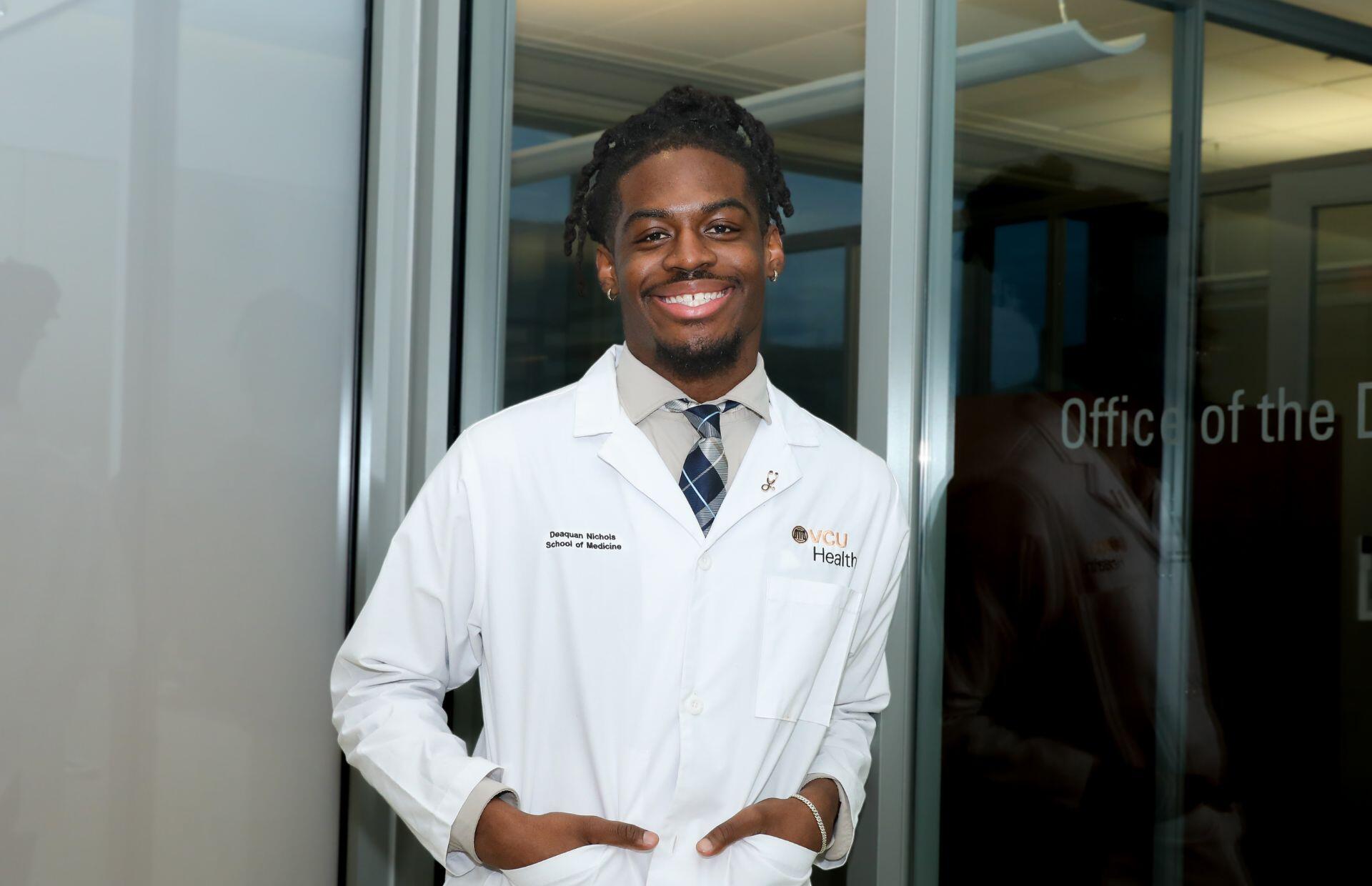
Deaquan Nichols, a third-year student in the Virginia Commonwealth University School of Medicine, is used to standing out. His resume paints the portrait of a high-achieving high schooler, collegiate football player and recent recipient of a prestigious national medical scholarship.
What that resume can't show, he said, is the community that has rallied behind him on his path to becoming a doctor. From family and friends to faculty and fellow students, Nichols credits much of his success to their efforts in encouraging a kid raised by a single mom in Roanoke to strive for something greater.
That foundation of support has given him the confidence to pursue a career as one of the only Black male dermatologists in Virginia — and to pay it forward by uplifting other aspiring physicians along the way.
“I never thought I’d be doing the things I’m now doing,” Nichols said. “I’m living a life that so many people worked and sacrificed so much for me to have, and I want to give that to other people as well.”
Family foundations
As a teenager in Roanoke, Virginia, Nichols thrived both on and off William Fleming High School’s football field. With support from coaches and teachers, the star quarterback found a calling in science, was elected class president and eventually graduated at the top of his class. Outside of school, however, was a different story.
During high school, two of Nichols’ peers died by gun violence, a number that increased after he graduated. School bus stops could be targeted for drive-by shootings, he said, and some kids chose to leave school rather than risk being caught in the crossfire. One of his friends, another high-achieving student whom Nichols recalled earning nearly perfect SAT and ACT scores, made the impossible choice to drop out following a close call at a bus stop. Last time he checked, Nichols said, that friend is serving a prison sentence until 2031.
“I often ask myself, ‘Why me?’” Nichols said. “We had very similar upbringings, and this kid excelled in all the ways I had. Now I’m in medical school, and he’s in prison.”
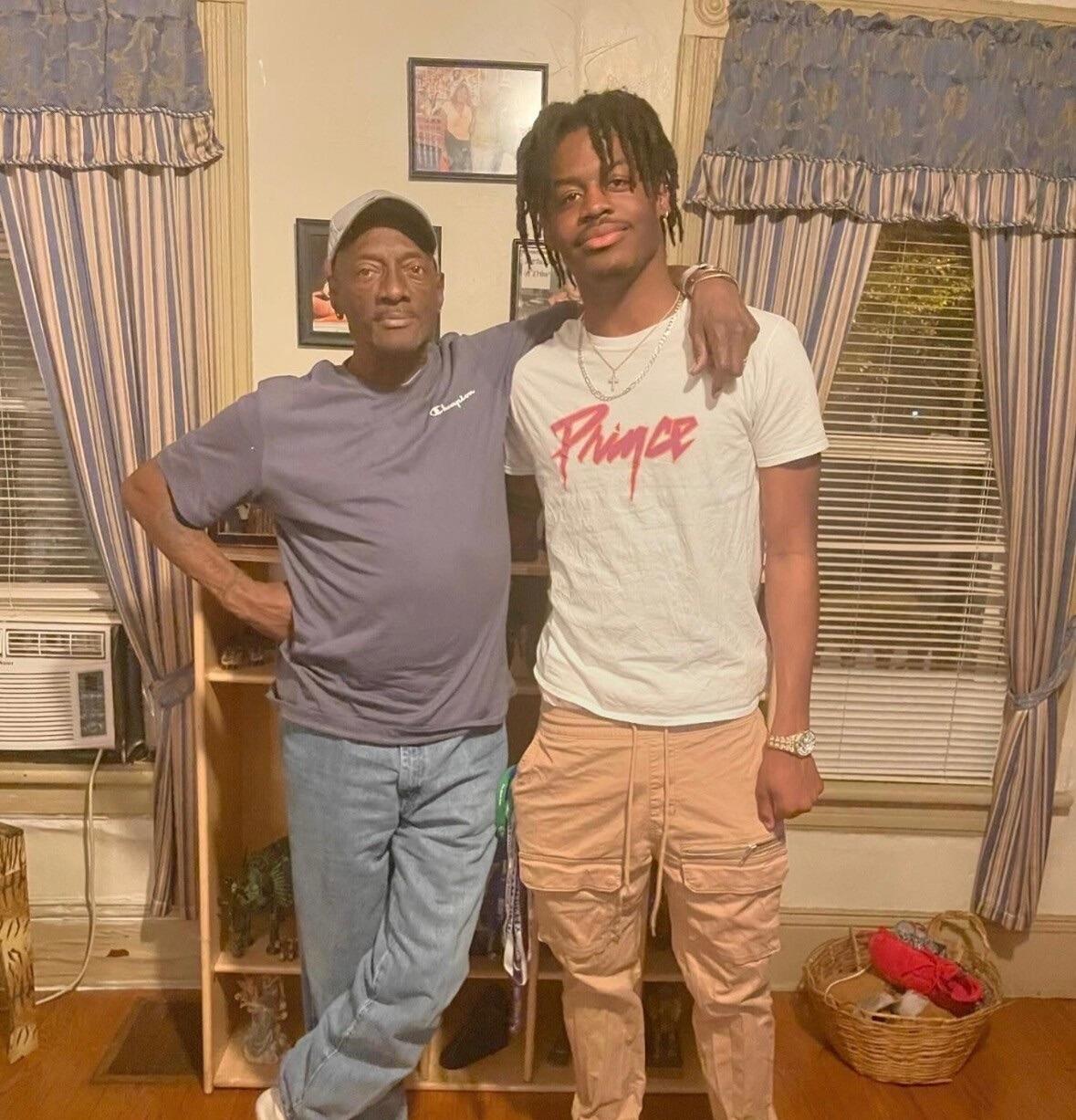
Nichols said he wouldn’t be where he is today without the support from his mother, Ebony, who he said sacrificed "so much" for him and his siblings, along with his teachers, administrators and coaches who saw something in him. But the greatest influence on his path was his great-uncle, James.
On paper, James was an unorthodox role model — he had been brought into gang violence at a young age and later convicted twice of felonies. But to Nichols, he was a devoted single father who was determined to help his great-nephew and other neighborhood teenagers learn from his choices and find better opportunities.
“He made a lot of bad decisions in his life, but he was a good person,” Nichols said. “He hated the things he was involved in and really made me understand that it wasn’t a cool thing to do. Hearing that from someone I could see myself in really changed my perspective.”
Taking his uncle’s advice to heart, Nichols committed himself to finding a route different from his peers. His academic and athletic achievements earned him a full scholarship to James Madison University — close enough to home to visit his family and far enough away to feel safe. Three years later, he graduated at only 20 years old and started medical school shortly after, making him the youngest student in the School of Medicine’s Class of 2027. Nichols said he is grateful that Uncle James, who died in 2024, was able to witness the results of his guidance.
“I carry what he taught me everywhere I go,” Nichols said. “He was one of the first people to tell me that I don’t have to change who I am even when I’m navigating uncomfortable situations.”
Strength in numbers
The support Nichols grew up with has only grown since beginning medical school in 2023. Back home, family, friends and neighbors already call him “Doc,” and excitedly introduce him as such to kids in the community
“I spend a lot of time explaining that I have to finish medical school to be a doctor,” Nichols said with a smile. “I think they’re just so excited to see someone from there pursue something like medical school.”
He knew he couldn’t become Dr. Nichols on his own, and during his first year in medical school he started proactively seeking out faculty mentors. One of those early connections pointed him to Mariana Phillips, M.D., a School of Medicine alum and dermatologist at Carilion Clinic in Roanoke, where she also grew up. Nichols was initially nervous to reach out to her, but when he learned that she had attended his rival high school, he knew that she would “understand what graduating from William Fleming meant.”
Phillips, who completed both medical school and her dermatology residency at VCU School of Medicine, said she was immediately impressed with Nichols' tenacity — it can be intimidating for a student to email a stranger and ask for a lunch meeting. She brought him onto a research project, and noted Nichols’ persistence when a paper they had worked on was twice rejected by a journal. That article, “Adenoid Cystic Carcinoma on the Scalp of an African American Male: Successful Management with Mohs Surgery and Postoperative Radiation," was approved and is pending publication in Cutis, a peer-reviewed clinical journal.
“He was going to get that paper published no matter what,” Phillips said. “When he wants something, he goes for it.”
The experience solidified Nichols’ interest in dermatology, a highly selective specialty with a match rate of only 63% during the 2025 cycle. Meeting Phillips helped him connect with Arturo Saavedra, M.D., Ph.D., who was dean of the School of Medicine when Nichols started and is currently serving as interim provost for the university. Saavedra is also a dermatologist and a researcher, and he says mentoring students like Nichols is where leaders can make the biggest difference in academic medicine.
“One of the gifts of being a dean is to inspire the leaders of tomorrow,” Saavedra said. “I could see very early on that Deaquan was driven by service and impact, not by any title or benefit of the specialty. It’s a pleasure to watch people define themselves from the aspect of personal service, not personal gain.”
With this research experience, Nichols has traveled all over the U.S. to present the work he’s done with Saavedra. At these conferences, he not only networks with dermatologists, he also gets a glimpse of what it might be like to work in a field where fewer than 3% of physicians look like him.
“There are very, very few Black men in dermatology, and I’m six-foot-four with dreadlocks, so I stick out at these events,” Nichols said. “But what I’ve learned is that people like authenticity. I bring a different perspective and that has value.”
Paying it forward
Even during the busy clinical years of medical school, Nichols makes time in his schedule to pay it forward as a mentor to other aspiring doctors. He works with undergraduate students at both VCU and nearby Virginia Union University and makes himself available to preclinical medical students on the MCV Campus.
“Being in a position where people now trust me to give them guidance is an honor,” Nichols said. “Medicine is a team sport, so there's no point in trying to do it on your own. Having that guidance helps you become a better student than you would’ve been without it.”
First-year medical student Nat Araia met Nichols in 2024, as a participant in VCU’s Summer Academic Enrichment Program, a six-week course for undergraduate students preparing to apply to health sciences programs. Nichols, then freshly out of his first year of medical school, dedicated a portion of his summer break to serve as a teaching assistant, helping pre-med students like Araia prepare for the next stage in their education. Nearly two years later, Araia said he can still rely on Nichols for “real, honest advice,” especially when it comes to finding opportunities in medical school and “thinking long-term.”
“Having someone a few steps ahead of you that understands what you’re going through makes a huge difference,” Araia said. “It’s also been really meaningful to see another Black man who looks like me thriving in this space. Representation matters more than people realize. It reminds me that I belong here too.”
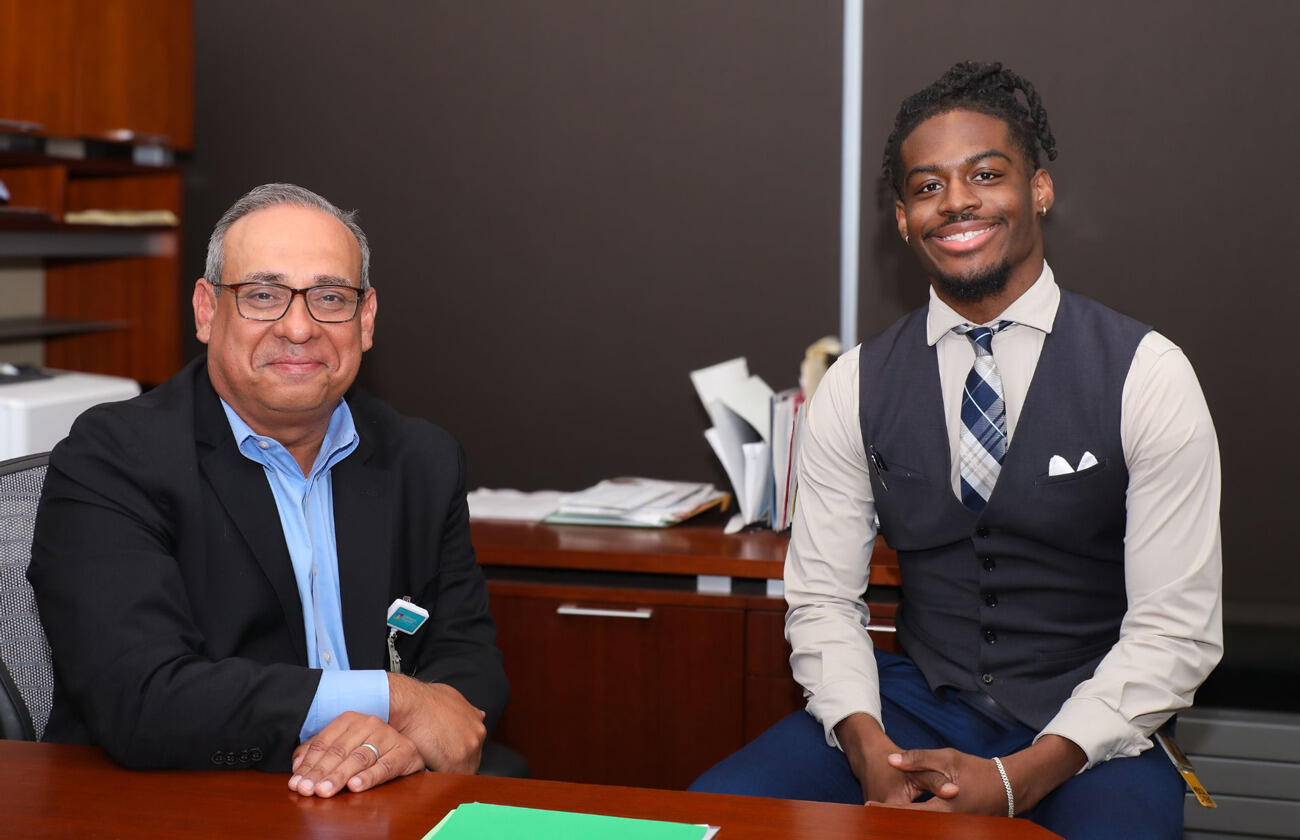
Aspiring dermatologist and fellow first-year VCU medical student Tohfe Beidas said working with Nichols has also helped her “see the bigger picture,” especially in her pursuit of matching into the competitive specialty. The two frequently meet to discuss research ideas, projects she can join, and how to balance priorities as a medical student. Having Nichols as a mentor, Beidas said, has helped her feel less overwhelmed and approach the specialty strategically.
“He doesn’t make dermatology seem scary or impossible, and he talks about it in a realistic, encouraging way, which helped me feel less intimidated,” Beidas said. “I’ve started to see it as something that’s achievable if you’re consistent and intentional.”
As his final year of medical school rapidly approaches, Nichols feels confident and prepared to take on residency and looks forward to serving communities that look like his neighborhood in Roanoke. Looking back on his journey so far, Nichols is certain he wouldn’t have made it to this point without mentorship, no matter the form it took.
“Some people think mentorship needs to be this formal thing or only counts in a professional or academic setting,” Nichols said. “But I think it can come from anywhere or anyone. There’s almost always value in someone’s experience, no matter their background or situation.”
This story was originally published on the VCU School of Medicine website.
Subscribe to VCU News
Subscribe to VCU News at newsletter.vcu.edu and receive a selection of stories, videos, photos, news clips and event listings in your inbox.