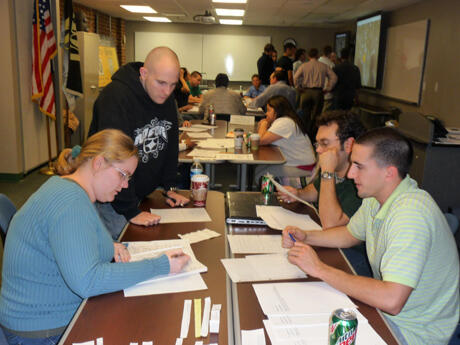
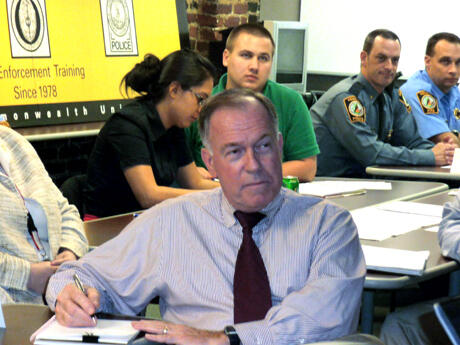
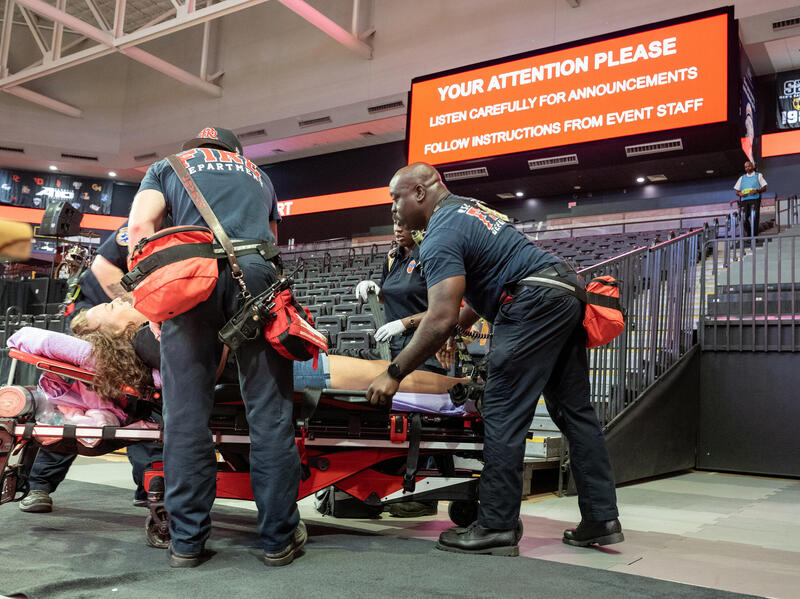
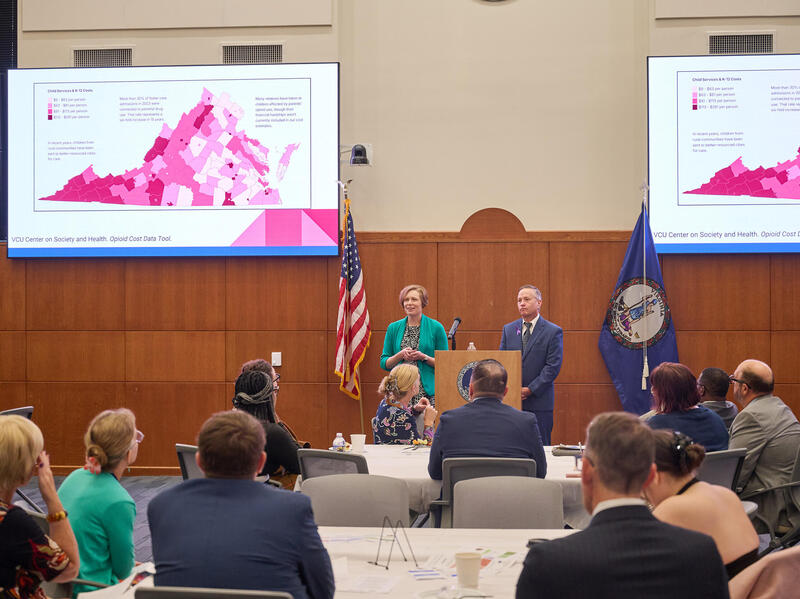
Students in VCU’s Homeland Security and Emergency Preparedness (HSEP) program consider their response to a community “disaster” in a daylong tabletop exercise on Nov. 30. The exercise tested their ability to coordinate a response in the areas of emergency management, intelligence fusion, firefighting, external affairs, public safety, and public health and medical resources. Mentors, including representatives from VCU and Henrico County, supported the students and provided feedback. Photos by Mike Porter, University Communications and Public Relations.
Associate Professor William Parrish (center) played the role of the governor in the exercise and received an update on decisions made by the 20 student participants in responding to the “crisis.” Modeling and simulation software by L-3 Communications Services Group, a communications and surveillance products and services company, helped the students manage regional emergency response assets as they established police road blocks, coordinated evacuations and directed fire and EMS response.
Subscribe to VCU News
Subscribe to VCU News at newsletter.vcu.edu and receive a selection of stories, videos, photos, news clips and event listings in your inbox.