Sept. 8, 2026
Does capitalism still work? VCU Institute for Free Enterprise forum will explore the question
Share this story
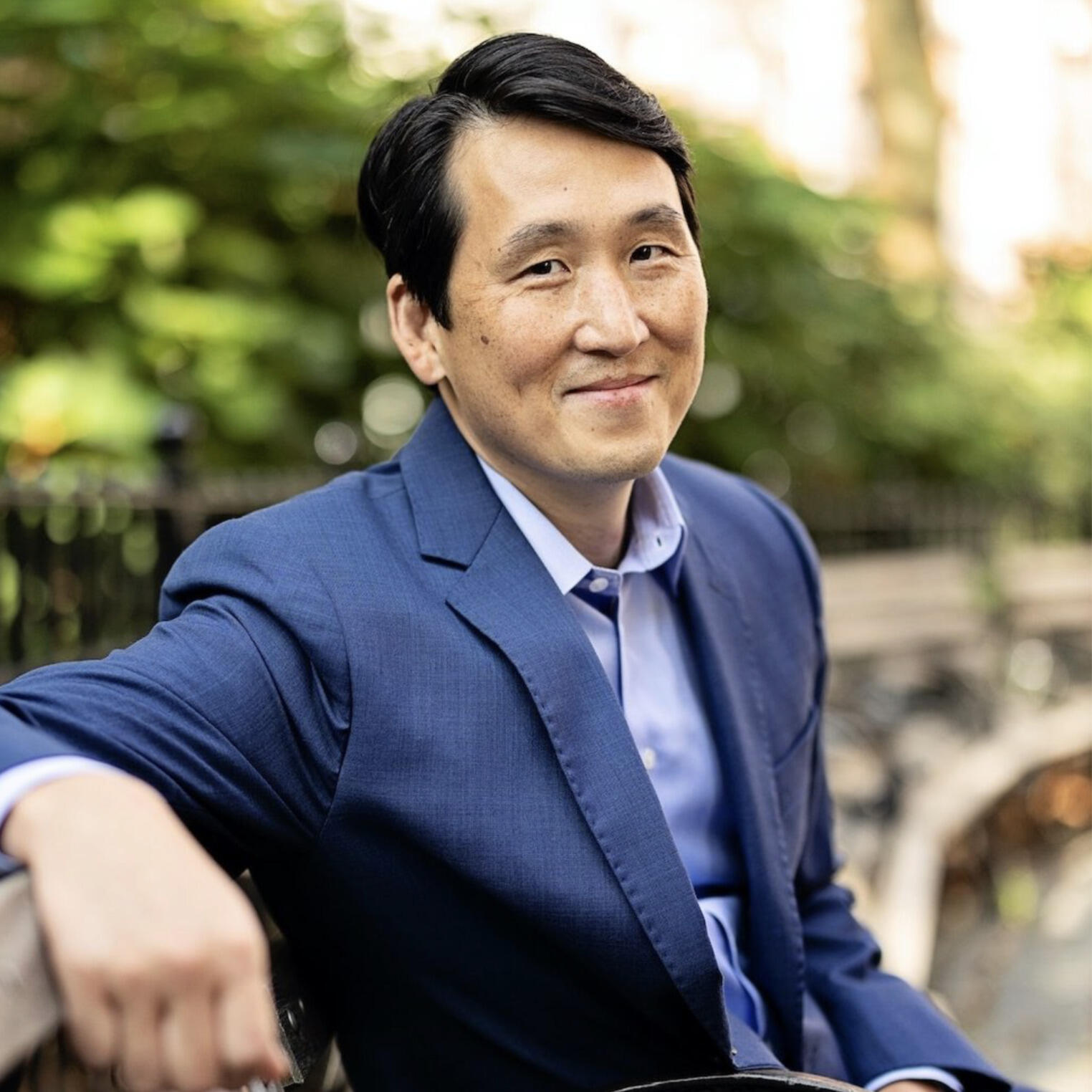
Kindness and capitalism might not be seen as a natural pair, but James Rhee is committed to the connection – particularly as business, society and democracy itself are being assessed through new lenses.
Rhee, a business leader, investor and author, will join National Public Radio “Full Disclosure” host Roben Farzad on Wednesday, Sept. 9, to explore a compelling question. Their public conversation – “Does Capitalism Still Work?” – will be held at 7 p.m. the Altria Theater as the inaugural signature event of the Institute for Free Enterprise, a new unit of Virginia Commonwealth University’s School of Business.
Historically, capitalism has created opportunities for people from many walks of life. Can it continue to power the American Dream?
“We are living in a time now where people are realizing that a well-functioning capitalism is a very good dance partner with democracy,” Rhee said. “When both function, they function well. But when they are not functioning well, they drag each other down.”
Rhee was an unlikely CEO of Ashley Stewart, a plus-size fashion retailer that caters predominantly to Black women. The self-described “Korean American, private equity guy with no retail experience” reversed the company’s 22-year profit loss by creating and operationalizing a financial system grounded in the humanities and cognitive science.
He chronicled Ashley Stewart’s success in his best-selling book (and later rock opera) “Red Helicopter: Lead Change with Kindness (Plus a Little Math),” which starts with the lesson of kindness he learned as a child after receiving a gift of a little red helicopter.
After reading “Red Helicopter,” VCU School of Business Dean Brian Brown, Ph.D., knew he wanted Rhee to reach students. They had first met at the 2025 AACSB Global Deans Conference, where Rhee delivered a keynote about human-centered agency against the backdrop of artificial intelligence.
“Young people are skeptical of capitalism, in part, because of negative associations like greed, economic inequity and a failure to address big social issues,” Brown said. “But research shows that capitalism itself isn’t the problem. It’s the lack of participation by enough people and especially our students, who are talented and work really hard but wonder if their determination, creativity and initiative will be enough for them to reach their goals or even live with dignity.”
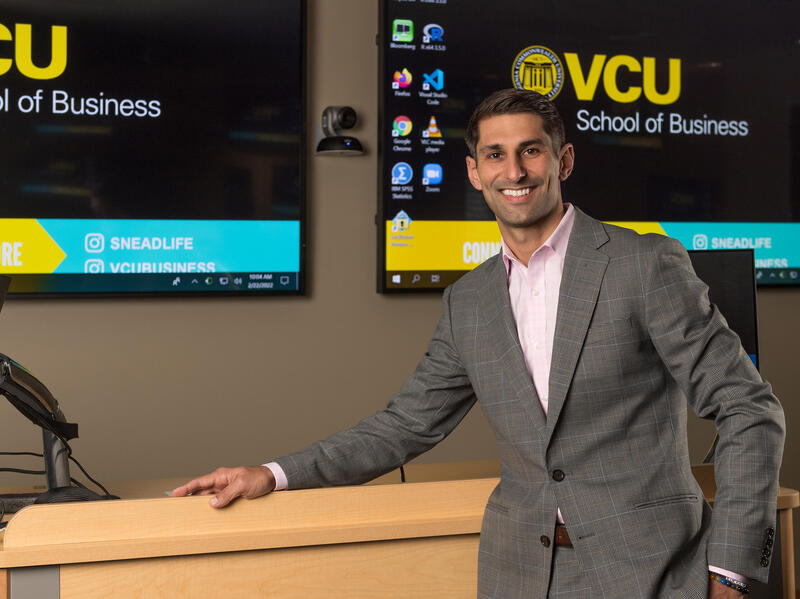
Paul Van De Putte, acting director of the Institute for Free Enterprise, thinks Rhee’s story will resonate with students and the larger business community.
“Technical skills like math matter, and the School of Business is a great place to develop those. But they can and should be exercised in an environment of kindness,” he said. “And that message is consistent with what we are teaching at the school.”
VCU News caught up with Rhee for a primer on kindness, capitalism and humanism in the business world.
How do you define kindness?
Kindness is an inherent, human behavioral system – a longitudinal investment in a system that acknowledges and encourages the realization of humanistic agency. It’s an investment that is not transactional in nature – an investment in a human’s journey toward freedom and self-determination.
And what about capitalism, which can carry a negative connotation?
Capitalism has many forms, molded by many different sociological and cultural foundations. So I would be careful about just saying “capitalism.” [But] capitalism, when properly functioning – and that is a big “when” – and paired with a symbiotic set of governing systems, acknowledges the natural desire for all individuals to self-govern, to have agency, to pursue their interests – economic and otherwise – in a manner that does not vitiate the system itself.
At its core, “Red Helicopter” is an operating system that shows how you helped the women of Ashley Stewart find their human agency. What does it look like?
Someone’s ability to influence the future in a way that they want intrinsically – that’s what a sense of agency means. You have to have the competence to do it, yes. But you have to have the confidence to do it. The motivation is intrinsic. It’s not external validation. Also, it leads to a connectedness to other human beings.
So agency is why the focus of “Red Helicopter” is what it is. It’s the underpinning of our civic and economic system.
Artificial intelligence is at the forefront of society now. Do you see AI benefitting humanity going forward?
Yes. I see it in a way no different than what money is: It’s a tool. It’s a tool of leverage. And so one of the cardinal rules about leverage is that it can be dangerous. However, leverage is incredibly productive when you know how to use it wisely. So AI is no different.
I think we have to be careful about defining what artificial intelligence is. First of all, generally speaking, I don’t like things that are artificial. I’d rather be intelligent. I would never replace intelligence with artificial intelligence. I don’t think you should be using leverage until you know what it is you are doing. I’d rather, instead, say augmented intelligence. I think that’s a more thoughtful and safe way of using it. Once you’re “intelligent,” then if you can leverage that intelligence, that means you augment it. It’s not artificial – it’s still intelligence.
Tell us about the Sept. 9 event with Roben Farzad.
We are going to be in conversation about everything relating to “Red Helicopter.” The future of the world. We will be weaving in some original music from the “Red Helicopter Rock Opera” that I composed and performed at Yale [as artist-in-residence]. The point of all that is to really demonstrate rather than just talking about principles in theory. It’s showing, immersively, what types of skills and modes of communication – ranging from finance to business, to the humanities, to philosophy to music – that a post-AI world will ask of people. Because they all help holistically connect with humans – music being the ultimate language of humanity.
Subscribe to VCU News
Subscribe to VCU News at newsletter.vcu.edu and receive a selection of stories, videos, photos, news clips and event listings in your inbox.