Oct. 6, 2026
Dance lessons for AI? VCU’s Kate Sicchio links choreography and computers
Share this story
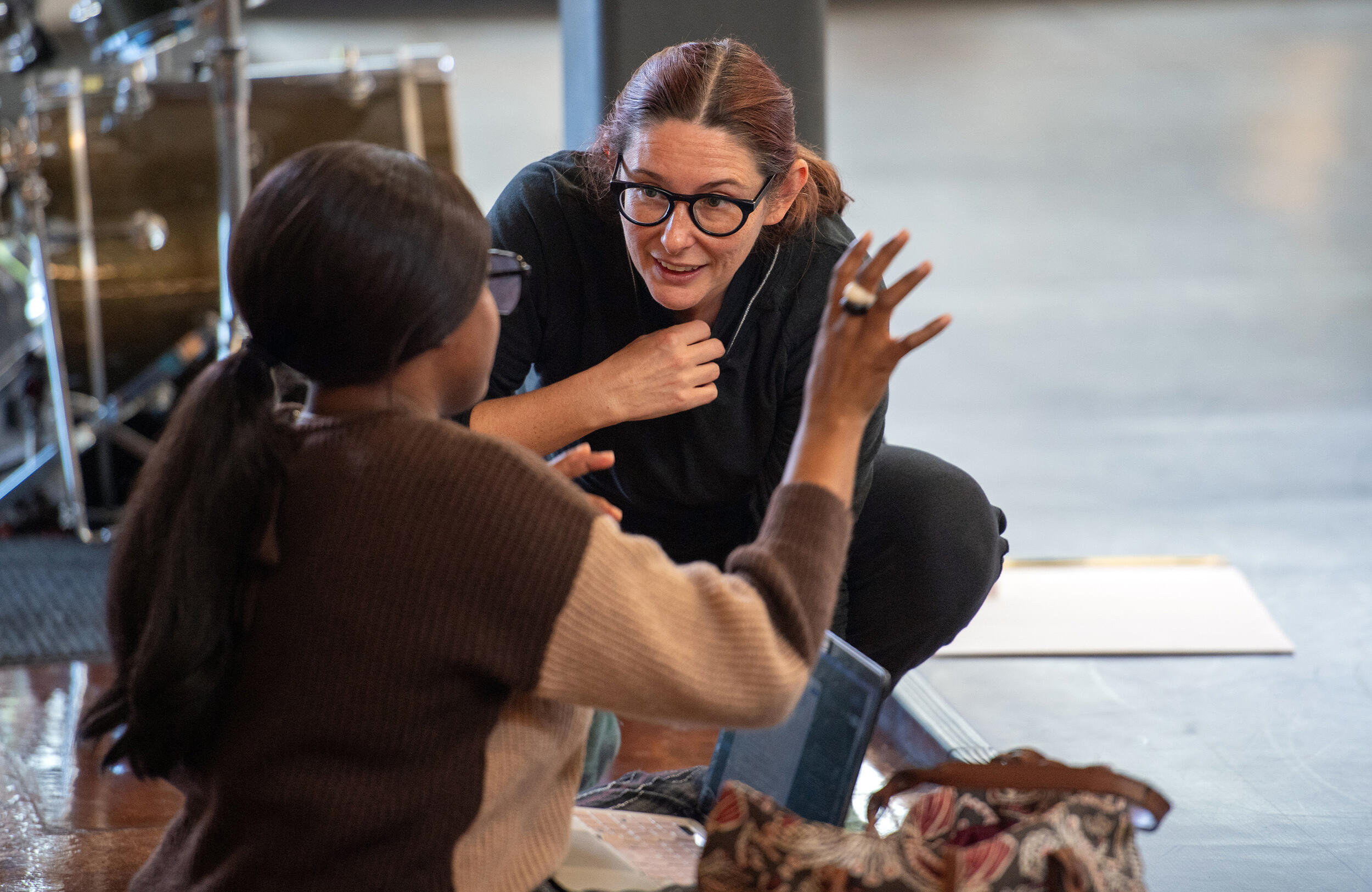
Kate Sicchio may never have discovered her love and talent for integrating dance with technology had an injury not sidelined her.
She was pursuing a bachelor’s degree in dance at Philadelphia’s University of the Arts, and the school “encouraged me to put dance and technology together,” Sicchio said. “I had an epiphany moment. That was the point in my career that I [became determined] to find ways that these two fields go together.”
Now an associate professor of kinetic imaging as well as dance and media technologies in Virginia Commonwealth University’s School of the Arts, Sicchio, Ph.D., is taking her next steps with some VCU partners. She is among this year’s recipients of a VCU Convergence Team Planning Grant, which provides up to $10,000 to faculty teams whose cross-disciplinary projects address complex societal challenges.
Working with associate professor of rhetoric and writing Caddie Alford, Ph.D., and assistant professor of philosophy Frank Faries, Ph.D., Sicchio is piloting the project, “Bodily Intelligence: Examining Computational Algorithms for Dance and Choreography.”
Sicchio said that while most algorithms are conceptually, theoretically or mathematically driven, choreography is an art that can also be expressed through algorithmic computation.
“There are a lot of similarities between how programming a computer is structured and how choreography is structured,” she said. “We want to look at AI systems from a more bodily perspective, since most of them do not take embodiment into account – which is how people interact with the world.”
With a portion of the funding, the team will run a series of practical workshops with local dance professionals to observe different movement methods and how to apply them to algorithmic development.
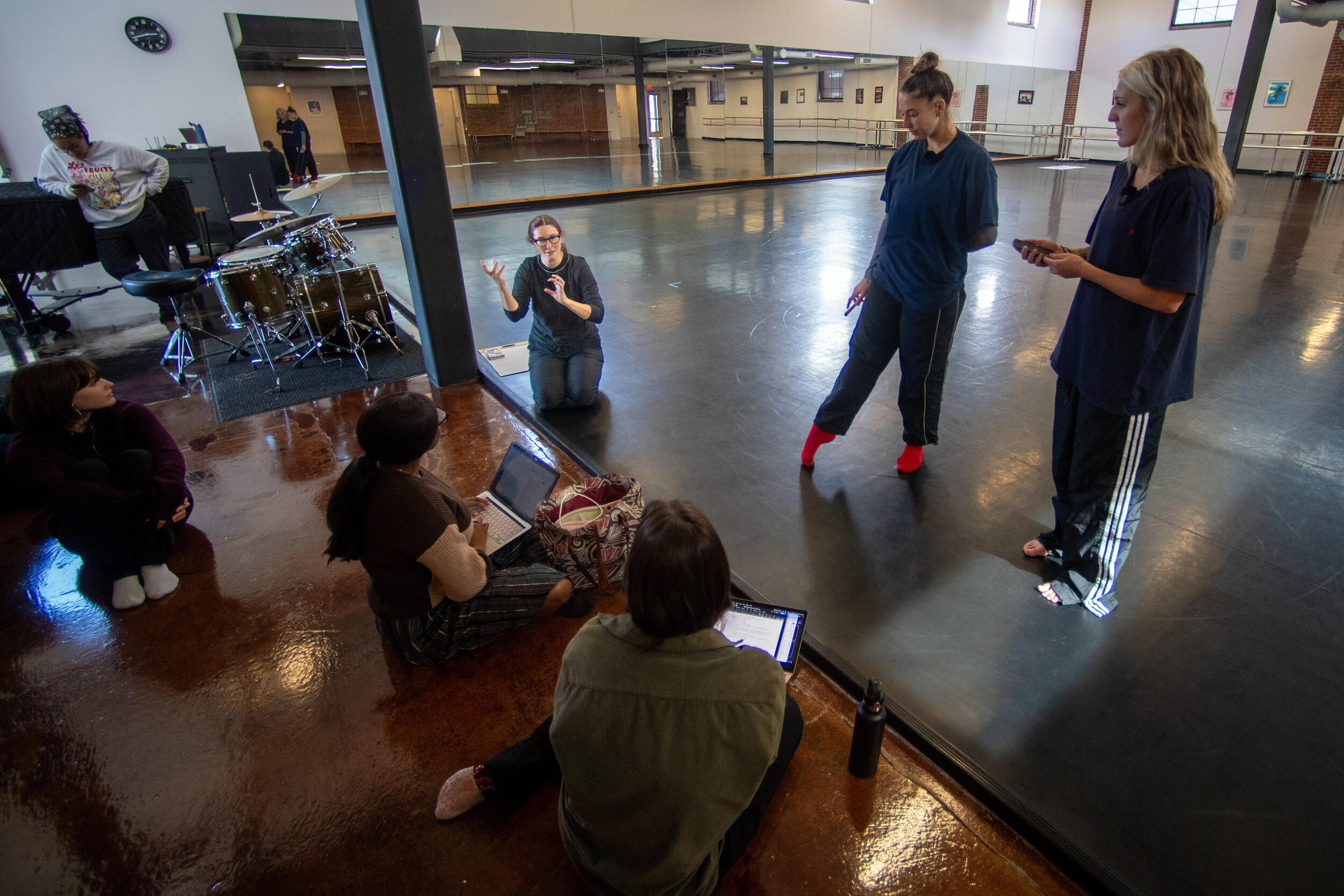
In one session, Sicchio said, “we used a sensor system I designed with accelerometers that control sound on dancers to see if they can sync their movements to produce more harmonious results.”
Each team member will use their varied expertise to study and apply various concepts. Faries will study embodied cognition through the workshops’ applications, and Alford, who co-runs the AI Futures Hub within the Department of English in the College of Humanities and Sciences, will examine how people talk about AI systems, with the team’s work being documented in a book chapter she will publish.
An essential component of AI development is for computer systems to perform as quickly and efficiently as possible, Sicchio said. Through their research, the team will consider how, in certain scenarios, it is more advantageous to program systems for slow, deliberate movements – as dancers often demonstrate.
“If you want to train a robot to [perform a task] like picking someone out of a hospital bed and into a wheelchair, you don’t necessarily want the robot to move fast and efficiently,” she said. “You want it to think about the most considerate path and the one that makes that person most comfortable.”
The team will host a small public showing of the practical dance elements they developed in February 2027 at the Richmond Movement Center.
Subscribe to VCU News
Subscribe to VCU News at newsletter.vcu.edu and receive a selection of stories, videos, photos, news clips and event listings in your inbox.