April 17, 2026
The future of data centers and AI might surprise you
Share this story
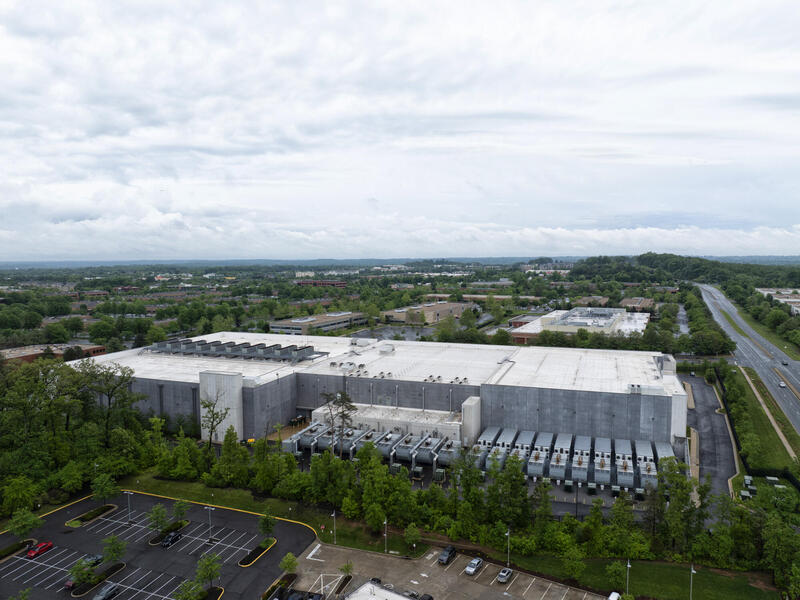
Virginia is home to the most data centers in the nation – more than 600, which is one-third of all the data centers on Earth. Driven by advances in artificial intelligence, more data centers are being built to house the computer systems and technology that support AI’s expansion into all corners of work and life.
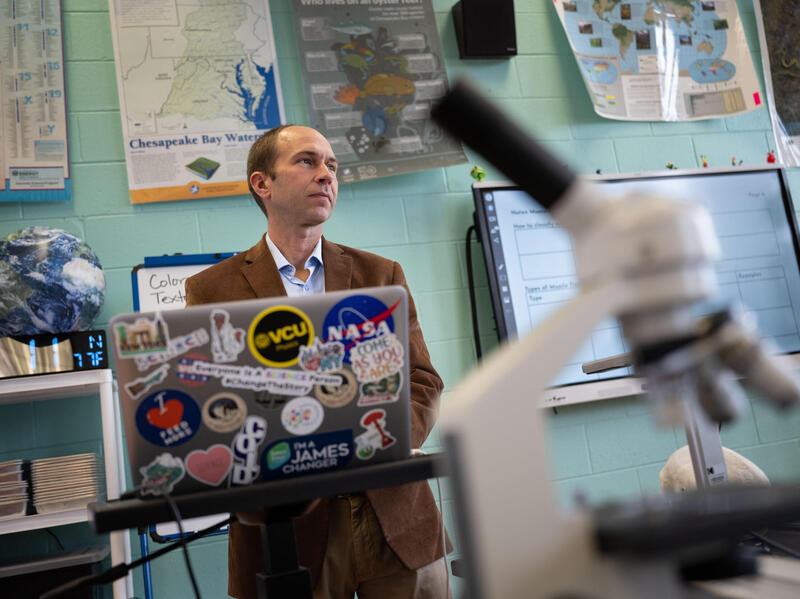
While some growth is inevitable, Peter Aiken, associate professor at the Virginia Commonwealth University School of Business, expects a “softening” of this peak. Aiken, Ph.D., is a data management authority who specializes in information systems, and over more than three decades, he has helped organizations leverage data to save an estimated $1.5 billion.
“We are approaching a ceiling driven by community pushback and inevitable engineering efficiencies,” he said.
Several other looming factors could fundamentally shift the landscape, moving us from a centralized model to a more distributed – and contested – reality, Aiken said. Those include the rise of “local AI” – the ability to run sophisticated models locally on laptops or even smartphones – and the threat of an AI winter if the hype cools down.
“For investors and localities alike, gambling everything on this industry right now carries substantial risk,” he said.
VCU News caught up with Aiken for some big-picture assessments of the data center landscape – and a bit of crystal-ball prediction, too.
To set the scene, what’s behind the explosive growth of data centers, and why are they so controversial?
In many ways, we have reached this point through a competitive “comedy of errors.” Because future demand for AI is impossible to predict, Big Tech has entered a strategic arms race. The logic is simple but dangerous: “If my competitor is building 100 data centers, we must build 200 to ensure we aren’t left behind.” Combined with low-risk financing and aggressive vendor marketing, this has created a cycle of over-provisioning that feeds on itself.
While data centers are the backbone of our digital lives, they impose heavy “physical” costs on their host communities: utility strain, water scarcity, economic imbalance and environmental noise.
What excites you most – and scares you most – about how data centers are taking hold?
I will answer both together because in the world of data, the greatest opportunity is often the greatest risk.
What excites me is the “knowledge worker’s superpower.”
If you have not yet experimented with generative AI, you must. As a researcher and educator, I want my team to be appropriately augmenting and enhancing their ability to contribute. Ignoring AI’s potential has never been an option; for any knowledge worker, investing $20 a month in a professional version is essentially investing in a personal “research assistant” that never sleeps.
The capabilities are breathtaking. For example, as a global professional, I find it wonderful that I can now generate a video in Mandarin to address my Chinese colleagues directly – bridging language gaps that once took years to cross. AI is democratizing expertise and scaling human creativity in ways we are only beginning to understand.
And now, what is keeping you up at night?
What keeps me up is the death of “seeing is believing.”
The flip side of that Mandarin video is the “dark side” of data. The same technology that allows me to communicate across borders also enables “deepfakes” that are becoming increasingly difficult to spot in the wild.
What keeps me up at night isn’t just the technology itself, but the harmful effects on our social fabric. When we can no longer trust our eyes and ears – when “proof” can be manufactured by a data center in seconds – the cost to society is immense.
As data centers scale, they don’t just process information; they process the very reality we rely on to make informed decisions. Maintaining data integrity and ethical governance in this environment is the greatest challenge my field has ever faced.
Give us a prediction that you think will notably shape the evolution of data centers.
First, the current era of building massive, power-hungry monoliths just to see who can house the most GPUs is unsustainable – both environmentally and economically. My prediction is that the “arms race” of 2024-2025 will shift into an efficiency race. We will see a massive move toward Edge AI, where sophisticated models are “shrunk” to run locally on your phone or laptop.
This won’t just be for convenience; it will be a necessity to bypass grid congestion. The most successful organizations won’t be those with the most data, but those who can deliver the most intelligence with the smallest energy footprint.
You said “first” for that one – what is another prediction?
Second, until now, storage has been so cheap that companies have behaved like digital hoarders. But as data centers face increasing local pushback and rising utility costs, the “tax” on redundant, obsolete and trivial data will become too high to ignore.
I predict we are entering the era of “data sufficiency.” Organizations will finally stop trying to “manage it all” and start investing in the data discipline required to delete the 80% of their data that adds no value. This “lean data” movement will do more to solve the data center crisis than any new cooling technology ever could.
In short: The future of data centers isn’t just about building bigger boxes – it’s about being smarter about what we put inside them.
Frequently Asked Questions About Data Centers and AI
What are AI data centers?
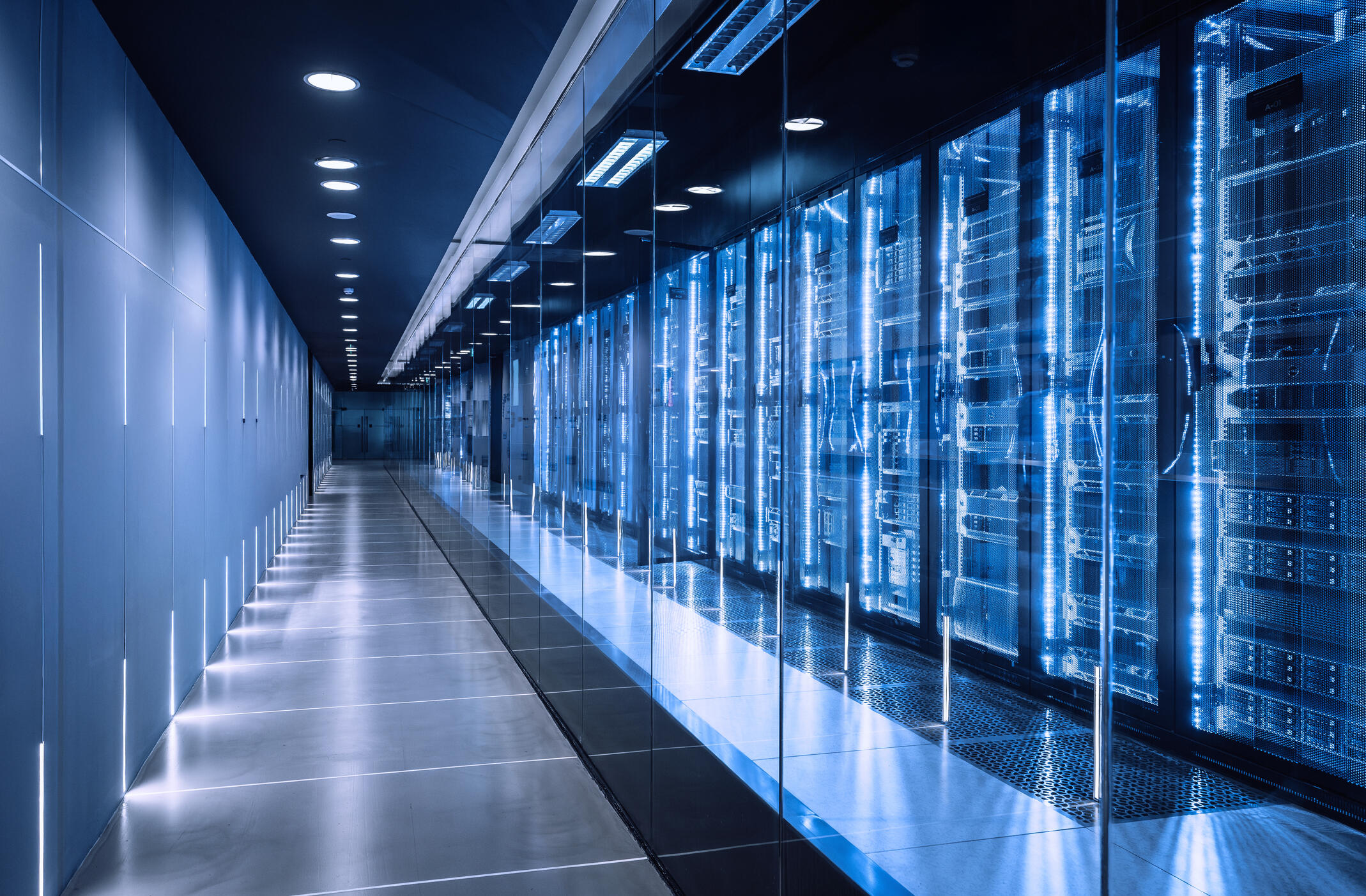
AI data centers are specialized facilities designed to store, process and manage the large volumes of data required to power artificial intelligence technologies and applications.
Why is Virginia a hub for data centers?
There are many data centers in Virginia due to its strong internet infrastructure, access to power, and proximity to major government and business networks. Northern Virginia communities such as Ashburn, Reston, and Loudoun County have become global hubs for data center development, with additional growth expanding into areas like Prince William County and Henrico County.
What is Edge AI?
Edge AI allows artificial intelligence models to run directly on local devices like smartphones and laptops instead of relying on centralized data centers.
Subscribe to VCU News
Subscribe to VCU News at newsletter.vcu.edu and receive a selection of stories, videos, photos, news clips and event listings in your inbox.