Aug. 13, 2008
Infectious diseases conference offers ongoing support for female health care workers from developing countries
Share this story
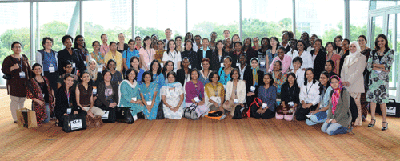
Female health care workers from developing countries in Africa, Asia and the Indian subcontinent attended the 13th International Congress on Infectious Disease held in June in Kuala Lumpur, Malaysia.
Their participation was made possible through a $250,000 grant from the Bill and Melinda Gates Foundation. The principal investigator of the grant is Richard Wenzel, M.D., chair of internal medicine, VCU School of Medicine and president of the International Society for Infectious Diseases (ISID).
Wenzel, an internationally recognized expert in infectious diseases, has helped implement a professional development program for the women to provide an opportunity for networking with leaders and experts from the ISID. The program is designed to help them to gather information and apply the new knowledge to improve the standard of care for women with infectious diseases in their home countries.
The grant to the ISID allowed 77 women with careers in medicine, nursing, public health and infectious diseases to attend. They interacted with approximately 3,300 infectious disease experts from 130 countries who shared the latest scientific findings and emerging trends in the field.
Participant Diana Antonia Rutebarika was part of a team offering care for persons infected with HIV/AIDS in her home country of Uganda. In a thank-you note to organizers, Rutebarika wrote that the event "was so enlightening, educative and challenging to young professionals like myself. It was at this same event that the role of mentorship (something that I hadn't adopted) was branded to me on a personal level."
During the Congress, the women were teamed up with mentors who are leading experts in the field of infectious diseases. Organizers hoped the participants would form long-lasting bonds with their mentors and each other.
According to Wenzel, there will be a six-month, post-meeting follow-up to identify what progress and changes the women have been able to make in their home nations.
In many developing nations, there is a critical need to boost the global shortage of physicians and improve patient care, especially for women suffering from various infectious diseases such as HIV/AIDS, drug-resistant tuberculosis and malaria.
Subscribe to VCU News
Subscribe to VCU News at newsletter.vcu.edu and receive a selection of stories, videos, photos, news clips and event listings in your inbox.