Dec. 6, 2002
O'Connell becomes chair of Human Genetics
Share this story
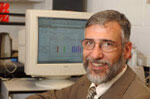
Peter O'Connell, Ph.D., says he was looking for a new challenge and - after eight years in Utah and 11 years in Texas - a return to the East Coast.
"I like this part of the country better than Texas," says Dr. O'Connell, who became professor and chair of VCU's Department of Human Genetics on July 1, succeeding Dr. Walter Nance.
O'Connell has several priorities for growing the department. One goal, he says, is to build on the strength of the behavioral genetics program, using resources that have been developed through 15 years of adolescent twin studies by the Mid-Atlantic Twin Registry and the Institute of Psychiatric and Behavioral Genetics to study gene-environment interactions in adult-onset disorders, such as heart disease and Type 2 diabetes. He is also working with the Massey Cancer Center to study gene-environment interactions in predisposition to cancer.
O'Connell hopes to recruit faculty members to help incorporate new genomic technologies and processes into the department's research projects. These individuals could help identify genes involved in disorders of behavior, metabolism and cancer under study in Human Genetics and other VCU departments. "More top talent and technology equal more federal research dollars for VCU," he says.
He also will emphasize a tighter link between genetic research and patient treatment.
"We're very good at accomplishing research objectives," he says. "We're not nearly as good at converting our accomplishments into practical clinical applications or even explaining their relevance to the public." As a result, additional department objectives include developing laboratory-to-patient "translational research" projects and using the department's genetic counselor program to "bring our research into the clinical setting."
O'Connell came to VCU after three years as a professor of cell biology, human genetics and pathology at Baylor College of Medicine in Houston. He spent eight years in the Department of Pathology at the University of Texas Health Science Center in San Antonio. Previously, he was an assistant professor of human genetics at the University of Utah Medical School in Salt Lake City. Past accomplishments include co-invention of the DNA marker-based individualization technology extensively used for paternity and forensic identification and identification of a number of genes involved in inherited disorders, such as the "Elephant Man," or neurofibromatosis, Type 1 gene.
O'Connell's research focuses on mapping genes causing common inherited and acquired diseases. His current research is aimed at identifying genetic changes that define subtypes of breast cancer and examining how these can be used to guide therapy. Another project is identification of genes associated with predisposition to adult-onset, or non-insulin- dependent diabetes.
He has published extensively, and participates in the review of grant applications for several federal, state and private entities that fund genetic research.
O'Connell received his Ph.D. and BA in biology from Brandeis University in Waltham, MA and completed his post-doctoral training at the University of Utah Medical School.
Subscribe to VCU News
Subscribe to VCU News at newsletter.vcu.edu and receive a selection of stories, videos, photos, news clips and event listings in your inbox.