April 27, 2026
How I found my research: Tara Nikzad Joolhar loves both the challenges and surprises she finds in the lab
Share this story
How I found my research is an occasional series featuring VCU students sharing their journeys as researchers.
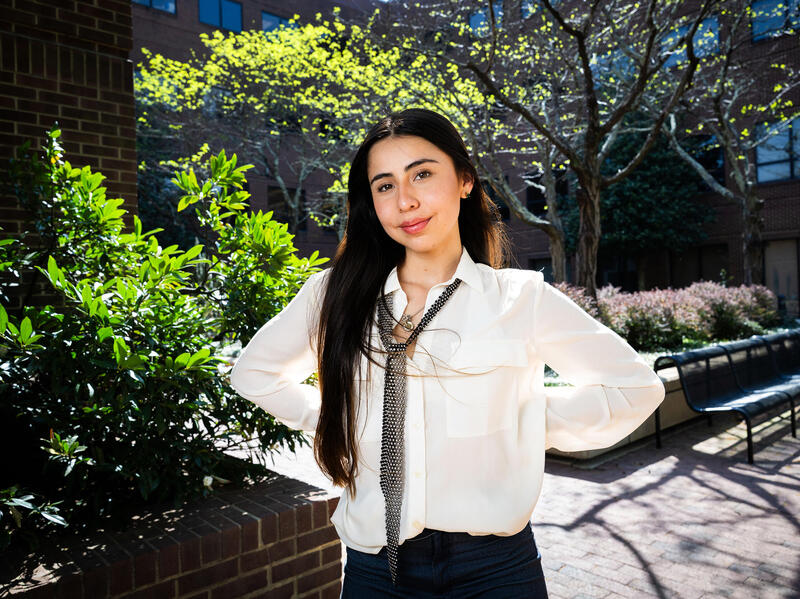
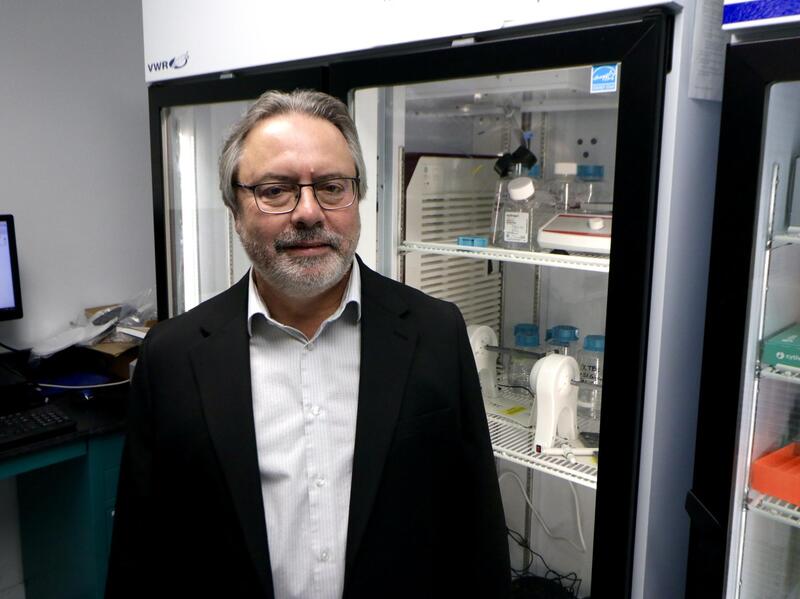
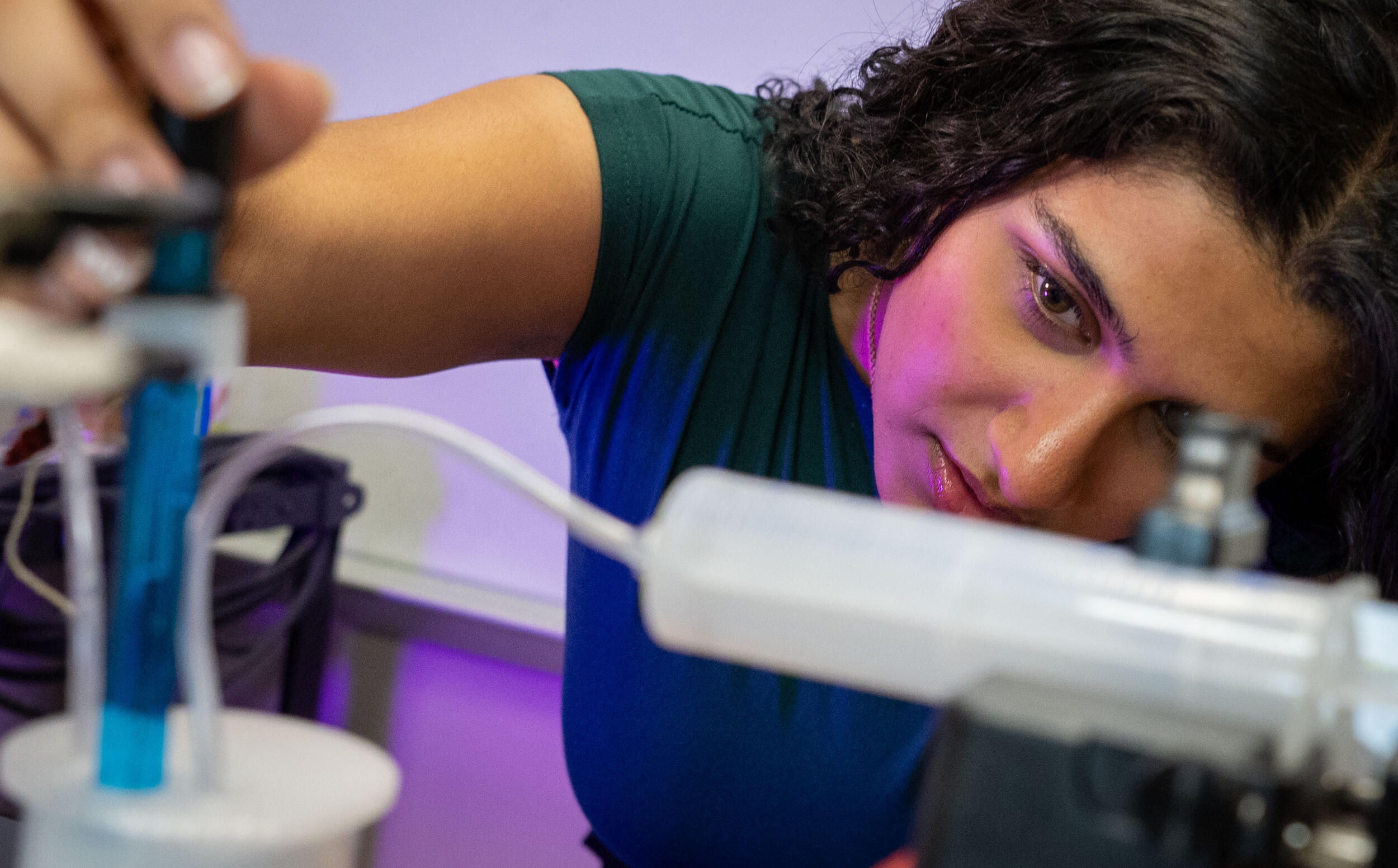
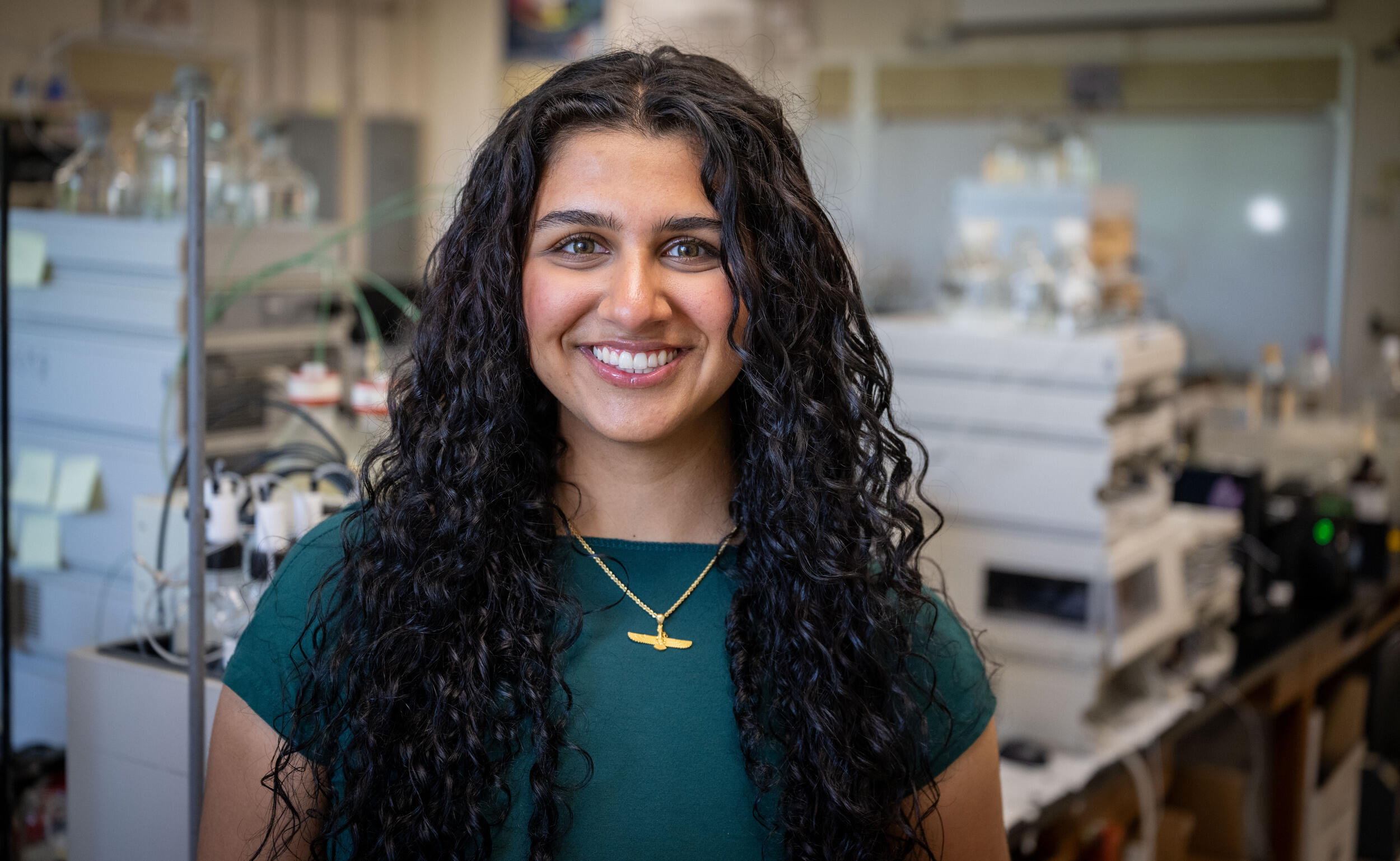
Tara Nikzad Joolhar found an ideal home to pursue her research ambitions at Virginia Commonwealth University. The Southern California native is working in the lab of Maryanne Collinson, Ph.D., the John B. Fenn professor of chemistry and chair of the department, and the fit with Collinson and her team has proved to be inspiring.
“I’ve been so lucky with the culture of my lab,” Joolhar said. “I’ve become close with basically everyone there, which makes such a difference in my drive and excitement for my work. Our environment is so uplifting, and people are always teaching and learning from one another without any judgment. Plus, my PI, Dr. Collinson, is truly one of the sweetest, most encouraging mentors I’ve ever had.”
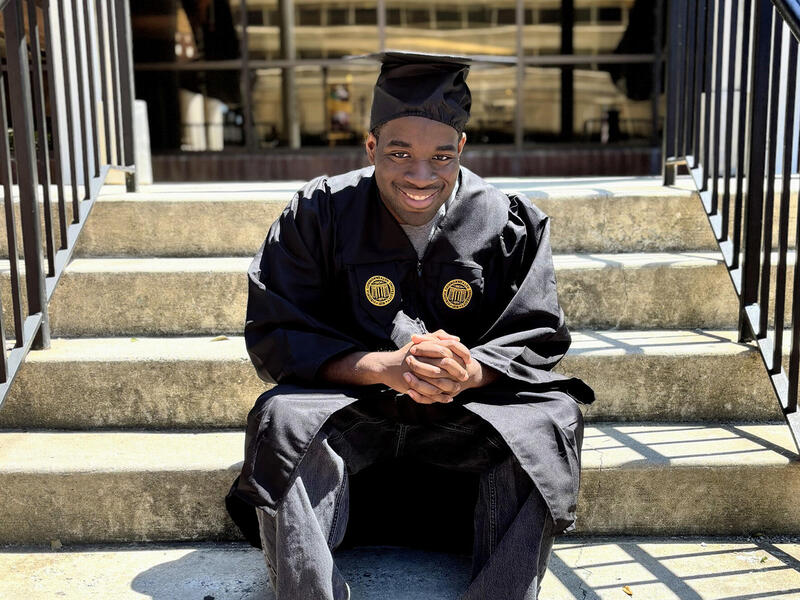
Joolhar is a senior majoring in science (with a concentration in professional science) and philosophy with a minor in chemistry from the College of Humanities and Sciences. She is graduating this spring as a 20-year-old after only three years at VCU, having arrived with 36 college credits from AP, IB and dual enrollment courses. She plans to apply for medical schools in the future, driven by a desire to form long-term connections with patients, and hopes to eventually build a career that would allow her to pursue research while mentoring others.
In an interview with VCU News, Joolhar shared the benefits of being challenged in research, the thrill of when a hypothesis works out and why surprises can be just as fulfilling as when a plan comes together.
In two sentences, tell us the focus of your research ... and why it is important/impactful for all of us.
My research focuses on using custom-engineered liquid gradients and 3D-printed systems to transform a simple, affordable lab technique into a high-precision tool for molecular analysis. By creating a low-cost way to accurately visualize how solvent systems affect resolution, I’m making advanced chemistry concepts (like chromatography and pH with amino acids) accessible to students and researchers who don't have the budget for expensive HPLC machinery.
What inspired you to pursue this line of research?
After taking Organic Chemistry 1 Lab, I took an interest in column chromatography and wanted to learn more about its limitations. It just so happened that a few weeks after that lab, the VCU Department of Chemistry had a Chemistry Connect featuring Dr. Collinson. There, I learned about her story with chemistry, how she worked to get where she is today, and it reminded me of how hard my mom worked as one of the few women in chemical engineering in Iran.
So I joined the lab, not even knowing a whole lot about chromatography yet, but excited and inspired to learn as much as I can.
Tell us about a surprise in your research journey.
The biggest surprise for me was definitely discovering a passion for 3D modeling and printing. To get my project moving, I used Tinkercad to design a custom 3D-printed setup, and I really enjoyed the process of creating these unique structures and constantly refining the models. Even now that the project is established, I find myself 3D modeling all sorts of things, like custom phone stands, just because I enjoy the creativity and precision of it.
Tell us about an obstacle or challenge you had to overcome in your work.
I’ve definitely had my fair share of challenges with chromatography, but the biggest hurdle was actually being able to see and trust my results. Thin layer chromatography is this classic, older technique that used to rely on just holding a ruler up to a plate, which isn't exactly the peak of scientific accuracy.
We tried using software like ImageJ to get more precise data on Rf values (a measurement of the molecule’s relative position on the plate), but then we’d hit a wall with the staining of the plate. Sometimes the plate would over-stain and get too dark, or a specific amino acid just wouldn't show up well enough for the computer to detect it.
It’s been this long process of trial and error just to get to a point where I can produce consistent, reliable results that I can actually use. And I’m currently at the stage where the results have been the most consistent, but for every problem solved, it’s quite easy to find a new one that needs addressing.
What do you find fulfilling about the research process?
It’s definitely that moment when a hypothesis finally comes to fruition. There’s this incredible little dopamine kick you get when you predict something, and then you see it actually happen right in front of you. I also love the surprises just as much. It’s very fulfilling when an experimental result (especially if it’s unexpected) teaches me something completely new about chemistry that I wouldn't have understood otherwise.
What advice would you offer undergrads to kick-start their own research journeys?
Go to as many seminars, events or conferences as you can! You never know what you’ll learn or how you’ll connect with someone’s research until you hear it from them yourself. Chemistry Research Connects, MCV Research Connects, Medical Journal Club and more offer direct ways to learn about people’s research, and sometimes all it takes is one PI and one story.
Subscribe to VCU News
Subscribe to VCU News at newsletter.vcu.edu and receive a selection of stories, videos, photos, news clips and event listings in your inbox.