Feb. 19, 2008
Science journal highlights physicist's work
Share this story
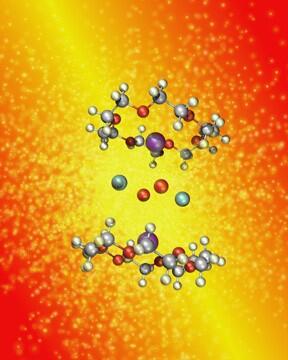
Shiv Khanna, Ph.D., professor of physics, and colleagues from VCU and Penn State, were recently highlighted in the Editor’s Choice section of the journal Science, as well as the trade publication Chemical & Engineering News, for the group’s work on the synthesis of an unusual inorganic ring molecule made of arsenic and tellurium, As2Te2-2, found to have magnetic and aromatic characteristics.
The
findings suggest that traditionally nonmagnetic elements can become
magnetic. For physicists, this work extends the understanding of
aromaticity and shows that it may occur in unexpected materials.
Magnetic
materials are used in a variety of applications, including magnetic
stickers, motors, credit cards, refrigerators, magnetic memory storage
and sensors.
“In this particular case, the interesting aspect
is that both the elements are traditionally semiconducting elements
that are nonmagnetic. We also expect the solid to be semiconducting
which is quite exciting because of the recent interest in
semiconducting magnets for quantum computing and spintronics,” said
Khanna.
According to Khanna, aromaticity and magnetism are generally thought
to be mutually exclusive; aromatic molecules are unusually stable and
nonmagnetic. The new molecule, As2Te2-2,
is ferromagnetic, suggesting a source of magnetism that is “new and
unknown.” This also shows that assembling materials with nonmagnetic
components may result in magnetic assemblies, suggesting that cluster
assembled materials may have unusual properties.
In the mid-19th
century, the term aromaticity was used to describe organic substances
that had pleasant smell, Khanna said. It was later used as a marker for
unusual stability of organic molecules and is linked to the delocalized
rings of charge that form above and below the stable molecular rings
and sometimes within the molecule itself.
Khanna said that the aromatic molecule synthesized by the team is unusually electron-rich. When one electron partially disrupts each ring, this leads to a magnetic moment, a distortion toward a parallelogram structure and an only partial disruption of the charged rings.
These findings were published in the January 2008 issue of the Journal of the American Chemical Society. Khanna collaborated with VCU researchers Arthur C. Reber and Meichun Qian and Penn State researchers Angel Ugrinov and Ayusman Sen.
Subscribe to VCU News
Subscribe to VCU News at newsletter.vcu.edu and receive a selection of stories, videos, photos, news clips and event listings in your inbox.