Aug. 10, 2026
VCU Rice Rivers Center offers its first coordinated summer session
Share this story
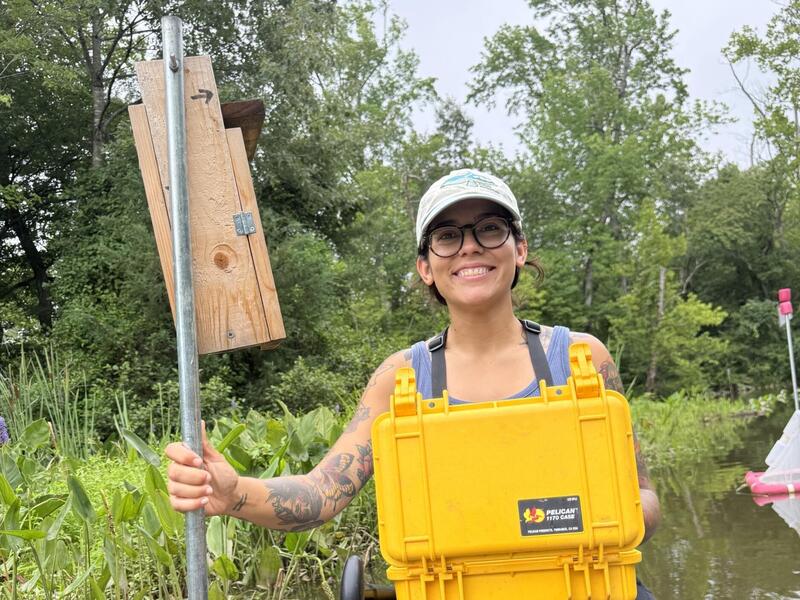
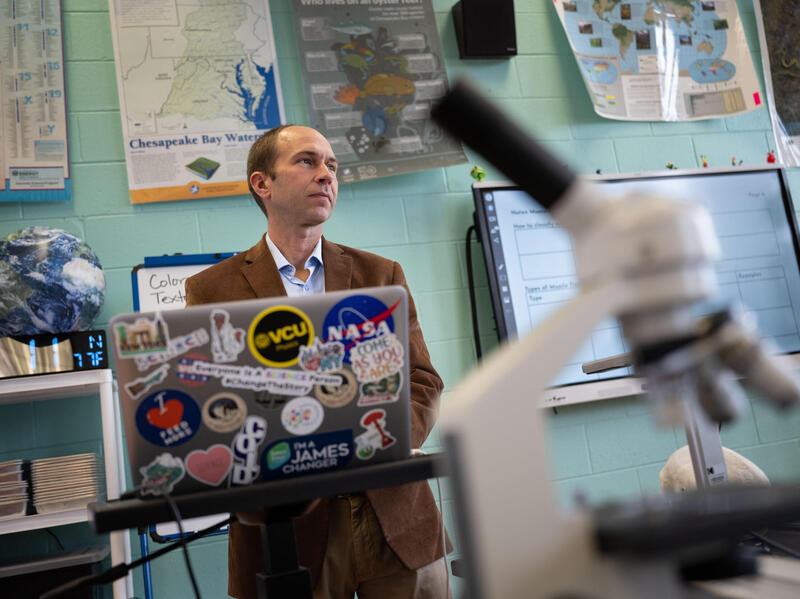
On their urban campuses in downtown Richmond, Virginia Commonwealth University students may not think about the insects and soil that surround them. But less than 25 miles away, VCU’s river campus – the VCU Rice Rivers Center – is increasingly putting them in touch with nature, including through its first-ever coordinated summer session this year.
At VCU’s field station in Charles City County, the session featured five courses – four that were new – and highlighted hands-on learning along the ecologically and culturally rich James River.
“We’ve never had a session with multiple classes taught concurrently,” said professor and forest ecologist Chris Gough, Ph.D., executive director of the Rice Rivers Center, which is part of VCU’s School of Life Sciences and Sustainability within the College of Humanities and Sciences.
The summer session’s four new courses were Mapping with Drones, Insect Research Lab, Ecology Lab, and Field Experiences in Anthropology. The fifth course, Footprints on the James, has been part of the Rice Rivers Center summer programming for several years.
The four new courses were supported by Faculty Instruction and Research Engagement grants, which facilitate teaching, training and research that strengthen collaboration among VCU’s downtown campuses and the Rice Rivers Center.
Gough called the summer session an extension of the center’s commitment to “immersive teaching and training experience, outreach, and community engagement activities and research.”
Course: Mapping with Drones
The Rice Rivers Center location gave the Mapping with Drones class direct access to a variety of natural environments, as well as an open airspace that is well-suited for drone operations.
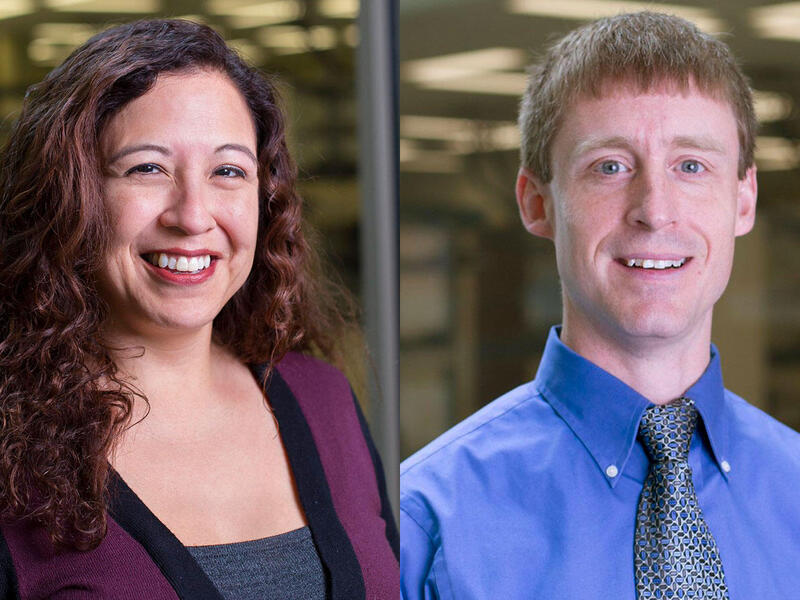
“That allowed students to safely learn flight skills and conduct mapping missions,” said assistant professor and remote sensing scientist Paige Williams, Ph.D., who taught the class with instructor and wetlands ecologist Ron Lopez. “The diverse landscapes, including forests, wetlands, fields and shoreline habitats, gave students the opportunity to collect and analyze data across different land cover types.”
The course emphasized not only how to fly drones but how to use them as scientific tools for environmental monitoring, natural resource management and geospatial analysis.
“Students prepared for the FAA Part 107 Remote Pilot certification, learned manual flight skills, planned autonomous mapping missions and collected aerial imagery at the Rice Rivers Center,” Williams said.
Becca Hoover, who was completing her final summer semester in the life sciences school’s graduate program, said the course offered a valuable skill tied to the latest technology and scientific methods.
“It gives my résumé a competitive edge,” she said, adding that the Rice Rivers Center offers students “abundant opportunities for hands-on drone data collection.”
Course: Insect Research Lab
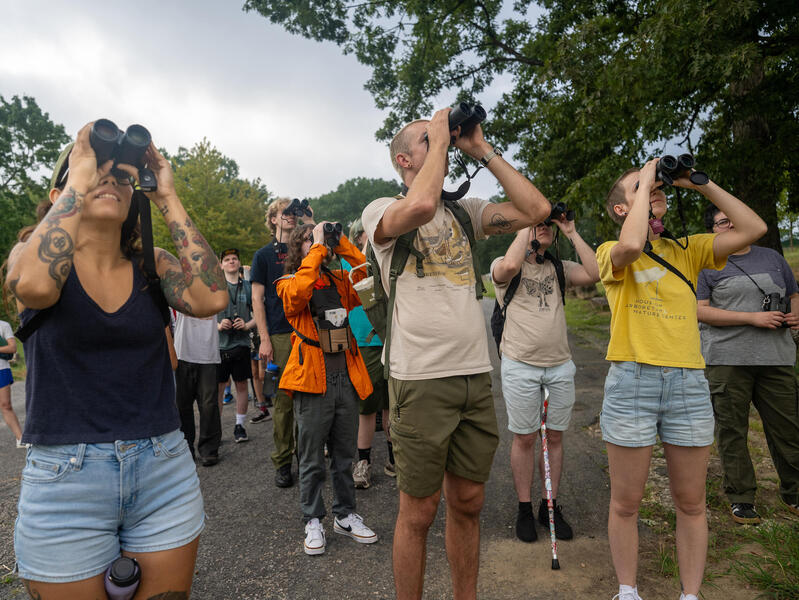
Students participating in the Insect Research Lab learned about insect identification, from common beetles to rare creatures, through hands-on practices. A goal was to help them build confidence and comfort with insects in their natural habitats.
“This course allows me to closely observe my students and help them develop sharper fieldwork skills,” said certified medical entomologist Wes Robertson of Henrico County’s vector surveillance and control unit, who taught the class with VCU assistant professor and entomologist Bret Boyd, Ph.D.. “My goal is for students to carry these foundational skills into any discipline they pursue and, more importantly, apply them directly to their future professional careers.”
Course: Ecology Lab
The Ecology Lab is also offered on VCU’s Monroe Park Campus downtown, but assistant professor and ecosystems ecologist Jeff Atkins, Ph.D., welcomed the chance to bring the lab to the Rice Rivers Center, where aquatic and forest biology could be emphasized.
Students used Kimages Creek on the center’s property to look at stream conditions and measure different species.
“We compared them to an urban stream, Reedy Creek in the city of Richmond, with equivalent water flow and found that species were more diverse at Rice,” Atkins said. “We also looked at the forests at Rice that had a bark beetle outbreak.”
Atkins and his students felt the lab component at the center added value to the class. “We hope to do the course again next year,” he said.
Course: Field Experiences in Anthropology
The new course enhanced research on the ancient DNA of corn pollen conducted by anthropology professor Chris Stevenson, Ph.D., and adjunct faculty Marie Vergamini in VCU’s School of World Studies within the College of Humanities and Sciences.
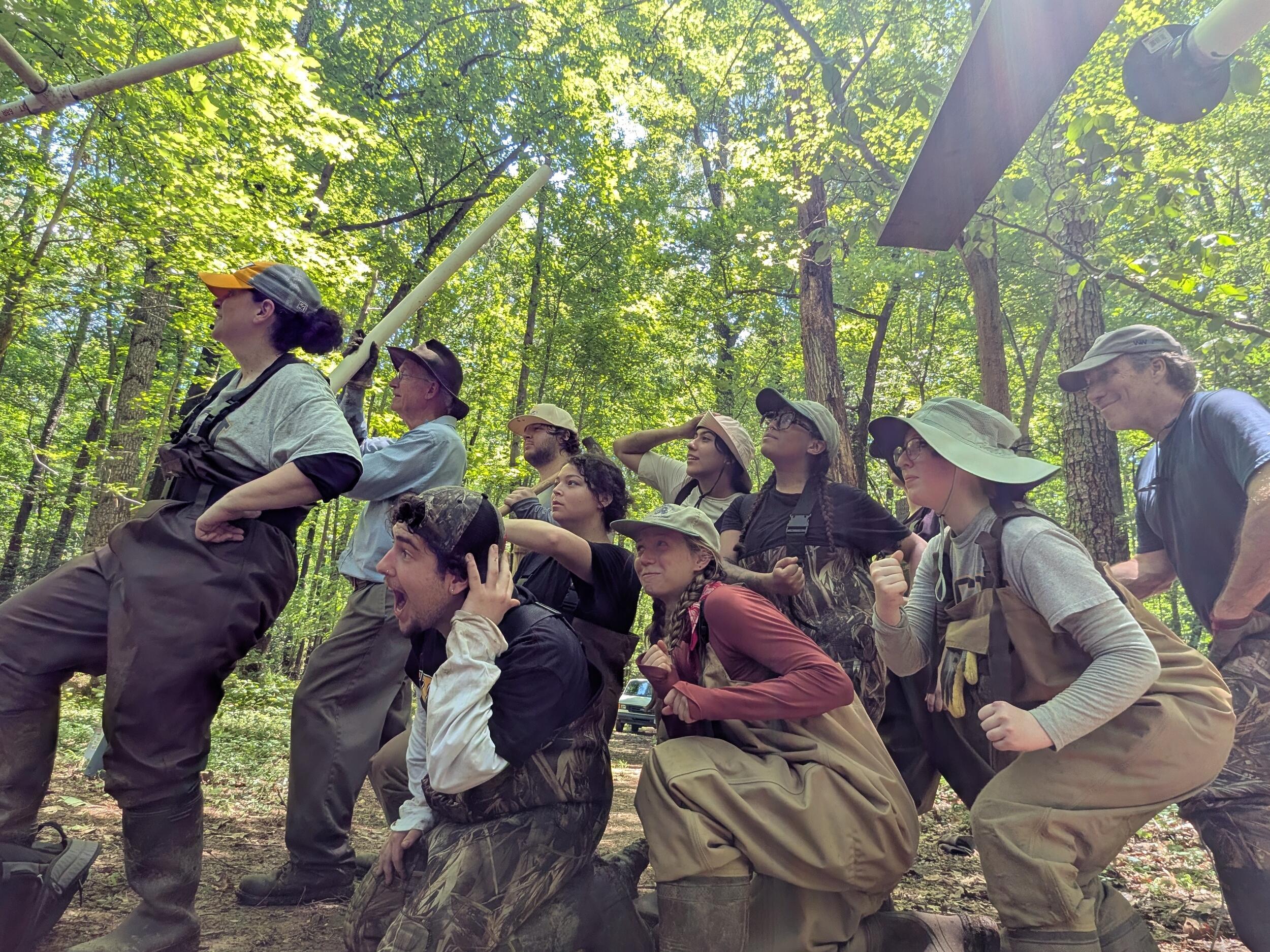
Students taking Field Experiences in Anthropology helped retrieve 6-foot core samples from the marsh by pushing a pipe into the ground, sealing it and pulling it out, a task that required some muscle and mental skill.
“The marsh created an incredible physics and physical challenge for us,” Vergamini said. “Essentially, as we pull out the core, the pressure of the marsh works against us, so our students were able to experience what every field worker experiences, which is finding a new solution on the fly while still out in the field.”
With some ingenuity, physical force and a farm jack (also called a hi-lift jack), students and researchers were able to extract a soil core from the marsh for analysis.
“We really had a great group of enthusiastic and bright anthropology students who were very excited and gung-ho about expanding their anthropology experiences with environmental sciences,” Vergamini said.
Course: Footprints on the James
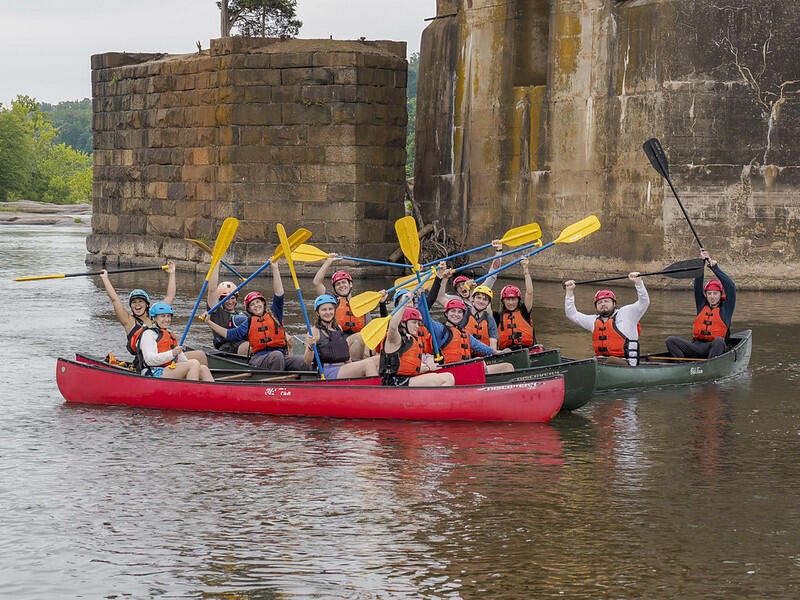
Footprints on the James, which debuted in 2014 and has been offered seven times since, is an immersive journey that lets students explore the biological and environmental components of the James River and its watershed.
“For students, it is also a living laboratory to develop skills useful for teamwork and group management,” said assistant professor and ecologist Daniel Carr. “These are particularly relevant in a field setting because they spend all day together and must share many elements of regular life as well as academic challenges.”
He noted that the Rice Rivers Center, whether in a summer session or during any season, offers a controlled setting through which students can be introduced to research, and life, in rugged or backcountry conditions.
“By using the residential setting at the center, the students learn about each other at the same time as they learn about the river,” Carr said.
Subscribe to VCU News
Subscribe to VCU News at newsletter.vcu.edu and receive a selection of stories, videos, photos, news clips and event listings in your inbox.