Dec. 6, 2005
VCU professor curates exhibit to benefit Katrina students
Share this story
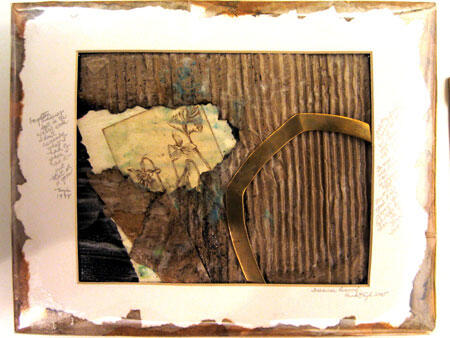
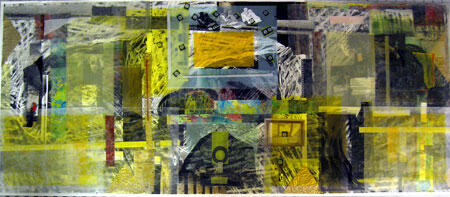
K.B. Basseches has long been fascinated with the power of water. Basseches, an assistant professor in the art education department at Virginia Commonwealth University, inherited the curiosity in part from her father, a maritime lawyer. A brother became a sailor.
Basseches was exploring her interest in water this August, developing an exhibit of her artwork for the Creative Change Center in Richmond, when Hurricane Katrina struck the Gulf Coast. The storm’s flooding ravaged communities, capturing Basseches’ attention both as an artist and as a person.
Determined to respond to the tragedy, Basseches conceived of an innovative project designed to give artists the opportunity to react to Katrina the best way they could. She decided to use the gallery space she had secured to organize a large exhibit dedicated to allowing artists to reply to Katrina creatively while simultaneously contributing to relief efforts.
“I felt responsible for helping,” Basseches explained. “And this was one gift I could give.”
The resulting exhibit, “… and the levee broke: meditations on the power of water,” is running from Dec. 1 to Jan. 3 at the Creative Change Center at 1801 E. Cary St. A reception for the exhibit will be held Dec. 8 from 5 to 8 p.m. The reception will feature original movies on the power of water made by students and faculty from the VCU Kinetic Imaging Department. The event will also include music from Keith D. Hanlon, who will play the flute, and Leilani Mork, who will play the piano.
The proceeds from the sale of artworks will benefit the National Art Education Association Katrina Fund, which serves children displaced by the Katrina disaster. Dick Blick, the art supply company, has already donated $25,000 to the fund and has agreed to match any additional proceeds up to $25,000. In addition to the original artworks, printed cards of some works will be available for purchase.
Visitors to the Creative Change Center will discover an exhibit that samples an unusual breadth of artists, spanning several generations and much of the United States. The exhibit was open to students in kindergarten through 12th grades, as well as college-student artists and professional artists. The result is a dynamic and moving experience.
“I’ve never seen a show like this,” Basseches said. “The art comes from a lot of different motivations and places. The children — sometimes through just their raw materials — can create something every bit as exciting as a professional artist. It’s amazing to see.”
Basseches worked tirelessly to spread the word about the exhibit and her efforts were rewarded. There are hundreds of pieces hanging at the Creative Change Center’s 5,000-square-foot space. Submissions of artwork came from across the United States and from as far away as Turkey.
Artists from the Gulf Coast region are well represented, according to Basseches. She said they showed an eagerness to address the disaster in their art.
Basseches said a number of graduate students have contributed long hours to making the exhibit a reality. Several VCU students and faculty members also contributed artwork. Kathryn Helms, a graduate student in the art education department, said the exhibit was immediately intriguing.
“From the first e-mail K.B. sent, I thought this just sounded like a great way to get involved and to help,” Helms said. “A lot of us felt like we had our hands tied. We couldn’t give money or get on a plane and go down to help. We didn’t really have a good way to contribute. This was a good way for some of us to contribute.
Jan Johnston, a graduate student in the art education department, said the exhibit’s inclusion of young budding artists proved to be a productive teaching tool in many classrooms. Basseches said it was important to her that the exhibit served the overall goal of art education. Art teachers used the exhibit to create assignments for their students, who were energized by the prospect of having their work on display for a large audience.
“This is a way to get those in the art community to assist with the recovery portion of this, but it’s also an opportunity to engage with the students,” Johnston said. “They can produce artwork that will actually be shown to an audience. The kids will make something that gets shown in a gallery. For them, that’s very exciting.”
Johnston said the students created some striking art. In particular, she mentioned fourth-grade artists from the Gulf Coast who painted triptychs representing life before, during and after Katrina.
Inspired by the interest others from across the country have expressed in the exhibit, Basseches decided to make it a touring exhibit. She hopes to secure stops at locations in each region of the United States and already has confirmed a temporary home for the exhibit in Riverside, Calif.
Basseches said she has been pleased with the keen support for the exhibit – but hardly surprised.
“It has just confirmed my sense that we could make a difference,” Basseches said.
Subscribe to VCU News
Subscribe to VCU News at newsletter.vcu.edu and receive a selection of stories, videos, photos, news clips and event listings in your inbox.