April 21, 2010
VCU professor’s Brandeis biography earns raves
Share this story
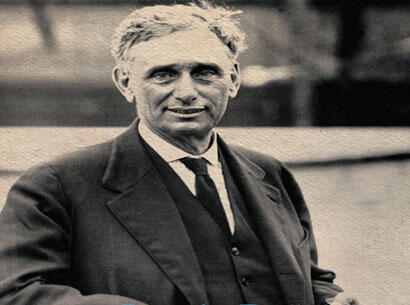
Biographers tend to spend many years immersing themselves in the lives of their subjects, interviewing the people who knew them, painstakingly poring over primary sources and deconstructing their subject’s work and accomplishments. In accruing the knowledge that resulted in “Louis D. Brandeis: A Life,” the biography that has been picking up praise since its publication in the fall, Melvin Urofsky delved into the life and work of Brandeis for a full 40 years.
Urofsky, professor emeritus of history and professor of law and public policy at VCU, has been studying Brandeis since he nearly wrote his dissertation at Columbia University on Brandeis and his influence on Woodrow Wilson’s New Freedom policies. He has co-edited a seven-volume collection of Brandeis’ letters, has written a couple dozen articles about the man and his work and has authored three books about him – including most recently, “A Life,” a 976-page goliath published by Random House in September.
Every time Urofsky believes he has finished with Brandeis, who was a U.S. Supreme Court justice from 1916 to 1939, a new project emerges. “My wife wants to know when he’s finally going to leave the house,” he says.
The interest that “A Life” has generated means that Urofsky is not done with him quite yet. Although it has been six months since publication, the biography continues to attract attention and has sent Urofsky traveling around the country to talk about the man who many consider the preeminent legal mind of the 20th century. Los Angeles; New York; Charlottesville; Madison, Wis.; Richmond; Louisville; Washington, D.C.; Baltimore; and New York again were all on the schedule in one six-week stretch this spring. Speaking engagements clutter his calendar all the way into the fall.
The prominent reviews have helped, including raves from such publications as the New York Times, the New Yorker, the Economist, the New York Review of Books, the Chicago Tribune, the Boston Globe and Kirkus Reviews. Alan Dershowitz, the author and lawyer who wrote one of two glowing reviews of the book for the New York Times, called “A Life” “a monumental, authoritative and appreciative biography.” Anthony Lewis, author of “Gideon’s Trumpet” and a writer that Urofksy particularly admires, wrote in the New York Review of Books that Urofsky’s book was “utterly fascinating” and that “his achievement is remarkable.”
The book was named a finalist for the Los Angeles Times Book Prize in the Biography category and Urofsky recently picked up the Everett Family Foundation Award from the Jewish Book Council for best non-fiction book of the year.
“I’m very pleased with what’s occurred so far,” Urofsky said. “It’s been on a roll. The book is still selling.”
After the demanding grind of researching and writing the book, Urofsky said the plaudits have proved rewarding – both a delight and a relief. The book took four focused years to write, including time to engage in new research and to return to research that he had done previously.
“I knew what I needed to look at and where to find it,” Urofsky said. “In many cases, it was a matter of re-familiarizing myself with something I’d already seen.”
Urofsky had access to thousands of letters Brandeis wrote, but very few of them revealed the personal side of Brandeis, who maintained his privacy even as he rose very publicly to prominence as one of the country’s most important intellectuals. Still, Urofsky spoke to many people who knew Brandeis well, such as his daughters, grandchildren and former clerks, and his assiduous study of the man over many years provides “A Life” with a keen sense of his personality.
Brandeis, Urofsky said, was a reserved and formal man, who nevertheless was extremely generous to those that needed help. He did not like to waste time and kept his office deliberately cold so that visitors would get to the point and not tarry. He loved jokes but did not know how to tell them. His clerks often were terrified of him initially, but gained an immense respect for him the longer they worked for him. Also, despite his many professional obligations, Urofsky was a devoted father who sometimes carried the responsibilities of a single parent because of the health issues of his wife.
And his influence was formidable. Reviewers have pointed to the strength of the analysis in “A Life” as an especially valuable asset of the biography. Urofsky said the breadth of Brandeis’ impact prevented him from writing in detail about every aspect of it. As reviewer Adam Kirsch noted in the magazine “Tablet,” the scope of Brandeis’ accomplishments were so great that a nearly 1,000-page book could still be considered “economical.”
“I couldn’t deal with every single reform,” Urofsky said. “I had to focus on the major ones. I only do an extensive analysis of the most important ones.”
As a lawyer, Brandeis pioneered the concept of lawyers performing pro bono work and he invented the Brandeis brief, a legal brief that placed legal arguments in a larger context. Both have become common practice. He was a prominent reformer who took on cases against a range of large, powerful interests, often winning major concessions for workers and others.
As a Supreme Court justice, Brandeis was the author of the constitutional right to privacy and developed the modern jurisprudence of free speech, among other critical matters. Even when he could not win over his colleagues, Brandeis’ opinion resonated – Urofsky said nearly all of Brandeis’ dissents later were adopted into law.
Urofsky also sheds light in “A Life” on some aspects of Brandeis that are not as well known as his legal efforts, such as his spirited warnings about the need to check the growth of financial institutions and to separate banking and brokering – warnings that the recent economic crisis in the United States has proved prescient, according to Urofsky – and his steadfast spearheading of the early American Zionist movement, which Urofsky said still defines the relationship between Jewish Americans and Israel.
Subscribe to VCU News
Subscribe to VCU News at newsletter.vcu.edu and receive a selection of stories, videos, photos, news clips and event listings in your inbox.