Jan. 19, 2010
VCU School of Engineering research selected by NSF to be presented to Congress
Share this story
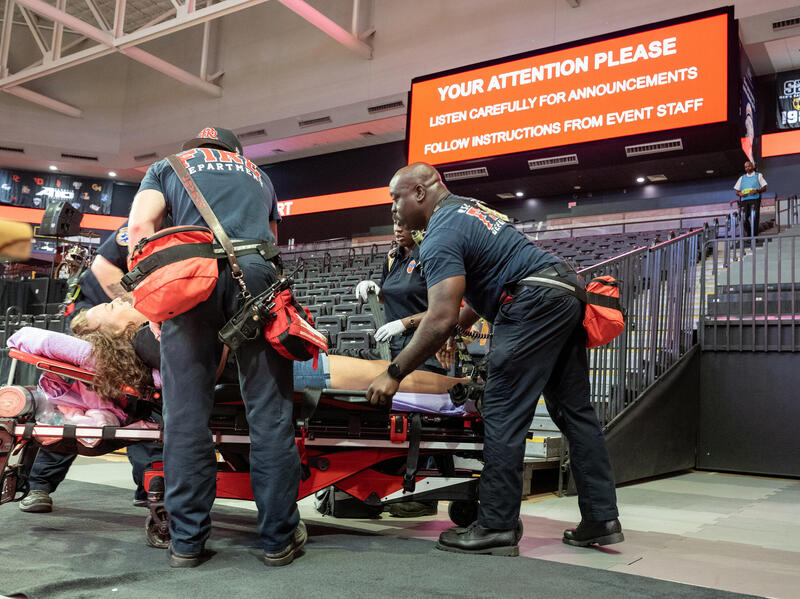
The rapid pace of activity inside an ER is indeed challenging. A medical team treating traumatic injuries caused by a car wreck or major fall must work extremely fast to save lives. However, making an accurate diagnosis and beginning an appropriate course of treatment requires them to review a vast amount of patient data, including biomedical signals, images, trauma scores and lab results.
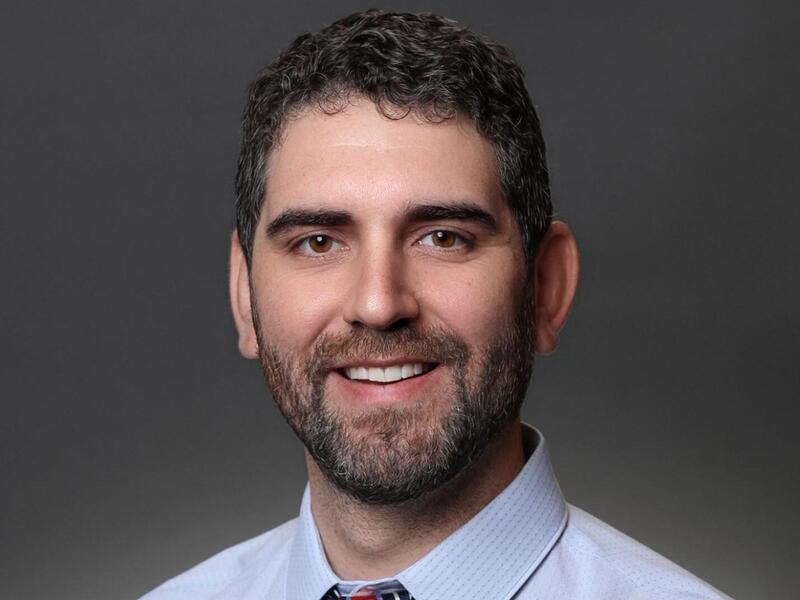
In this situation, the decision-making process is a complex one, but Kayvan Najarian, Ph.D., associate professor in the Department of Computer Science in the Virginia Commonwealth University School of Engineering, hopes that the computer-aided decision making platform he and his team have created will change the way critical care is practiced by providing real-time assistance to physicians.
The work has involved close collaboration with medical experts, in particular Kevin Ward, M.D., associate professor in the Department of Emergency Medicine in the Virginia Commonwealth University School of Medicine.
Due to the transformative nature of Najarian’s research, the National Science Foundation has selected it as one of its top research grants and plans to present the work before Congress.
According to Najarian, the real-time system works at every stage of care, assisting physicians in the decision-making process by combining all available patient information and using it to generate warnings and treatment recommendations.
Raw data is extracted from biomedical signals and images – such as those from ECG, MRI and CT – and through computational modeling, key features are extracted and analyzed. Based on this analysis, the system generates recommendations and predictions, which are communicated to the medical team via a user-friendly interface.
“The extraordinary potential of computers in revolutionizing clinical care has been under-explored. Though decision-support systems have been proposed in the past, none has analyzed all available patient information to generate diagnosis and treatment suggestions in real time,” explained Najarian, who is director of the Biomedical Signal and Image Processing Lab at VCU, and co-director of the VCU Reanimation Engineering Shock Center, or VCURES.
“This project develops a system that overcomes these limitations and analyzes a vast database of prior cases, providing physicians with real-time advice based not only on the complete history of the individual patients, but also on the collective past expertise and experience of hundreds of other physicians,” he said.
Najarian added that the computational techniques involved here could be extended to non-trauma medicine, as well as non-medical fields including financial engineering, macroeconomics and information security.
This work was supported by a grant from the National Science Foundation.
Subscribe to VCU News
Subscribe to VCU News at newsletter.vcu.edu and receive a selection of stories, videos, photos, news clips and event listings in your inbox.