April 25, 2006
VCU’s Egyptian building to be commemorated with historic marker
Share this story
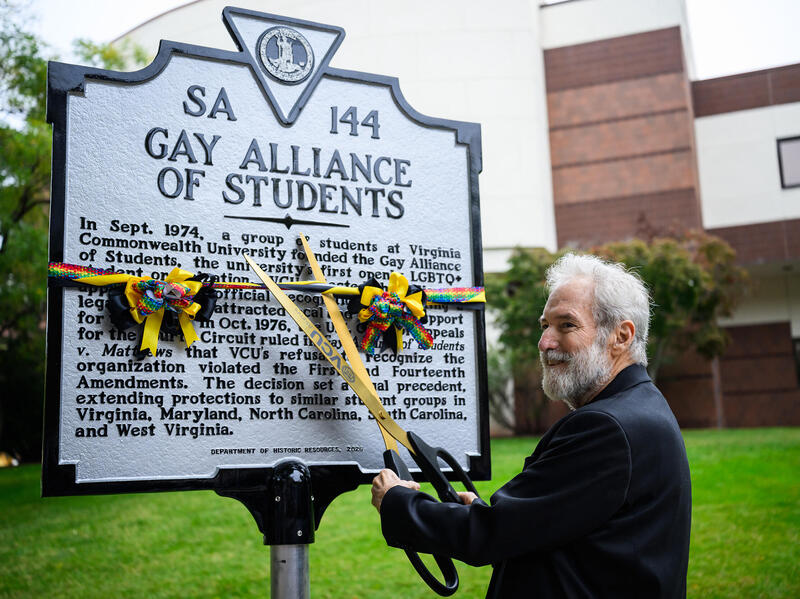
RICHMOND, Va. (April 25, 2006) — Virginia Commonwealth University’s Egyptian Building, a state and national landmark considered one of the finest examples of Egyptian Revival architecture in the United States, will get a roadside marker in a ceremony on Friday.
The Virginia Department of Historic Resources Roadside Marker will be unveiled and dedicated during a 1 p.m. ceremony Friday near the corner of Marshall and College streets on the MCV Campus. The building is located at 1301 E. Marshall St. Representatives from VCU, the MCV Foundation, the VCU Alumni Association and VCU Historic Resources will participate.
The effort to locate a historic marker at the site began with a group of students, alumni, and faculty members who are involved in a secret philanthropic society called the Junto Society (of the Medical College of Virginia Campus at Virginia Commonwealth University.) This organization recognizes physicians, scientists and students on the MCV Campus for extraordinary achievements, altruistic endeavors and community involvement.
Junto received approval for the marker last fall, and VCU paid $1,350 to create and install it.
The marker text reads:
EGYPTIAN BUILDING SA-72
In Oct. 1844, Hampden-Sydney College’s medical department first
held classes in this Egyptian Revival structure designed by
Philadelphia architect Thomas S. Stewart. Completed in 1846, it
provided educational and clinical facilities for the medical
school, which later became a centerpiece of the Medical College
of Virginia. It is now part of Virginia Commonwealth
University. The structure, named the Egyptian Building in 1927,
was extensively renovated twelve years later to carry the
Egyptian style to the interior. As one of the nation’s finest
examples of the Egyptian Revival style, the Egyptian Building
was designated a National Historic Landmark in 1971.
Department of Historic Resources, 2005
Subscribe to VCU News
Subscribe to VCU News at newsletter.vcu.edu and receive a selection of stories, videos, photos, news clips and event listings in your inbox.