Oct. 30, 2025
Feeling overwhelmed? Resiliency program teaches skills to VCU students
Share this story
Nick Echard was foundering. As a transfer student coming to Virginia Commonwealth University midway through freshman year, he was in a new area, surrounded by new people – and the pressures began to pile up.
As he juggled a job and his college coursework, Echard, now a third-year mass communications major, quickly became overwhelmed.
“I met with my advisor, and she essentially told me that if I were to continue on the [same] track, I would likely fail out of college,” he recounted. “And that is just terrifying to hear.”
With the help of a new resiliency program coordinated by academic advisors within VCU’s College of Humanities and Sciences, Echard got back on his feet – and began to thrive.
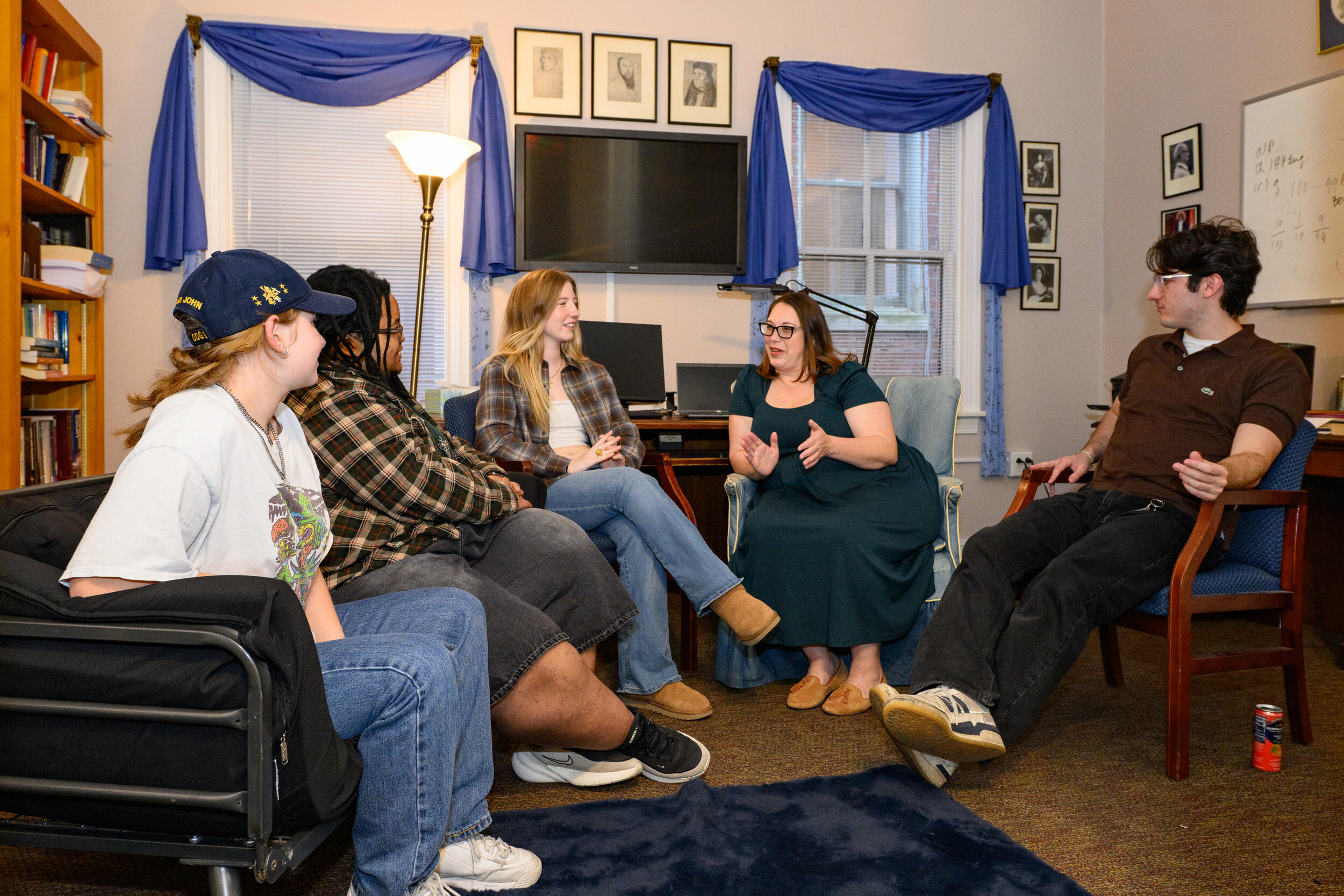
Now in its second semester, the program centers emotional learning, bringing together students for weekly meetings that focus on seven resiliency skills. From lessons on how to reach out for support to how to positively reframe one’s thinking, the program’s facilitators, including senior advisor Nicolette Zbell, provide relevant tools for the classroom and beyond.
“Resilience is more than just powering through circumstances or a personality trait that can’t be changed. It is a set of skills that can be taught,” said Rigby Bendele, associate director of advising for the humanities. “It’s important to equip our students with the tools that they need to do well in classes. That includes emotional skills such as the focus on learning how to reach out for help and build strong social support.”
The program is the brainchild of Melissa Siebert, an academic advisor with the college. She was inspired to explore resiliency after hearing from students who felt burdened in every realm of life.
As advisors, “we help students figure out their classes, but we’re also helping students with problems,” Siebert said. “Students are coming to us because they’re struggling with their life – how to figure out their life and how to balance working and school.”
When Siebert began researching resilience, she identified seven skills that make up the foundation of the program. Throughout the semester, student groups meet with advisors once a week, learning tools and addressing potential barriers.
“It’s just shifting perspective,” Siebert said. “And that can be incredibly helpful. Students [realize] it’s not all or nothing, it’s not … ‘I failed this exam and my life is over.’ It’s ‘I failed this exam, so let me break this down [and consider]: What do I have control over? What can I do now? What are the next steps?’”
While the program is currently focused on students who are studying within the College of Humanities and Sciences, the organizers hope to expand it to other schools at VCU as they enlist more advisors to facilitate. Students may register their interest by filling out an online form.
Echard credited the program for extending beyond academics and helping him address how he deals with anxieties.
“You need to have a level head to be productive, and if you’re going to the library and going to tutors and then finishing the day with a head full of anxiety and stress, that is not how you’re going to succeed,” he said. “Whenever a student is struggling, everyone always immediately jumps to academic help. … But with the [resiliency] group, something that is so special about it is that it’s academic help, but it’s not doing your homework with a tutor. It’s someone telling you that you’re going to be OK.”
For students experiencing challenges with schoolwork or social connections, the opportunity to talk to, and learn from, one another is crucial.
“They start to realize that they’re not the only one,” Siebert said. “Oftentimes students think, ‘Oh, I should know this already,’ or ‘I should be able to pass these classes, or ‘I’m having a hard time balancing work and school.’ But then they start to talk to other students and [realize] everybody feels that way.”
Echard, who is participating in the resiliency program again this semester, said the meetings continue to resonate.
“I might not be as anxious and worried as I was last semester, but that doesn’t mean that I should stop going,” he said. “When I did the program the first time, that was the strongest semester I have ever had … in my entire academic career. So I’m doing it again because if it’s not broken, don’t fix it.”
Subscribe to VCU News
Subscribe to VCU News at newsletter.vcu.edu and receive a selection of stories, videos, photos, news clips and event listings in your inbox.