Dec. 11, 2025
Commencement speaker Timmy Davis reflects on lessons learned during his high-stakes career
Share this story
Timmy Davis has several lifetimes’ worth of experiences. As a U.S. Marine, Davis served in the Horn of Africa and was part of the invasion of Iraq. Then, during his two-decade career as a diplomat, Davis returned to Iraq to help with reconstruction efforts, worked in a series of high-profile posts in the U.S. and abroad, helped to build a global coalition to combat terrorism and was the U.S. ambassador to Qatar. He’s traveled to dozens of countries and served in close supporting roles for statespeople as politically different as Hillary Clinton and Mike Pompeo.
During the course of his career, Davis has seen misery and tragedy. His work has kept him unsettled and perpetually on the move while facing intense pressure and weighty responsibilities. Inevitably, things have gone wrong – sometimes very wrong – as he has navigated no-win situations with solutions that were inherently imperfect.
Still, Davis, who will serve as the featured speaker at Virginia Commonwealth University’s commencement ceremony on Dec. 13, can’t imagine a different path for his life.
“I’m a big fan of comfort, and I like as much as anyone to sit on the couch on Saturday and watch college football,” Davis said. “But on the list of things that are important to me, comfort doesn’t really rank.”
Learning to search for nuance in the world
Davis was born in Quantico, Virginia, where his father, a U.S. Marine, was stationed. His dad served for nearly 30 years in the Marines, and his service included two tours of duty in Vietnam and two Purple Hearts. Davis attended schools in South Carolina and North Carolina, graduating from high school at Camp Lejeune, and then spent a year on a soccer scholarship at Mount Olive College before completing his studies at the University of Southern Mississippi and the University of Alabama.
After college, he followed in his father’s footsteps and joined the Marines, something he always knew he would do, ranking first in a company of 300 at basic training. During his decade in the Marines, which included a tour of duty in Iraq at the height of the conflict there, Davis embraced the discipline and sense of service required of him.
When the Foreign Service came recruiting from the Marines, Davis was intrigued and took the written and oral assessments. He qualified and started his diplomatic career in March 2004, envisioning a future of seeing the world and shaking a lot of hands. What followed was a lot more complicated.
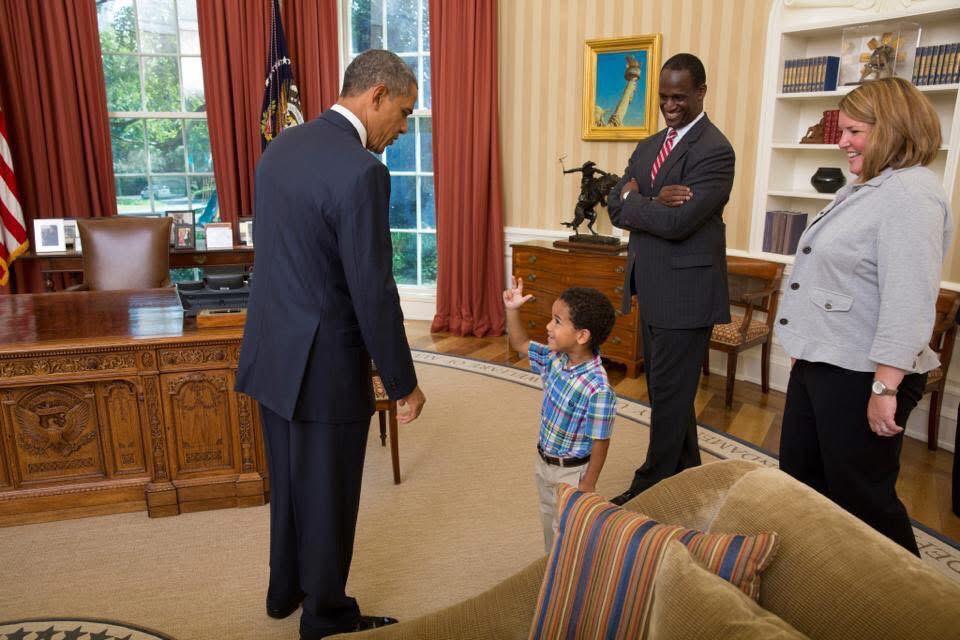
After four-and-a-half months in Guatemala, Davis answered a call for diplomats with military and regional experience to join the ongoing efforts in Iraq. He was stationed in Najaf.
“At the time, it was one of the most dangerous places on Earth,” Davis said. “They sent me there as a junior officer, and provided me with a Blackwater team, and they essentially said, ‘Good luck.’ And so for the next 18 to 20 months, I tried to make a difference in people's lives and tried to make things better for Iraqis. It was harrowing. There were death threats and bombings, and people lost their lives. When I left, I left with a great sense of guilt and responsibility for what was happening there.”
Among the more haunting episodes of his time there, Davis recalls a young sheikh who ran a charity for widows of police officers and soldiers and who Davis had convinced to work with him through the local reconstruction council. One day, the sheikh was ambushed and killed while en route to a meeting with Davis.
“He had his own family, and so it is some terrible irony that, because I convinced him to work with me, his own wife became a widow, and his kids lost their father,” Davis said.
Davis said he worries that we live in a “post-nuance” era and believes that career experiences such as the one in Najaf have helped him search for intricacies in the world that might otherwise have eluded him.
“When I showed up in Najaf as a new Foreign Service officer, I remember how struck I was by what I saw, because even as a Marine, I didn't get to see these things,” he said. “There were families walking their kids to school every morning. There were people working in shops. If you're sitting in the United States and you're watching a war on TV, they're only going to show you the things that blow up, right? The way you learn about some countries is only through the violence that causes them to be on the news. But when you're in it, you realize that largely people are all trying to do the same thing. They're trying to live their lives and take care of their families and live in peace. We can’t always see that, though.”
Davis left Iraq with PTSD and settled into a much quieter post in Canberra, Australia for more than a year, before transferring to the State Department Operations Center in Washington, D.C.
“I threw myself into work,” Davis said. “That’s the way that I was going to feel better and assuage my guilt. I said yes to everything because working was the way I took care of myself. It was my way of self-medicating.”
A dedication to diplomacy
Davis soon was tapped to serve as a special assistant to Secretary of State Hillary Clinton and then worked at the White House as the director for Iraq for the National Security Council. A position followed in Bogota, Colombia before Gen. John Allen, a fellow Marine, asked Davis to join the work to build a global coalition against the Islamic State of Iraq and the Levant. Davis visited 43 countries in just 10 months as part of the all-consuming diplomatic outreach.
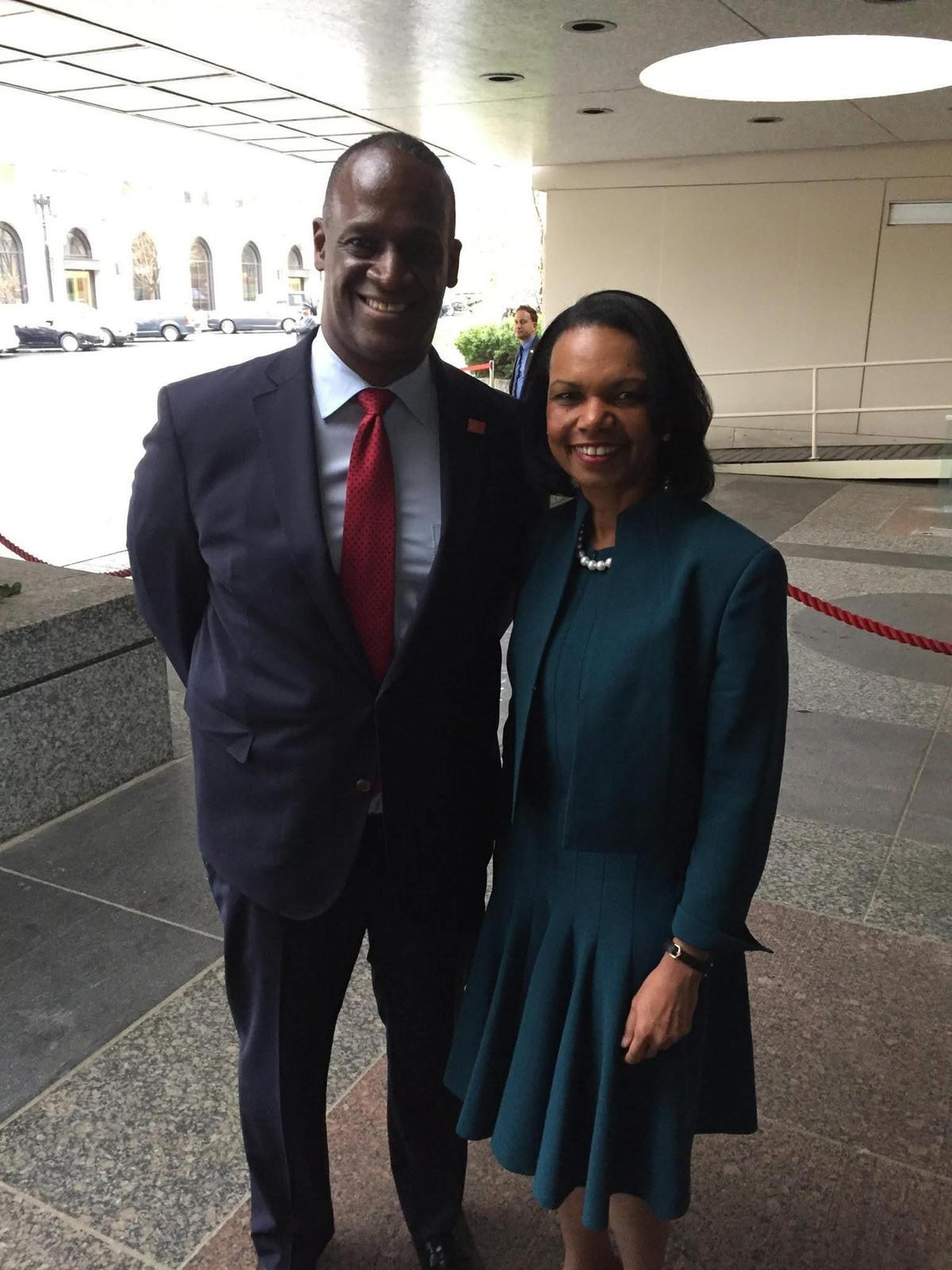
More high-ranking positions followed in rapid succession at the State Department, as Davis went where he was needed. Eventually, that meant returning to Iraq as consul general for Basra. After the consulate was on the receiving end of a rocket attack one Friday evening, Davis was tasked with the daunting assignment of rapidly closing and evacuating the consulate.
In just three weeks – a process that he estimated would normally take 13 months – Davis oversaw the consulate’s closure and the evacuation of 1,000 people. Although he did his duty, Davis did not agree with the decision and authored a dissent cable. Rather than issuing it through discreet channels, he shared it so that it could be widely read throughout the department.
Davis ultimately was recognized for his efforts leading the evacuation with the Ryan C. Crocker Award for Outstanding Leadership in Expeditionary Diplomacy, but he also received the American Foreign Service Association's William R. Rivkin Award for Constructive Dissent for his opposition to the evacuation. He was most proud of the Rivkin Award.
“I wrote that dissent with some risk to my career, but I believe in open, honest conversation and felt it was important to say something when I thought I saw something wrong that was going to hurt a lot of people,” Davis said.
Much to his surprise, though, his critique did not undermine his career. In fact, Secretary of State Mike Pompeo, part of then-President Donald Trump’s cabinet, called him to his office and asked him to serve as his executive assistant. Davis first confirmed that Pompeo was comfortable with his past work for Clinton and then spoke with Clinton – “she told me, ‘You’ve got to do your duty.’”
Davis served a year for Pompeo and then remained in the position for Anthony Blinken when he became Secretary of State following Joe Biden’s election as president. During his time with Blinken, two memorable experiences underscored the high stakes and difficulty of the work he had chosen to do.
First, Blinken asked Davis to join him to go to Dover Air Force Base and attend the transfer of the remains of 13 service members, including 11 Marines, killed in a terrorist bombing at Kabul International Airport during the U.S. evacuation of Afghanistan. Davis and Blinken met with the late service members’ loved ones for hours.
“We were in this big hall, and we went from family to family, listening to their stories and sharing their grief with them,” Davis said. “Especially as a Marine, it was highly emotional for me, and something I’ll never forget.”
Following the visit, Blinken asked Davis to engage with upset veterans who were concerned about the fate of the Afghan interpreters and assistants who had helped them during the war in Afghanistan – another issue marked by charged emotions and considerable complexity.
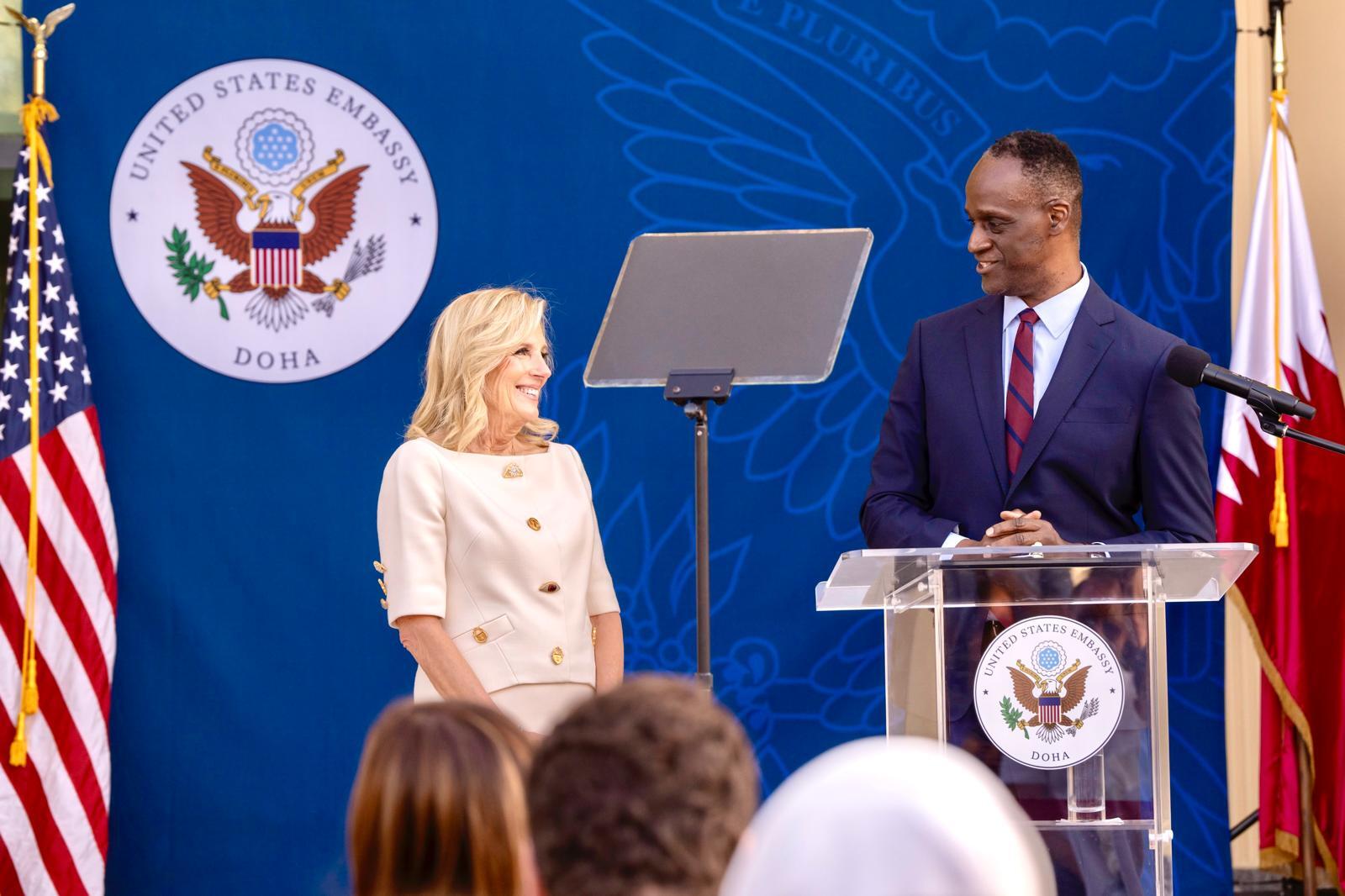
After a year working for Blinken, Davis, who speaks Arabic as well as Spanish, was nominated and confirmed as the new U.S. ambassador to Qatar in 2022. He served for three years in the position, and it was then that he became acquainted with the VCU School of the Arts Qatar, which is located in Doha.
“I enjoyed building relationships with the folks at VCU and sitting in the front row of the events they had and helping to highlight the strength of a university like VCU that is not just building connections between the United States and Qatar, but is also demonstrating the best of the U.S. education system,” Davis said. “It was a great delight to work with VCU.”
‘Hard to bother’
Today, Davis serves as president and partner at Irth Capital Management, a global asset management firm, and is senior advisor at Mavik Capital. When he reflects on the previous iterations of his career, he said that he believes the challenges and harsh realities that he has faced have helped him find a sense of perspective as a leader.
“No one wants to get PTSD. No one wants to see the images that I have carried around with me,” he said. “But it has made it so that the decisions that I make are not based on things that don’t matter. I can focus on what does matter.”
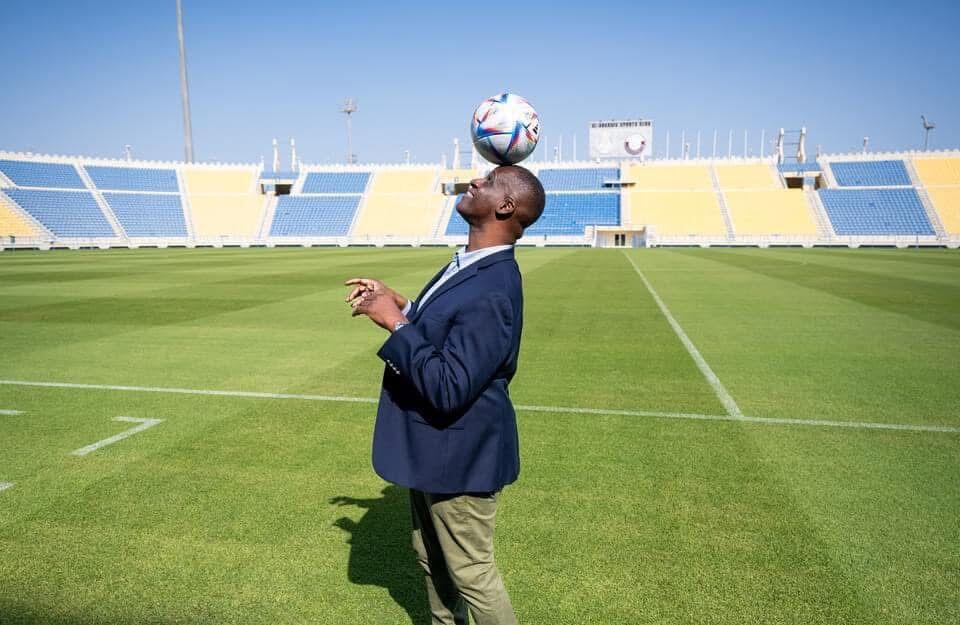
Davis said a core lesson from his time in the Marines still drives him today: the importance of being someone who is “hard to bother.” In the Foreign Service, he said, everyone was smart, and those who tried to prove their value simply by proving how smart they were did themselves – and their colleagues – a disservice. They also did not stand out among their peers.
“What I learned is if you take out the trash, if you make copies, if you support the people around you, if you don’t peacock around and try to give yourself credit, then you will be the unicorn,” Davis said. “You will be the person people want to work with.”
Davis said he plans to share that lesson, among others, with VCU’s graduates this week. Often, he emphasized, young people are told that they are special because of their intelligence.
“The world very quickly makes you understand that that’s not true,” Davis said. “You can be smart and make smart decisions, but the thing that will set you apart is a dedication to doing the jobs that move your team forward, whatever that is, and a focus on serving others. That’s where your real value as a person is.
Subscribe to VCU News
Subscribe to VCU News at newsletter.vcu.edu and receive a selection of stories, videos, photos, news clips and event listings in your inbox.