Sept. 23, 2005
Candidates for lieutenant governor and attorney general debate at VCU
Share this story
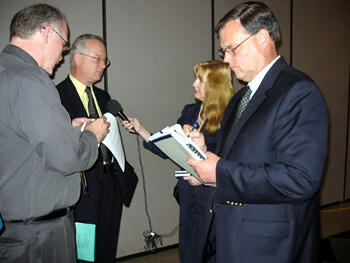
The candidates vying for the lieutenant governor and attorney general posts participated in separate debates on the Monroe Park campus of Virginia Commonwealth University.
The Virginia Chamber of Commerce on Sept. 21 sponsored the forums in collaboration with VCU's L. Douglas Wilder School of Government and Public Affairs.
In the first debate, featuring candidates for attorney general, Sen. R. Creigh Deeds, D-Bath County, and Del. Robert F. McDonnell, R-Virginia Beach, responded to questions regarding transportation, immigration, identity theft and higher education.
In the afternoon, Sen. Bill Bolling, R-Mechanicsville, and Democrat Leslie Byrne, a former state senator and former congresswoman, carved out different positions on nearly every issue covered in their debate, including Virginia's right-to-work law, tort reform, education and transportation.
In recent polls for both contests, the respective candidates were separated by just a few percentage points, with large portions of those polled undecided about either candidate. More than 200 people attended each forum.
Subscribe to VCU News
Subscribe to VCU News at newsletter.vcu.edu and receive a selection of stories, videos, photos, news clips and event listings in your inbox.