Feb. 21, 2008
February faculty and staff features
Share this story
Raj Rao, Ph.D., VCU School of Engineering
Rao, assistant professor of chemical and life science engineering,
has received a National Science Foundation Career Award, one of the
foundation’s most prestigious awards, to engineer systems to propagate
stable human embryonic stem cells in the laboratory setting and to
educate students and the general public about the latest advances in
stem-cell research.
Previous work conducted by Rao and colleagues demonstrated that human
embryonic stem cells are prone to genomic instability based on their
propagation conditions. The award will fund research that aims to
ascertain molecular mechanisms that cause these changes and develop
propagation systems that aim to be efficient, while generating high
quantities of stable, human embryonic stem-cell lines.
The award also will enable Rao to develop educational and laboratory
modules for high school students, undergraduate students and the
general public. These modules will increase awareness of engineering,
molecular genetics and cellular biology skills. He will work with high
school teachers, public educators at museums and faculty at
undergraduate universities to disseminate the information.
Through this project, the goal is to communicate and engage students
and the general public about the far-reaching potential of research in
this field.
In 2006, his work was featured on Science magazine’s career Web site,
ScienceCareers.org, in a career development article titled, “U.S.
Embryonic Stem Cell Research: Can Young Researchers Succeed?” The
article highlighted several researchers, including Rao, who are
conducting research using human embryonic stem cells.
In the article, the researchers discussed the difficulties in obtaining
funding, restrictions placed on new and established stem-cell
scientists, and the importance of diversifying one’s funding portfolio
work. In addition, they talked about the importance of educating the
public about this work.
Patrick Dattalo, M.S.W., School of Social Work
Dattalo, associate professor in the School of Social Work, has written a book about sample-size determination in research. “Determining Sample Size – Balancing Power, Precision, and Practicality” provides a current and comprehensive overview of sample-size determination. The book describes and critiques all sample-size determination strategies for social work research, uses worked examples throughout and in a separate chapter to demonstrate applications of concepts and strategies, and identifies Web-based resources, such as free software and scripts. “Determining Sample Size – Balancing Power, Precision, and Practicality” was released in January 2008 by Oxford University Press.
Robert Cohen, Ph.D., Department of Psychiatry
Cohen, professor and vice-chair of the Department of Psychiatry, as well as director of VCU’s Virginia Treatment Center for Children, has written a murder mystery novel that reveals unsettling truths about the child mental-health system in America. In “Hammond’s Choice,” Cohen tells the story of Ruth and Larry Hammond, who are forced to relinquish custody of their son Tommy in order to obtain services for his serious emotional and behavioral problems. When Tommy is accused of murder, the Hammonds turn to a private investigator, who uncovers questionable policies and practices in the child mental health system. “Hammond’s Choice” was released in February 2008 by Brandylane Publishers Inc., of Richmond.
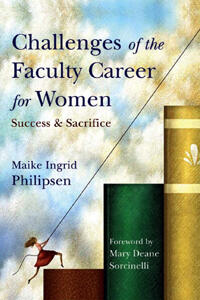
Maike I. Philipsen, Ph.D., professor, School of Education, Department of Foundations of Education
Philipsen’s latest book, “Challenges of the Faculty Career for Women: Success and Sacrifice,” offers recommendations for reform and advice for female faculty members coping with issues such as balancing work and family, defining one’s identity and priorities, facing elder-care issues and working in a historically male-dominated environment.
The book maps three stages of female faculty members’ careers and lives in academia: the early years comprising the typical struggles of a young or beginning female academic, the middle years dealing with specific issues and challenges, and the late-career stage involving the experiences of older women in academia.
“I decided to write the book because statistics indicate a persistent gap between the numbers of male and female professors in the higher ranks of colleges and universities, particularly research universities,” Philipsen said. “This gap does not appear to narrow over time, and it was my hunch that the balancing act of professional and personal lives may have something to do with that.”
Based on qualitative and quantitative data collected through interviews with female faculty members, “Challenges” presents the stories of women whose lives do not fit any linear stage approach and instead follow nontraditional career paths, such as beginning academic careers later in life or interrupting their careers. It includes experiences of diverse groups of faculty, including single women, immigrant scholars, parents and members of the “sandwich-generation.”
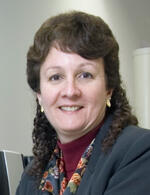
Jennifer Wayne, Ph.D., professor, Department of Biomedical Engineering
Wayne has been named Engineer of the Year by the Richmond Joint Engineering Council in recognition of her academic, leadership and career achievements and her dedication to and integrity for the engineering profession.
The Richmond Joint Engineers’ Council, an all-volunteer coalition of engineering, scientific and technical societies, promotes engineering education and provides a vehicle to disseminate knowledge and information relating the art and science of engineering to its member societies and the general public.
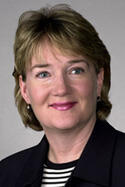
Teri Fauber, Ed.D., Department of Radiation Sciences
Fauber, associate professor and radiography program director in the School of Allied Health Professions’ Department of Radiation Sciences, recently published the third edition of “Radiographic Imaging and Exposure” through Elsevier Publishers. The book provides comprehensive coverage of the fundamental principles of imaging needed to produce the highest-quality images and reduce the number of repeated radiographs. This text also includes patient protection alerts, practical tips, important relationships and mathematical solutions features.
Hani M. El-Kaderi, Ph.D., Department of Chemistry
El-Kaderi, assistant professor of chemistry, has been named among the recipients of the 2007 American Association for the Advancement of Science (AAAS) Newcomb Cleveland Prize. The award recognizes El-Kaderi’s contributions to a research paper published in the April 2007 issue of the journal Science. The findings of that work help move scientists another step closer to new materials with high surface area for hydrogen fuel storage.

The study focused on the synthesis and characterization of three-dimensional, covalent organic frameworks (3D-COFs), crystalline nanoporous polymers made from light elements such as hydrogen, boron, carbon and oxygen. These polymers have high thermal stability, high surface areas and extremely low densities. The research team was the first to crystallize these organic polymers, especially COF-108, a member of this new class of materials with the lowest reported density of any crystalline material.
The synthesis and characterization of COFs, particularly COFs with high surface areas such as COF-108, have automobile and energy-related applications. Researchers are trying to reveal ways to use high surface areas of organic structures as a means of hydrogen storage.
El-Kaderi conducted the research while he was a post-doctoral fellow at the University of California at Los Angeles in conjunction with the departments of chemistry and biochemistry and with the California NanoSystems Institute. At VCU, El-Kaderi is continuing his research to develop new classes of covalent organic frameworks as a means of hydrogen and methane storage. The study at UCLA was funded by the U.S. Department of Energy and BASF, a global chemical company based in Germany.
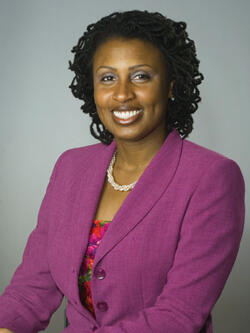
Rosalyn Hobson, Ph.D., associate dean of graduate studies, School of Engineering
Hobson has been named one of Dominion’s Strong Men and Women for 2008 in recognition of her academic, leadership and career achievements.
Dominion’s Strong Men and Women program, now in its 18th year, provides area youth with positive African-American role models whose accomplishments and determination demonstrate true excellence in leadership.
"If these … honorees are a sample of the role models the youth of today will emulate, then our world is in good hands," said Thomas F. Farrell II, chairman, president and chief executive officer of Dominion.
Hobson received her bachelor's, master's and doctorate degrees in electrical engineering from the University of Virginia and has received more than $1.5 million in research funding. Her current research involves artificial neural networks and their application to control problems, intelligent systems, biological modeling and signal- processing issues.
Lynn Goodloe, R.N., Department of Neurosurgery
Goodloe, nurse manager in the Harold F. Young Neurosurgical Center at the VCU Health System, was named a 2008 Nurse Manager Fellow by The American Organization of Nurse Executives (AONE). The AONE Nurse Manager Fellowship program focuses on the practice needs of nurse managers while preparing them for the next generation of executive level nurse leaders. Goodloe will develop a project using video monitoring to promote patient safety in the high fall risk population.
Kenneth Kendler, M.D.,
Kendler,professor of human genetics and psychiatry at VCU, and director of the
Virginia Institute for Psychiatric and Behavioral Genetics, has received a
five-year grant extension totaling nearly $2.5 million from The National
Institute of Alcohol Abuse and Alcoholism to understand the genetic basis of the vulnerability to
alcohol dependence.
Since the early 1980s, Kendler has studied the genetics of psychiatric and substance use disorders including schizophrenia, major depression, alcoholism and smoking and nicotine dependence. His work on the molecular level focuses on identifying the location of the specific genes that influence vulnerability to schizophrenia, alcoholism and nicotine dependence.
According to Kendler, alcohol dependence is a major public health problem and previous research findings suggest that genetic factors may play a critical role in the cause of such dependence. Through this research, Kendler's team plans to identify specific loci, or position on the gene, which impacts on the risk for alcohol dependence.
The work builds on the team's findings of a molecular genetic study from the first two funding periods. Kendler and his colleagues examined alcohol dependence in sibling pairs studied in Ireland with the goal of detecting the genomic location of susceptibility loci (SL) for alcoholism.
In this new funding period, their plans involve working with collaborators in Northern Ireland to collect at least 2,000 individuals with alcohol dependence. The team will apply advanced mapping and bioinformatics methods to further clarify specific genes that influence risk for alcohol problems in humans.Subscribe to VCU News
Subscribe to VCU News at newsletter.vcu.edu and receive a selection of stories, videos, photos, news clips and event listings in your inbox.