July 27, 2012
Fewer Supermarkets in Chicago Neighborhoods Linked to Poor Health Outcomes
Share this story
In Cook County, Ill., communities of color, high poverty rates and low educational attainment among adults have fewer supermarkets in their vicinity, limiting access to affordable, nutritious food and leading to a greater risk of premature death and heart disease, according to a new study by Virginia Commonwealth University Center on Human Needs researchers.
In collaboration with the Joint Center for Political and Economic Studies Health Policy Institute and the Virginia Network for Geospatial Health Research, the VCU Center on Human Needs is releasing the third of eight studies assessing population health inequities and related social and economic conditions in urban and rural communities across the United States. Working alongside the project partners are eight “Place Matters” teams consisting of individuals who work and live in each of the communities studied.
The third report examines health disparities for Cook County, which is the home of the city of Chicago. The community team in Cook County was interested in studying the social, economic and demographic determinants of access to healthy food sources like supermarkets and how that access is related to health outcomes.
The technical report by the VCU Center on Human Needs has been translated into a policy brief that has been issued by the Joint Center for Political and Economic Studies Health Policy Institute.
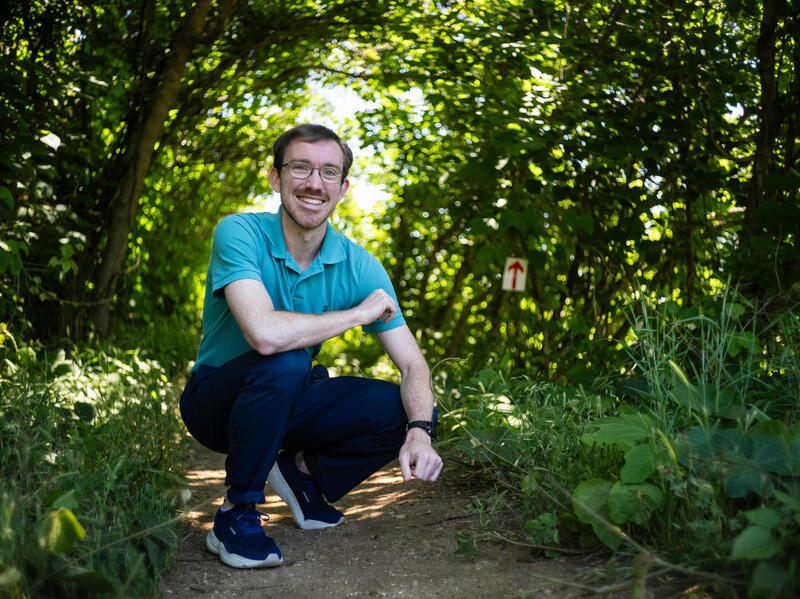
“Among food providers, chain supermarkets are the most likely to provide healthy options, such as fresh produce and whole grain bread, at the most affordable prices,” said the lead author of the study, Benjamin Evans, a policy research manager at the VCU Center on Human Needs.
“In general, access to supermarkets is greatest in dense urban areas. This study attempted to analyze which characteristics other than population density determine food access,” he said.
Food access has received a lot of attention recently, especially so-called food deserts, areas of communities without nearby access to places to buy healthy foods. In 2010, the White House Task Force on Childhood Obesity, led by the first lady Michelle Obama, called for the elimination of food deserts within seven years. Cook County had 39 census tracts that were designated as a food desert in 2010.
“As with the prior reports from this project, the research conducted in Cook County was not conducted solely for academic purposes but also as an advocacy tool for concerned community members to sway decision-makers to make policy decisions that would improve healthy equity,” said Evans.
The VCU team examined the community characteristics associated with access to chain supermarkets as well as large and small independent grocery stores and fast food outlets. They observed that non-Hispanic white communities and communities with low poverty rates and a highly educated adult population had greater access to chain supermarkets than would be expected based on population density. Independent grocery stores were more likely than supermarkets to locate in communities of color, particularly Hispanic communities. While this may provide a quality food source for those neighborhoods, these retailers are less likely to stock healthy options such as whole grains and produce, or to offer them at low prices or high quality.
According to Evans, the Cook County analysis showed that neighborhoods with greater access to supermarkets had lower rates of premature death and heart disease mortality independent of the effects of other social and economic determinants like income, education or employment.
In the next several months, the VCU Center on Human Needs will be releasing studies of other communities, including Alameda County (Oakland), Calif.; Baltimore; Bernalillo County (Albuquerque), N.M.; Boston; and South Delta, Mississippi.
The project was funded by a subaward from the National Institutes of Health. The Health Policy Institute was the prime and also receives funding from the W.K. Kellogg Foundation for the Place Matters initiative.
Evans collaborated with colleagues at the VCU Center on Human Needs, including Steven H. Woolf, M.D., M.P.H., director of the Center on Human Needs; Amber Haley, M.P.H., research epidemiologist at the VCU Center on Human Needs; and Emily Zimmerman, Ph.D, assistant research professor.
Subscribe to VCU News
Subscribe to VCU News at newsletter.vcu.edu and receive a selection of stories, videos, photos, news clips and event listings in your inbox.