March 13, 2009
Fourth-year medical students share experiences with global health learning elective
Share this story
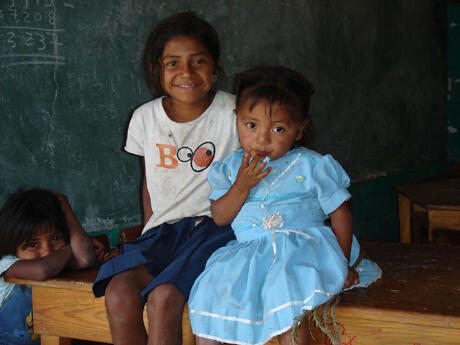
A new elective in Virginia Commonwealth University’s School of Medicine is making it possible for fourth-year medical students to experience global service learning.
Eight students spent two weeks last fall in the mountains of rural Honduras as part of the Family Medicine global service learning elective.
This is the first time that fourth-year medical students have traveled as a group for the elective, which is part of an ongoing program in Pinares, Intibuca, where students team up with other volunteers to provide assistance with projects in health education, children’s health, water filtration, medical and dental care, nurse midwifery and community health work.
“The students who have not traveled as much usually come back pretty shocked by the extremeness of the poverty,” said Steven Crossman, M.D., associate professor of Family Medicine and faculty coordinator for the elective.
“I hope that they come back with the awareness that ‘primary care’ means so much more to those who are poor,” he said. “Meaning, it includes access to clean water, shelter, education and nutrition – some of the social determinants of health."

The medical students that traveled to Pinares were Nathan D. McLaughlin, Babak Moini,
Amy K. O'Toole, Michelle E Ng, Jessica L. Caldwell, Jasmine L. Patterson, Whitney A. Sullivan-Lewis and Palak Oza.
According to the students, the group prepared for the trip with lectures and research and planning what supplies and equipment they would be working with over the course of two weeks in Pinares.
Once in Pinares, the students and volunteers immersed themselves in the culture and the different assignments.
For the medical-dental clinic, the students said they saw between 25 and 30 patients on busy days. The three-room clinic included a registration area, pharmacy and basic labs and a dental room complete with a compressor.
Students and volunteers involved with the water filtration project delivered 37 new water filters to households throughout eight villages. Families in the villages receiving filters paid a nominal fee for the filter, and the students also provided educational information on water filter storage, cleaning and maintenance.
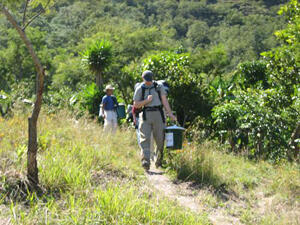
Another project involved child health, which served eight villages and provided basic screening and exams for children, such as height and weight checks, hemoglobin tests and eye exams.
Community health worker project volunteers taught first aid and provided education on dehydration therapy, asthma treatment, wound care and suturing.
In addition, some of the students worked with nurse midwives and discussed common pregnancy and delivery complications. They also discussed postpartum Honduran customs. Midwives received gift bags with helpful tools such as gloves, scissors, baby blankets and hand sanitizer.
Other VCU faculty members who participated in the project and traveled with the group were Daniel Lawrence, M.D., Department of Family Medicine; Thomas Ball, M.D., VCU Shenandoah Family Medicine Residency Program; and Janett Forte, VCU Institute for Women’s Health.
“It definitely has added to what I want to do,” McLaughlin said. “It doesn’t matter what books you read, you have to experience it.
The Department of Family Medicine sponsors or co-sponsors three trips each year to Pinares and helps to financially support the clinic.
Subscribe to VCU News
Subscribe to VCU News at newsletter.vcu.edu and receive a selection of stories, videos, photos, news clips and event listings in your inbox.