Feb. 1, 2008
Gov. Timothy Kaine recognizes VCU researcher as one of Virginia’s Outstanding Scientists for 2008
Share this story
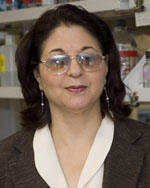
Gov. Timothy Kaine has named Sarah Spiegel, Ph.D., an
internationally renowned researcher and professor and chair of the
Department of Biochemistry and Molecular Biology in the Virginia
Commonwealth University School of Medicine, as one of the state’s
Outstanding Scientists of 2008 for her discovery of a potent lipid
mediator, which she demonstrated to have important roles in cancer,
inflammation and allergy.
Spiegel’s contributions to this research have opened new avenues for drug development to fight these diseases.
Spiegel
was recognized for her pioneering work on a new lipid mediator that
regulates vital physiological processes important for health and
diseases. She developed the concept that sphingolipid metabolites serve
as signaling molecules, and the one that she discovered in the early
1990s, sphingosine-1-phosphate (S1P), is now the most thoroughly
characterized and widely accepted mediator in this field.
Spiegel,
who is also the program co-leader of the Cancer Cell Biology Program at
the VCU Massey Cancer Center and the Mann T. and Sara D. Lowry
Professor of Oncology, has received multiple grants from the National
Institutes of Health to continuously fund her research for nearly 20
years. In 2003, she was awarded a National Institutes of Health MERIT
award totaling nearly $2.1 million, to continue her research on S1P.
The award is given to investigators who have demonstrated superior
competence and productivity.
"Dr. Speigel's basic research has been groundbreaking and has changed the scientific paradigm," said Sheldon M. Retchin, M.D., CEO of the VCU Health System and Vice President for VCU Health Sciences. "Her discoveries have altered the way scientific investigators look at cell growth and proliferation."
Spiegel’s seminal report, published
in a 1993 issue of the journal Nature, linking S1P to growth factor
action has been followed by a steady stream of contributions important
to the field of lipid mediators. In a 1996 paper, also published in
Nature, Spiegel introduced the provocative notion that the dynamic
balance between S1P and its precursors functions as a cellular rheostat
that determines whether a cell survives or dies. This concept has since
been demonstrated by other investigators and has important implications
for chemotherapy and radiation therapy of cancer.
Subsequently,
Spiegel and her colleagues have published a number of reports examining
the important physiological and pathophysiological processes that are
regulated by S1P, including cancer, cardiovascular function,
atherosclerosis, immunity and asthma, and more continue to emerge from
VCU at a remarkable rate.
Spiegel has thoroughly investigated
the diverse roles of the simple molecule, S1P. She discovered that S1P
functions not only inside cells but also can be secreted and act
outside of cells by binding to specific cell surface receptors.
According to Spiegel, there is not a cell in the human body that does
not express at least one of these receptors, which is why the S1P is
considered such a powerful mediator. These findings were reported in
the journal Science.
In a 2006 commentary in the journal Cancer
Cell, Spiegel proposed that cross-talk between S1P receptors and growth
and pro-angiogenic factor receptors can lead to the amplification of
signals important for tumorigenicity and angiogenesis. Thus, targeting
S1P and the enzymes that regulate its levels would be a novel avenue
for cancer therapeutics.
More recently, she has uncovered a new
role for S1P in pathogenesis of allergic disorders, such as asthma and
anaphylaxis. Additionally, in a 2006 paper in the Proceedings of the
National Academy of Sciences, her team described how mast cells, which
orchestrate and perpetuate allergic responses and asthma, secrete S1P.
Spiegel’s research in this area is paving the way for the development
of potent and specific drugs that may be useful for alleviation of
these disorders.
In 2007, Spiegel was honored with the
University Distinguished Scholarship Award at the VCU’s 25th Opening
Faculty Address and Convocation for excellence in teaching, scholarship
and service. That same year, she was also a recipient of the VCU Women
in Science, Dentistry and Medicine (WISDM) Professional Achievement
Award for her special contributions, dedication, leadership, mentorship
and accomplishments in the School of Medicine. According to colleagues,
her arrival as chair in 2002 brought with it new talent and
re-energized existing staff and researchers.
Under her
leadership, the reputation of VCU’s Biochemistry and Molecular Biology
Department has soared and research funding has increased dramatically
to more than five times larger than when she started. In fewer than
five years, Spiegel took a department ranked 103rd in NIH funding and
drove it to 32nd.
Subscribe to VCU News
Subscribe to VCU News at newsletter.vcu.edu and receive a selection of stories, videos, photos, news clips and event listings in your inbox.