July 13, 2011
Hawkridge Retires Following Decades at VCU
Share this story
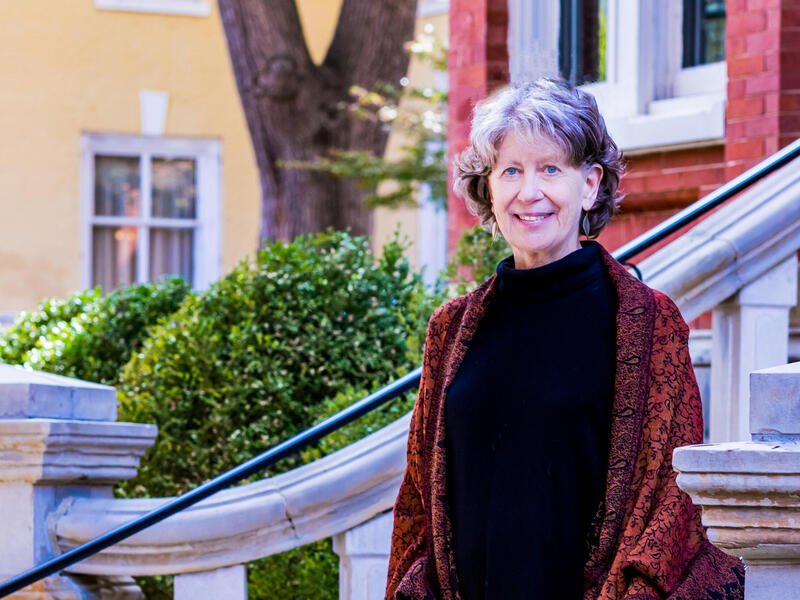
During his 35 years at VCU, Fred Hawkridge, Ph.D., has seen the university transform itself. And Hawkridge has been integral to that transformation.
Hawkridge, who has worked the past three years as interim dean of the College of Humanities & Sciences at VCU, retired June 30. He previously served as executive associate dean of research and graduate affairs in the college, and he has been a longtime professor in the departments of chemistry and biochemistry.
Through the years, he has worked with many VCU students as a professor, administrator and mentor, fostering and encouraging exploration and advancement through scientific research.
A central part of his legacy will be his strong advocacy over the years for promoting and increasing funded research by members of the Monroe Park Campus faculty, something that was not always a priority for non-medical faculty members. He also has been actively involved in creating new Ph.D. programs within the college.
“I’ve enjoyed being a part of VCU moving from largely a commuter school to one with a mature standing in research, and a student-centered university,” Hawkridge said. “This university is one that pays attention to students and has a future as a key player.”
Among his many recognitions, Hawkridge is most proud of the honorary Ph.D. he received in 1993 from St. Petersburg University in Russia. He also was the recipient of two national awards, one from the American Microchemical Society in 2002 and other from the American Chemical Society in 2003. These distinctions were a result of several of Hawkridge’s academic and professional contributions, including research conducted at VCU, service as an editor for professional journals, leadership roles in professional organizations and work at the National Science Foundation.
His research team contributed to understanding how to get large biological electron transfer proteins and enzymes to easily undergo electron transfer reactions at electrodes, so the native selectivity of these biomolecules can be used for analytical and other applications. When the team began this research, there were many reasons why these reactions were believed to be impossible, but over time and after much work, this is now possible. As an end result, a handheld breath analyzer for acetone was developed and commercialized using enzymes immobilized on electrodes to aid in the treatment of diabetics and people on strict diets to address morbid obesity.
“VCU students that worked in my research labs over the years have been tremendous,” said Hawkridge. “The accomplishments achieved by this group as independent scientists in their own careers attests to their quality and creativity.”
Beverly Warren, Ed.D., Ph.D., provost and vice president for academic affairs, said Hawkridge has done a laudable job as interim dean, leaving the college in great shape and laying the foundation for a new dean. James Coleman, Ph.D., succeeded Hawkridge as dean.
“He has been a real asset to the institution throughout his career, and I admire him as a person of integrity,” Warren said. “He’s an outstanding scholar and researcher, and I have tremendous respect for his work, particularly that which advanced and provided opportunities for women and minorities in the sciences.”
On April 26, the College of Humanities and Sciences hosted a reception at the Scott House in Hawkridge’s honor, one that brought a packed house of colleagues and friends, and included words from VCU President Michael Rao, Ph.D.
Despite missing the current day-to-day routine, Hawkridge looks forward to retirement and spending time with his family and grandchildren.
Subscribe to VCU News
Subscribe to VCU News at newsletter.vcu.edu and receive a selection of stories, videos, photos, news clips and event listings in your inbox.