Feb. 25, 2026
Online degrees viewed more positively post-pandemic, VCU research finds
Share this story
COVID-19 made remote work and remote learning a new norm for employees and students. But even as many have returned to offices and schools, one of the pandemic’s quieter legacies is influencing both the workplace and the classroom: Online degrees are now held in higher regard by hiring professionals, according to new research from Virginia Commonwealth University.
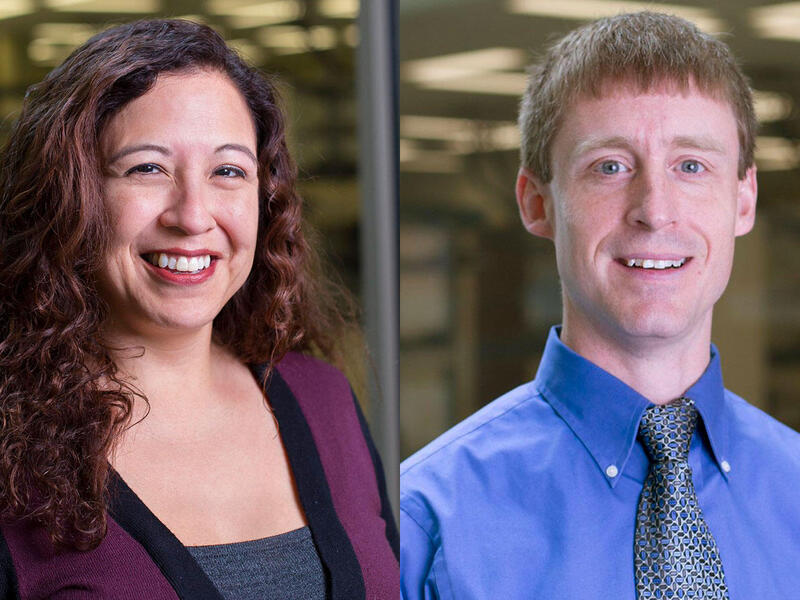
In their recent study, Heather Millar, Ph.D., an adjunct professor in VCU’s L. Douglas Wilder School of Government and Public Affairs, and assistant professor Elsie Harper-Anderson, Ph.D., found that COVID-19 dramatically changed how human resources professionals and hiring decision-makers view online degrees. The researchers’ survey-based study found that some hiring managers are now almost 10 times more likely to hire a job applicant with an online degree than they were pre-pandemic, and top executives are 13 times more likely to do so compared to other survey respondents.
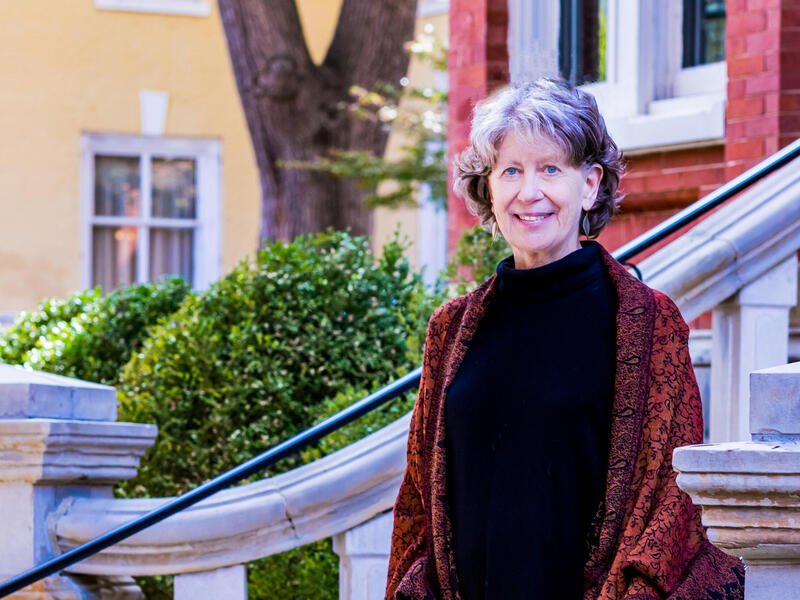
“All of the research I found prior to the pandemic consistently showed a clear preference for traditional‑degree job candidates,” said Millar, who studies higher education trends and workforce development. “When the pandemic forced us all into a virtual environment, I wanted to see whether that shift changed perceptions of online degrees during the hiring process, and our data shows the impact was dramatic.”
Published recently in the American Journal of Distance Education, the findings could be consequential for traditional universities, which increasingly have to compete with one another as well as nontraditional programs. The results also echo a societal shift toward increased legitimization of online degrees, as well as the rise of micro-credential courses and a movement toward skills-based versus degree-based hiring.
“If employers are increasingly accepting both online and traditional degrees, what does that mean for traditional higher education?” Millar said.
VCU News spoke with her for more insights.
In the past, why haven’t hiring professionals viewed online degrees as positively as traditional degrees?
I’ll highlight three key reasons:
- Prior to the pandemic, many assumed that the flexibility and convenience of online learning signaled lower academic rigor, with coursework perceived as easier or less demanding.
- Early online programs were also heavily concentrated in the for‑profit sector, some of which engaged in predatory recruitment and tuition practices, creating a broader stigma around online education.
- In addition, employers, and society more broadly, had limited exposure to reputable online programs, which contributed to skepticism about the quality of engagement, collaboration and hands‑on learning in online formats.
How did the pandemic change how businesses view online degrees, even after many have returned to in-person operations?
The COVID‑19 pandemic rapidly normalized online learning by forcing students, faculty and staff into virtual environments. As a result, online education became a mainstream experience for millions of learners, including those enrolled in traditional institutions. This widespread exposure helped legitimize online learning and demonstrated that high‑quality instruction could occur outside of the traditional classroom.
How have society’s views on online degrees changed?
The pandemic played a major role in normalizing online education. At the same time, questions of value, addressing workforce demands and return on investment have been at the forefront of conversations regarding higher education.
These trends reflect a larger societal reorientation: Higher education is increasingly evaluated through an economic lens, with value defined by measurable outcomes. As employers prioritize demonstrable skills over formal credentials, traditional higher education faces growing pressure to adapt.
Why do some hiring professionals now view online degrees so positively?
As employers place greater emphasis on demonstrated competencies rather than traditional educational pathways, online degrees and alternative credentials have gained legitimacy. Employers are also resetting degree requirements in a wide range of roles, dropping the requirement for a bachelor’s degree in many middle-skill and even some higher-skill roles.
This reverses a trend toward degree inflation in job postings going back to the Great Recession. And while the COVID-19 pandemic accelerated this process, this reset began before the crisis and is likely to continue after it.
Together, these trends signal increasing confidence among top executives in the quality and workforce relevance of online education.
How do you view the changing role of traditional universities as more people pursue online learning?
With this study, I wanted to provide a realistic, research‑based understanding of the forces reshaping higher education – not to undermine it, but to help it adapt and co-exist with emerging models.
There is room for multiple missions. Society still needs research, critical inquiry and broad education, especially in an increasingly technological‑driven world. Today’s universities are asked to do both: advance knowledge and train workers. Recognizing these as distinct pillars, while allowing bridges between them, would reduce frustration and still honor the aims of higher education.
Subscribe to VCU News
Subscribe to VCU News at newsletter.vcu.edu and receive a selection of stories, videos, photos, news clips and event listings in your inbox.