July 1, 2010
July Faculty and Staff Features
Share this story
Gordon McDougall, assistant vice president for University Alumni Relations
McDougall was recently elected to a three-year term on the board of directors of the Council of Alumni Association Executives.
The CAAE advocates the values of alumni association self-governance and provides its members with relationships, information and professional development to enhance alumni association administration.
As assistant vice president of University Alumni Relations, McDougall provides the overall direction of VCU alumni activities and programs, and manages VCU alumni associations, chapters and divisional boards.
Nicholas Farrell, Ph.D., Department of Chemistry
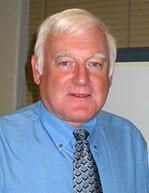
Farrell, professor in the Department of Chemistry, recently was awarded a Jefferson Science Fellowship from the U.S. State Department. The Fellowship, which is administered by The National Academies, is designed with the purpose of engaging academics at the forefront of science, technology and engineering (STE) in the formulation and implementation of American foreign policy. About six or seven awards are granted annually and recipients will spend a year at the State Department or U.S. Agency for International Development advising top officials on areas requiring STE expertise. All Jefferson Fellowships are contingent upon awardees obtaining an official U.S. government security clearance.
Frank Guarnieri, adjunct professor in the Virginia Commonwealth University School of Medicine’s Department of Physiology and Biophysics
Guarnieri and colleagues have developed a targeted, long-lasting emphysema treatment that causes drugs to linger in the lungs and work more effectively. The breakthrough technique, developed during experiments on mice, may lead to better treatment options for human patients with emphysema, an often debilitating disease. Smoking cessation remains the only known effective emphysema treatment. Guarnieri and other team members successfully connected a human neutrophil elastase (HNE) inhibitor to a larger peptide that is naturally present in the lungs’ mucous lining. That resulted in a longer-acting pulmonary drug. The research team administered HNE to mice and then treated the mice with either the inhibitor alone or with the team’s novel peptide-inhibitor construct. An independent pathologist could not distinguish between the lungs of healthy control mice and the lungs of mice that had received the team’s peptide-inhibitor. By contrast, the mice treated with only HNE inhibitors showed no decrease in induced lung damage. The research was highlighted in a June issue of the Proceedings of the National Academies of Science.
James P. Bennett, Jr., M.D., Ph.D., Department of Neurology
Bennett, chair of the Department of Neurology and founding director of the VCU Parkinson’s Disease and Movement Disorders Multidisciplinary Research and Clinical Center, recently joined five other experts in the field of pharmaceuticals in a panel discussion on the emerging trends and the evolution of the process by which medical research is translated into drugs and treatments for patients.
The talk, sponsored by Parkinson’s Action Network, a group committed to representing patients with Parkinson’s in public policy, aimed to better understand and improve the drug development pipeline for all medical disorders. Bennett’s panel discussion can be found in the form of a webcast at http://www.parkinsonsaction.org/parkinsons-disease/emerging-therapies-webcast where viewers are encouraged to discuss the topics presented.
Subscribe to VCU News
Subscribe to VCU News at newsletter.vcu.edu and receive a selection of stories, videos, photos, news clips and event listings in your inbox.