Jan. 27, 2016
Lecture series to dig into questions of humans’ relationship with machines
Share this story
Three internationally known lecturers will visit Virginia Commonwealth University and the Richmond community this spring as part of a lecture series that will explore humans’ relationship with technology.
The series, “Seeing Machines: Humans and Technology,” is a collaboration between the Science, Technology & Society Program, or STS@VCU, in the College of Humanities and Sciences and Science Pub RVA, a program of the Community Ideas Stations’ Science Matters initiative.
“‘Seeing Machines’ is meant to have a double meaning: How do humans regard technologies that enrich and complicate our lives?” said Karen Rader, Ph.D., director of STS@VCU and a professor in the Department of History. “[And] ultimately, how do these technologies change our capacity to see and shape the natural and social worlds?”
Humans and machines have a long and complicated history.
“Humans and machines have a long and complicated history,” she said, “with unexpected connections and resonances — like the existence of androids in the Enlightenment, or visions of space development on which artists and engineers collaborated that long predate contemporary understandings of the value of interdisciplinary STEAM [or science, technology, engineering, art and math] education.”
Each of the three lecturers will give a lunchtime talk at VCU, in which they will delve into questions about design, innovation, art, science, engineering and, more broadly, the relationship between humans and machines.
Then, in the evenings, the lecturers will lead more informal discussions of the same topics for the Richmond community at Science Pub RVA events.
All events are free and open to the public, though the Science Pub RVA talks require registration, which opens two weeks in advance of each event. To register, visithttp://sciencepubrva.org.
Registration is not required for the VCU campus events, but complimentary box lunches will be available only to those who register in advance. Registration links will be available at http://sts.vcu.edu two weeks in advance of each event.
“I couldn't be more excited that we are partnering with Richmond's own ‘café scientifique,’” Rader said. “This discussion-oriented movement to bring science ‘to the people’ represents a perfect opportunity for our program to link interdisciplinary thinking to a community conversation that meaningfully shapes relationships between science and society.”
The full schedule of the lecture series:
Tuesday, Feb. 2
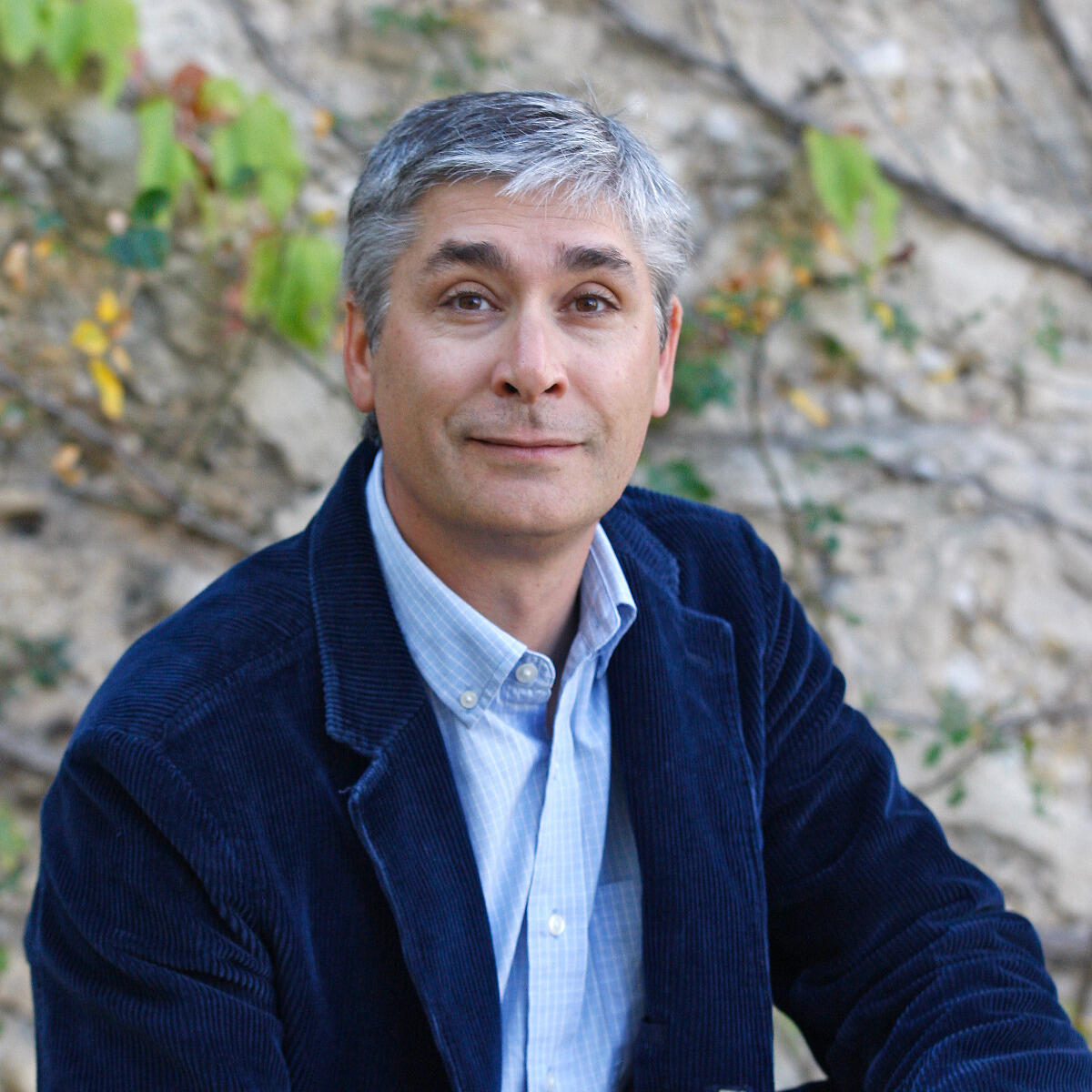
Patrick McCray, Ph.D. Professor of History, University of California at Santa Barbara
- “Visioneering from Space Colonies to Nanotechnologies” Noon–1:30 p.m. VCU Student Commons, Virginia Rooms C-D
In the 1970s, many people feared the depletion of natural resources and humanity’s impact on the planet. Others saw terrestrial constraints as a challenge and opportunity for technological change and social improvement. This talk follows the careers of two “visioneers” who imagined, designed and advocated for a future that could be radically improved through space colonies and nanotechnologies.
- “Re-Wiring Art: Collaborations of Artists and Engineers” 6–7 p.m. Capital Ale House, 623 E. Main St., Richmond
Artist-engineer collaborations were all the rage in the 1960s. Their history — something McCray has been researching for several years — gives insights into the worlds of both communities and also into today’s fascination with design, creativity and innovation.
Thursday, Feb. 25
Adelheid Voskuhl Associate Professor of History and Sociology of Science, University of Pennsylvania
- “Engineering Philosophy: Machine Culture and Social Elites in the Second Industrial Revolution (1900-1930)” Noon–1:30 p.m. VCU Student Commons, Virginia Rooms C-D
This talk aims to uncover the historical connections between the emergence of technology as a subject of philosophical thinking and the emergence of engineers as a social group and elite in the moment of political, military and philosophical crisis of modern industrial nation-state building.
- “They Had Robots Way Back When? Androids in History” 6–7 p.m. The Camel, 1621 W. Broad St., Richmond
The history of androids and robots is long and surprising. Explore our fascination with them, as far back as the 1700s, and how they express a large variety of concerns about being human in a technological world.
Wednesday, April 6
Oliver Gaycken Associate Professor of English, University of Maryland
- “The School of the Future: Thomas A. Edison, Inc. and the Popular Science Film” Noon–1:30 p.m. The Depot, 814 W. Broad St., Richmond
This talk will trace the contours of Thomas Edison’s educational film project, paying close attention to specific films and their uses that will serve as representative case studies. The talk will also consider more general implications for educational media that arise from Edison’s experiment, including the circulation of nonfiction images in other domains, notably that of the avant-garde.
- “Cheese Mites and Acrobatic Flies: Early Popular Science Films” 6–7 p.m. C’est le Vin, 15 N. 17th St., Richmond
Early science films captured nature’s marvels and oddities. Come for a screening of some popular science films from the early 1900s, a short talk and an open discussion on how time-lapsed movies impacted the way we see and engage with our world.
Subscribe to VCU News
Subscribe to VCU News at newsletter.vcu.edu and receive a selection of stories, videos, photos, news clips and event listings in your inbox.