Nov. 23, 2026
Lifelong learner: Doctoral student brings industry experience to Ph.D. program
Share this story
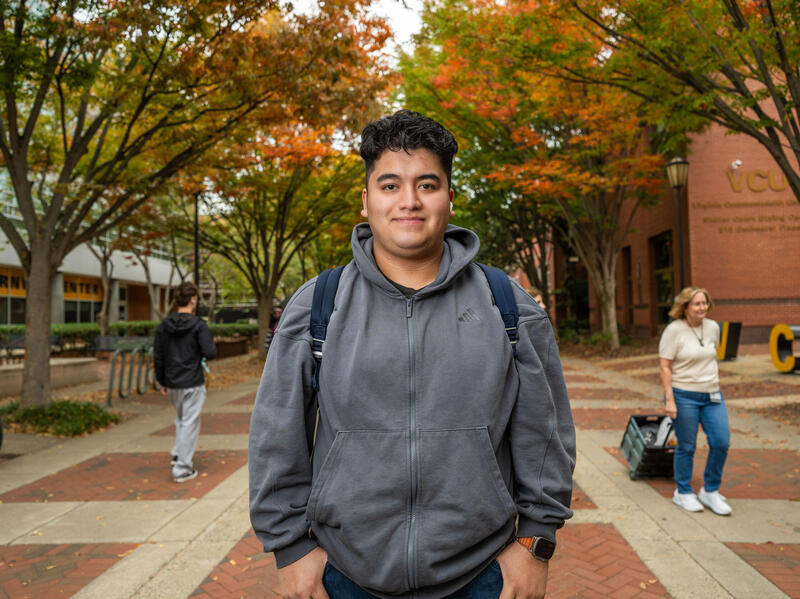
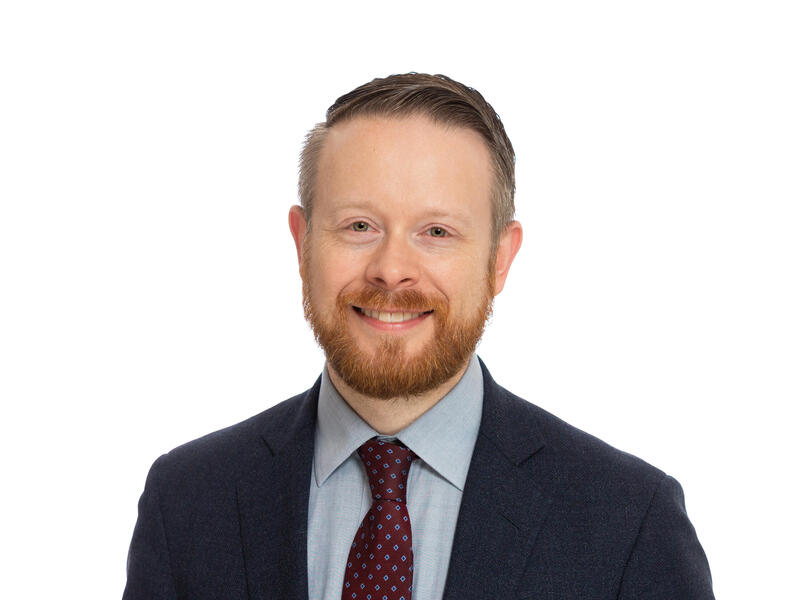
Juan Ortega is used to making unexpected career moves. After working as a chemist, serving in the U.S. Navy and teaching at a community college, the 53-year-old has recently embarked on another new career path — Ph.D. training.
Now a doctoral student at the VCU School of Medicine, Ortega is using his diverse industry and teaching background to bring a fresh perspective to the lab. A self-described “lifelong learner,” Ortega wants to better understand how the world works at a microscopic level and use his training to encourage others to pursue knowledge, no matter their stage of life.
“It hasn't been without its challenges, but I don't think age is a limitation,” Ortega said. “School is where I want to be and I want to learn as much as I possibly can about how the universe works.”
Twists and turns
Ortega always had a thirst for knowledge. Growing up in rural Puerto Rico, he wanted to know as much as he possibly could about his favorite subject in school — chemistry. He graduated from the Interamerican University of Puerto Rico in 1998 with a Bachelor of Science in chemistry and put that degree to work as a quality control chemist in pharmaceutical industry, ensuring that the materials used met strict safety standards according to the U.S. Food and Drug Administration.
Going back to school and furthering his education was always an intention, but life got in the way. After the 2008 financial crisis left him unemployed, Ortega joined the U.S. Navy at 37 years old. The move took him and his wife all over the U.S. before being stationed in Norfolk, Virginia. Ortega served as an avionics technician for eight years, including two deployments to Kuwait, the United Arab Emirates and Jordan. Between maintaining and repairing the aviation equipment, he earned a master’s degree in chemistry from the University of St. Joseph in West Hartford, Connecticut.
After leaving the military in 2018, Ortega returned to his professional roots as a quality control chemist and ultimately settled in Richmond to work as a research chemist and Liquid Chromatography-Mass Spectrometry analyst, using instruments to separate, identify and quantify compounds in laboratory samples. In the capital city, he also found a part-time job that brought him back to his academic roots — teaching chemistry at Reynolds Community College, on a campus just a few blocks from the School of Medicine.
“Being a teacher meant that I was studying all the time, so teaching my students was also teaching myself,” Ortega said. “Being able to communicate to others why these concepts matter and how the world works on a scientific level is really important to me.”
Returning to the world of higher education reignited Ortega’s lifelong spark of curiosity and pushed him to revisit his dream of pursuing a doctorate. But reorienting his life and choosing to go back to school in his 50s was not an easy decision. He knew that staying in the workforce would be the more societally conventional and stable option, and Ortega said he was nervous that he wouldn’t fit in with other trainees. But the drive to learn as much as he can, as well as reassurance from a new connection, encouraged him to make the leap.
In 2024, seeking insight into pursuing a Ph.D. at VCU, Ortega cold-emailed Carlos Escalante, Ph.D., a professor in the Department of Cellular, Molecular and Genetic Medicine. Escalante invited both Ortega and his wife to his office to discuss Ortega's interest in joining his lab and working toward a doctorate in biophysics and physiology.
“One of my main concerns was the atmosphere that a mentor creates, because I’ve learned over the years that if a team isn’t working well, the work isn’t going to get done,” Ortega said. “But after meeting Dr. Escalante and seeing how dedicated he was, I knew that it would be a good fit.”
Taking the leap
Two years later, Ortega is thrilled to rotate through Escalante's lab. As a student in the Biomedical Sciences Doctoral Portal, the School of Medicine's entry point for students pursuing doctoral degrees, he's spending this first year taking courses and exploring multiple labs in his area of interest before selecting a Ph.D. program and dissertation advisor.
“I was nervous at first, because I knew I was going to be older than most of the other students,” Ortega said. “But once I got here, I felt more confident because we can connect over the science and our shared interest in learning more.”
Escalante said having a nontraditional student like Ortega in his lab has been beneficial for both him as an instructor, and for the other trainees. He noted Ortega's workforce experience, particularly in teaching, means that Ortega can bring a different perspective to the cohort.
“I'm not only mentoring him, he’s also mentoring the other students,” Escalante said. “In group meetings, he talks about his experiences in the industry. He’s very self-motivated and assured. It’s great to have someone like him in your lab.”
Over the past few weeks, Ortega has been running AI-based protein design pipelines and molecular dynamics simulations to design muscle-specific adeno-associated virus vectors — a harmless protein shell used in gene therapies that deliver genetic material into target cells. The ultimate goal is to improve current therapy vectors used to treat muscular dystrophies, a group of more than 30 rare and currently incurable genetic disorders that cause muscle loss and progressive weakness.
“I want to use my training to contribute to humanity,” Ortega said. “The universe is very dynamic and there are so many invisible molecules, hard at work, that go into keeping you alive. Knowing why things happen is how we create better outcomes for everyone.”
As he looks beyond the next four years, Ortega said he is excited to use what he learns to educate others, possibly by returning to teaching, and encouraging them to embrace their own sense of curiosity.
“I think it’s a different way of seeing the world, and we need people who want to understand how things work,” Ortega said. “That’s how we find solutions to the problems we face.”
This article was originally published on the School of Medicine website.
Subscribe to VCU News
Subscribe to VCU News at newsletter.vcu.edu and receive a selection of stories, videos, photos, news clips and event listings in your inbox.