March 2, 2012
March Faculty and Staff Features
Share this story
Terri L. Fauber, Ed.D, Associate Professor, Department of Radiation Sciences
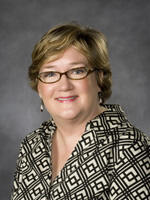
Fauber, associate professor and director of the Radiography Program, Department of Radiation Sciences, recently has published “Radiographic Imaging and Exposure, 4th Edition,” a textbook that provides comprehensive coverage of both digital radiography and conventional film-screen radiography.
“Radiographic Imaging and Exposure, 4th Edition,” is meant to help students master the fundamental principles of imaging, produce clear images and reduce the number of repeat radiographs. It also includes integrated digital radiography coverage with information on how to acquire, process and display digital images.
Juan Carlos Arango, Ph.D., Associate Professor, Department of Physical Medicine and Rehabilitation

Arango this month will be awarded the International Brain Injury Association Young Investigator Award for Early Career Contributions to the Field of Brain Injury Science at the Gala Dinner during the IBIA World Congress in Edinburgh, Scotland.
“It is a great honor to be selected by my peers in the U.S. and abroad for such a prestigious award,” Arango said. “I am proud that my hard work and dedication to the topic of traumatic brain injury outcomes have been noticed.”
This is the most recent in a series of awards for Arango, who received the American Psychological Association's Division 45 Emerging Professional Award in 2009 and the Early Career Award from the National Academy of Neuropsychology on 2011.
“I am most proud of my research determining influence of race and ethnicity on outcomes of individuals with traumatic brain injury,” Arango said. “I hope that my finding can be used by health professionals to impact and improve care for these individuals and their families.”
In addition to rigorous academic devotion to family needs following brain injury, Arango is himself a family member of a survivor of traumatic brain injury. During his short career, he has been instrumental in securing more than $4 million in grant funds. He has published more than 120 articles and book chapters in neuropsychology, brain injury, cultural and family issues and rehabilitation.
Wally R. Smith, M.D., Professor and Chairman of the Division of Quality Health Care, Medical Director of the Center on Health Disparities
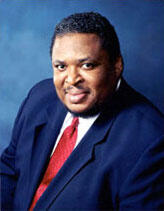
In February, Smith was appointed to a new Interagency Pain Research Coordinating Committee, which was created by the U.S. Department of Health and Human Services, through the Affordable Care Act, to identify critical gaps in basic and clinical research on the symptoms, causes and treatment of pain.
The committee’s focus will be to coordinate pain research activities across the federal government with the goals of stimulating pain research collaboration, fully leveraging the government resources dedicated to supporting pain research and providing an important avenue for public involvement.
“I will be sitting next to some of the world's greatest pain experts,” Smith said. “When I talk to colleagues, all agree my expertise in sickle disease uniquely qualifies me to represent the treaters of non-cancer pain.”
“Almost all of my research career has been spent at VCU,” he added. “It was here that we conducted the now landmark Pain in Sickle Cell Epidemiology Study (PiSCES). It was here that we developed one of the NIH sickle cell centers of excellence (Basic and Translational Research Programs). And it was here that we participated in the first ever Sickle Cell Disease Clinical Research Network. VCU has essentially been the place where I have earned the right to be selected to this panel.”
Smith has almost 20 years of experience in teaching and performing critical reviews of the medical literature. He has published more than 30 peer-reviewed articles on health disparities and minority health, especially on clinical and health services in sickle cell disease. His research interests are quality, health disparities, clinical epidemiology and medical decision-making, especially changing physician behavior.
Greg Miller, Ph.D., Professor in the Department of Pathology, Director of Clinical Chemistry and Director of Pathology Information Systems

Miller assumed the presidency of the American Association for Clinical Chemistry in January for a 12-month term.
“It is an honor to be elected by my peers to serve as president of the most prestigious professional organization in the field,” said Miller. “It also makes me aware of the trust placed in me to guide the organization to best meet all members' professional needs.”
Miller said as AACC President, he will work to “develop a new strategic plan to include major new initiatives in [AACC’s] global role to lead the practice of laboratory medicine, to add value to membership and to further develop collaborations with clinical medicine organizations to develop practice guidelines that use laboratory tests.”
“I will ensure that these new strategic initiatives are advanced for the benefit of patients whose medical conditions are helped by laboratory testing,” he added.
In 2007, Miller received the AACC Lifetime Achievement Award in Clinical Chemistry and Laboratory Medicine and the Clinical and Laboratory Standards Institute’s Award for Excellence in Consensus Management. He also has won the AACC Miriam Reiner (2006) and Joseph H. Roe (1997) Awards for Contributions to the Field of Clinical Chemistry.
Subscribe to VCU News
Subscribe to VCU News at newsletter.vcu.edu and receive a selection of stories, videos, photos, news clips and event listings in your inbox.