April 22, 2026
VCU and Richmond ID campus 'hot spots' following targeted traffic enforcement operation
Share this story
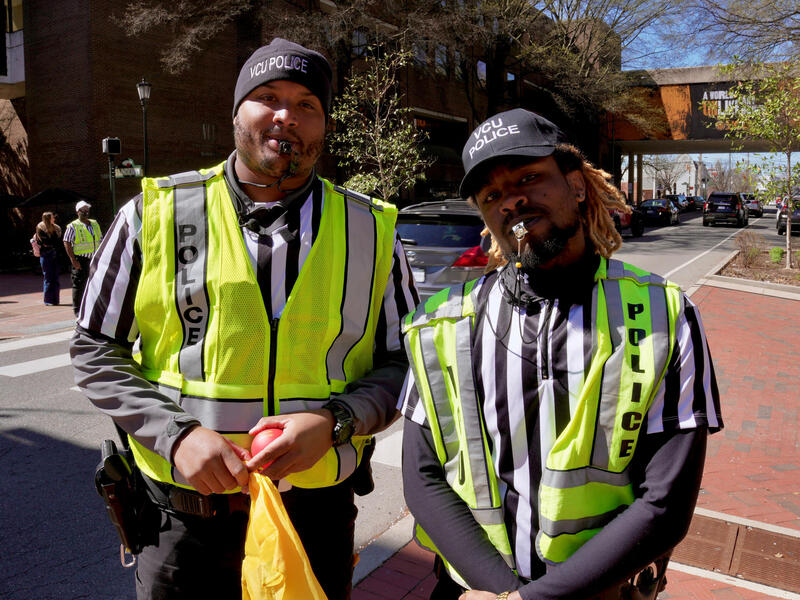
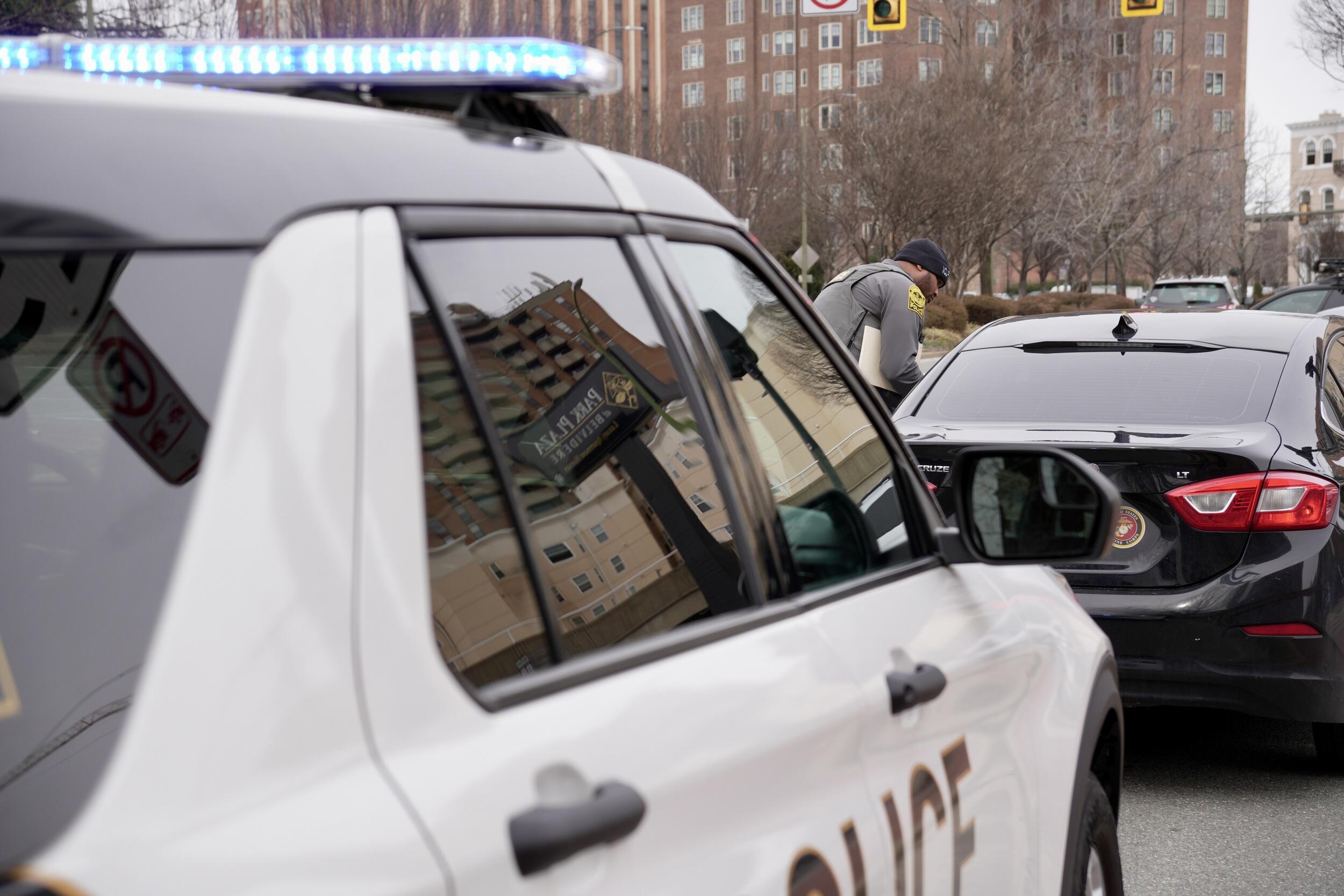
In the first three months of this year, Virginia Commonwealth University Police officers issued nearly as many traffic summons as during the entire 2024-25 school year due to Operation Safer Streets, a new targeted traffic enforcement operation.
Launched in early January following multiple fatal traffic incidents involving pedestrians near VCU’s campuses, Operation Safer Streets involves intensified traffic enforcement, data analysis and sustained educational outreach.
In January, VCU Police doubled the number of personnel in the traffic division to amplify enforcement efforts within its jurisdiction and directed other officers to increase their traffic enforcement duties when available. As part of Operation Safer Street, officers initiated 1,943 traffic stops that resulted in 1,760 traffic summonses issued, including 14 DUI arrests.
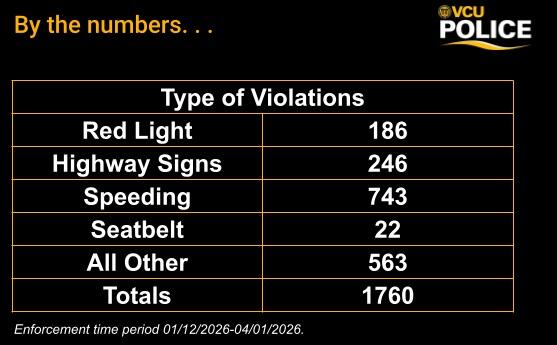
During the entire 2024-25 academic year (8/1/24 to 7/31/25), VCU Police officers issued a total of 1,774 traffic summons. The data show drivers have continued to exhibit potentially dangerous behaviors on the roadways near VCU’s campuses.
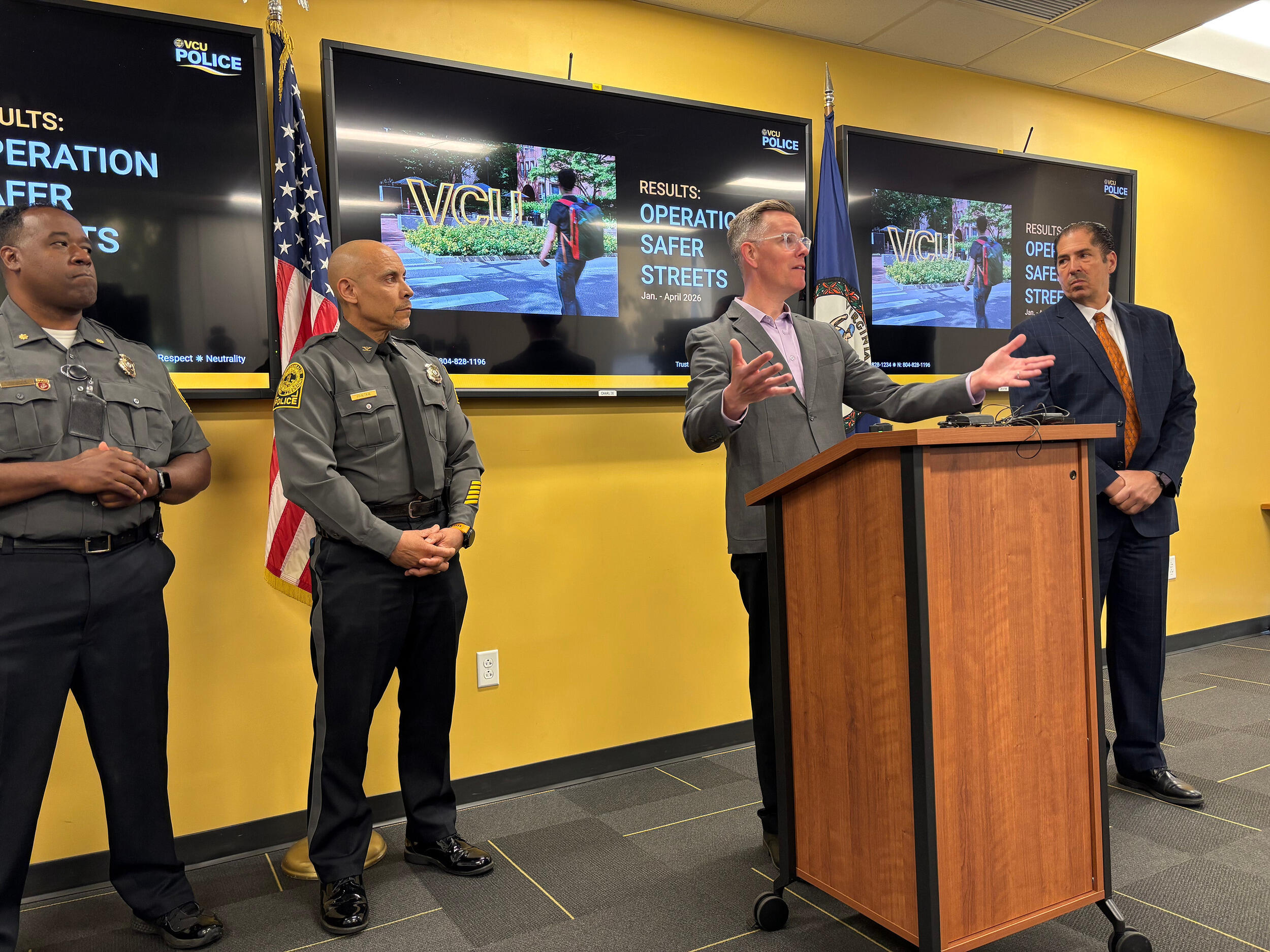
At a press conference April 21, VCU and city of Richmond officials discussed problem areas, next steps and insights into how the community can use this data to keep themselves safe
“We launched this operation with safety, education and data collection in mind,” said Clarence T. Hunter Jr., chief of police at VCU. “I’ve asked our entire force to take this work seriously. It's something we’ll continue to do because this problem isn’t going away overnight or just by writing tickets.”
VCU Police’s crime analysis team is now working to overlay operation data with geographical data related to pedestrian incidents on or near campus. Police commanders said this ongoing analysis will help inform deployment of personnel.
Based on the final tallies, hot spots for speeding are Belvidere Street to the east of the Monroe Park Campus and then East Leigh Street between North 4th Street and North 8th Street near the MCV Campus.
Areas near North Harrison Street, West Grace Street and West Franklin Street are problem areas for drivers who fail to obey highway signs, do not yield to pedestrians and run red lights.
Lt. Edgar Greer, who led Operation Safer Streets, said while speeding remains an issue near VCU’s campuses, intersections present the greatest hazard to pedestrians.
“When a vehicle is turning, it’s the greatest risk for pedestrian conflict in a downtown area,” Greer said. “We know that not all drivers that come near VCU are familiar with the roads – so mistakes happen. But we really ask all drivers – and even pedestrians – to understand that you really need to take your time, be careful and stay alert when traveling through an intersection.”
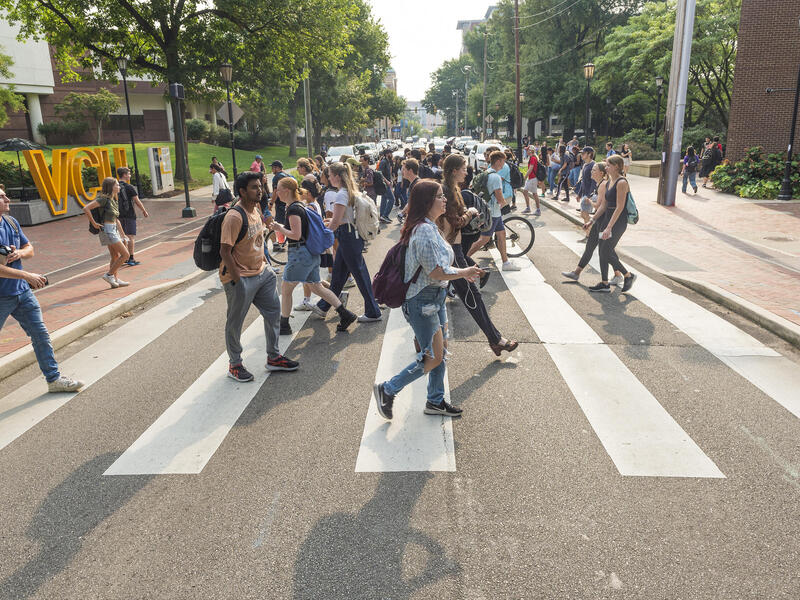
VCU Police continue to urge drivers to take responsibility for slowing speeds and staying alert when traveling near VCU’s campuses, which represent the highest daily pedestrian volume in Richmond.
Andy Boenau, director of the Richmond Department of Transportation, told reporters that every conversation the city officials have about rebuilding transportation infrastructure starts with the goal of eliminating serious traffic injuries. The data, he said, highlights the need for behavioral changes.
“We as pedestrians have to be extra vigilant because people behind the wheel are behaving so poorly,” Boenau said. “We know the most harm that comes to pedestrians is from motor vehicles. This isn’t to put blame on those who get hurt by walking around; it’s to acknowledge there is such bad behavior behind the wheel that you have got to pay more attention.”
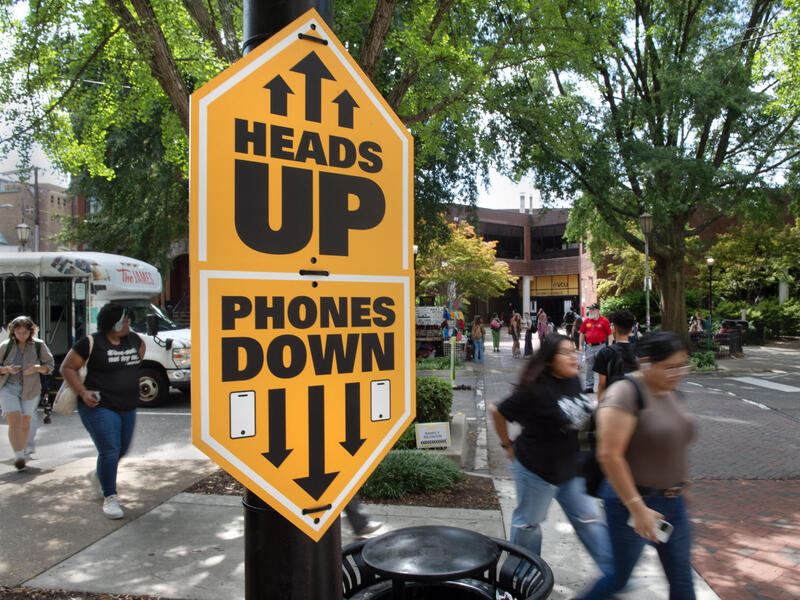
John Venuti, associate vice president for public safety and emergency services at VCU and VCU Health, said anyone can take three simple steps to make the streets safer: pay attention, slow down and put away your phone. He also pointed to real progress that VCU and the city have made in making streets and sidewalks safer – through enforcement, engineering and education.
“What we laid out today is a clear picture of what we are doing to change behavior on your streets,” Venuti said. “In prevention work, we are often trying to quantify a negative. We simply cannot measure the absence of tragedy; we cannot give you a ‘ghost statistic’ for the lives that were saved because an officer made a traffic stop or a signal gave a student a five-second head start.”
VCU provides an updated list of pedestrian safety projects that have been completed, are planned or underway, and that are under discussion. The full list is available at masterplan.vcu.edu/pedestrian-safety/
VCU, city and regional partners continue to work to keep pedestrian safety top of mind for community members and travelers, through ongoing infrastructure investments, a focus on innovative ways of reducing pedestrian-vehicle conflicts and community outreach.
Subscribe to VCU News
Subscribe to VCU News at newsletter.vcu.edu and receive a selection of stories, videos, photos, news clips and event listings in your inbox.