June 1, 2026
VCU pioneer in Lyme disease puts another tick-borne menace in his sights
Share this story
Building off his groundbreaking work in diagnosing and treating Lyme disease, a Virginia Commonwealth University researcher is targeting another tick-borne illness that has quietly emerged as a significant public health concern.
Caused by microscopic parasites that infect red blood cells, babesiosis can produce symptoms ranging from flu-like illness to life-threatening complications, particularly in older adults and immunocompromised patients. Yet despite its increasing prevalence, diagnosing babesiosis remains slow, expensive and unreliable in many clinical settings – raising concern that the disease may be significantly underdiagnosed in humans as well as animals.
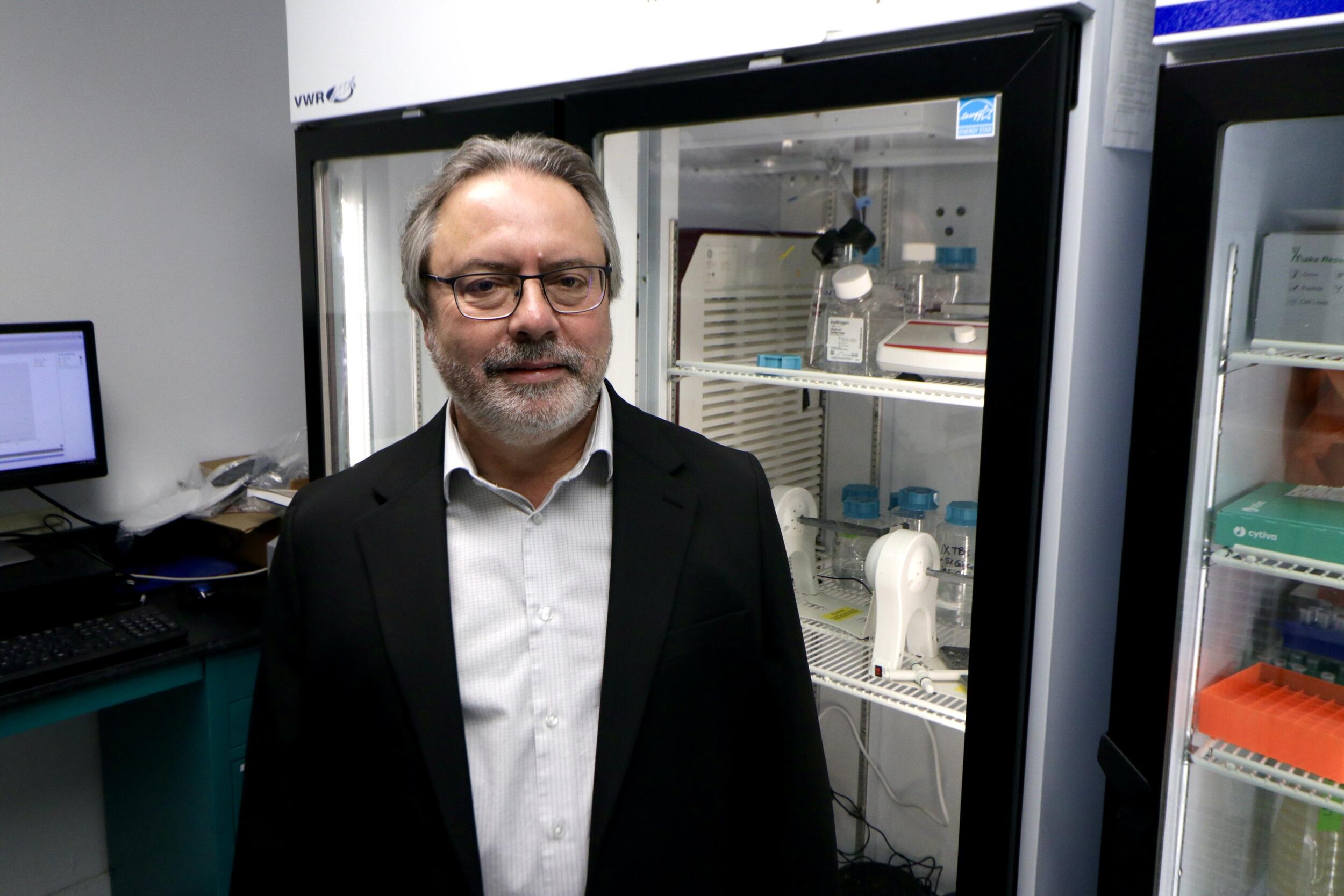
Richard T. Marconi, Ph.D., a professor in the VCU School of Medicine’s Department of Microbiology and Immunology, is working with his laboratory team to deliver a faster, more accurate diagnostic tool for babesiosis. The innovation could fundamentally improve not just how the disease is detected but how it is managed.
“We want to develop an accurate test that does not require skilled personnel and that can be run quickly, directly in a clinician’s office,” Marconi said. “It’s really important to get the results quickly so that you can treat promptly.”
Babesiosis is transmitted primarily through tick bites, though it can also spread via blood transfusions or from mother to child during pregnancy. The most common species infecting humans in the United States is Babesia microti, while related species pose serious risks to companion animals.
Today’s diagnostic approaches rely largely on PCR testing, blood smear analysis or indirect immunofluorescence assays – methods that can be costly, require specialized expertise, be impractical for routine clinical use or fail to detect early-stage infection. Marconi’s team is developing a peptide-based diagnostic antigen derived from B. microti surface proteins.
“We found in early studies that peptides derived from Babesia surface proteins can detect antibody responses very early in the infection process, even before some of the other tests would pick it up,” he said.
The innovation builds on Marconi’s decades-long work developing chimeric epitope-based technologies, a strategy that combines fragments from multiple proteins into a single diagnostic or vaccine antigen. His laboratory pioneered this approach, successfully translating it into commercial products, including licensed vaccines for canine Lyme disease.
“We are making a test that will pick up antibodies that develop as a result of infection with any of the Babesia species that are out there, so it’s a more comprehensive test,” Marconi said. “It’s also a more rapid test, and it will be a less expensive test as well.”
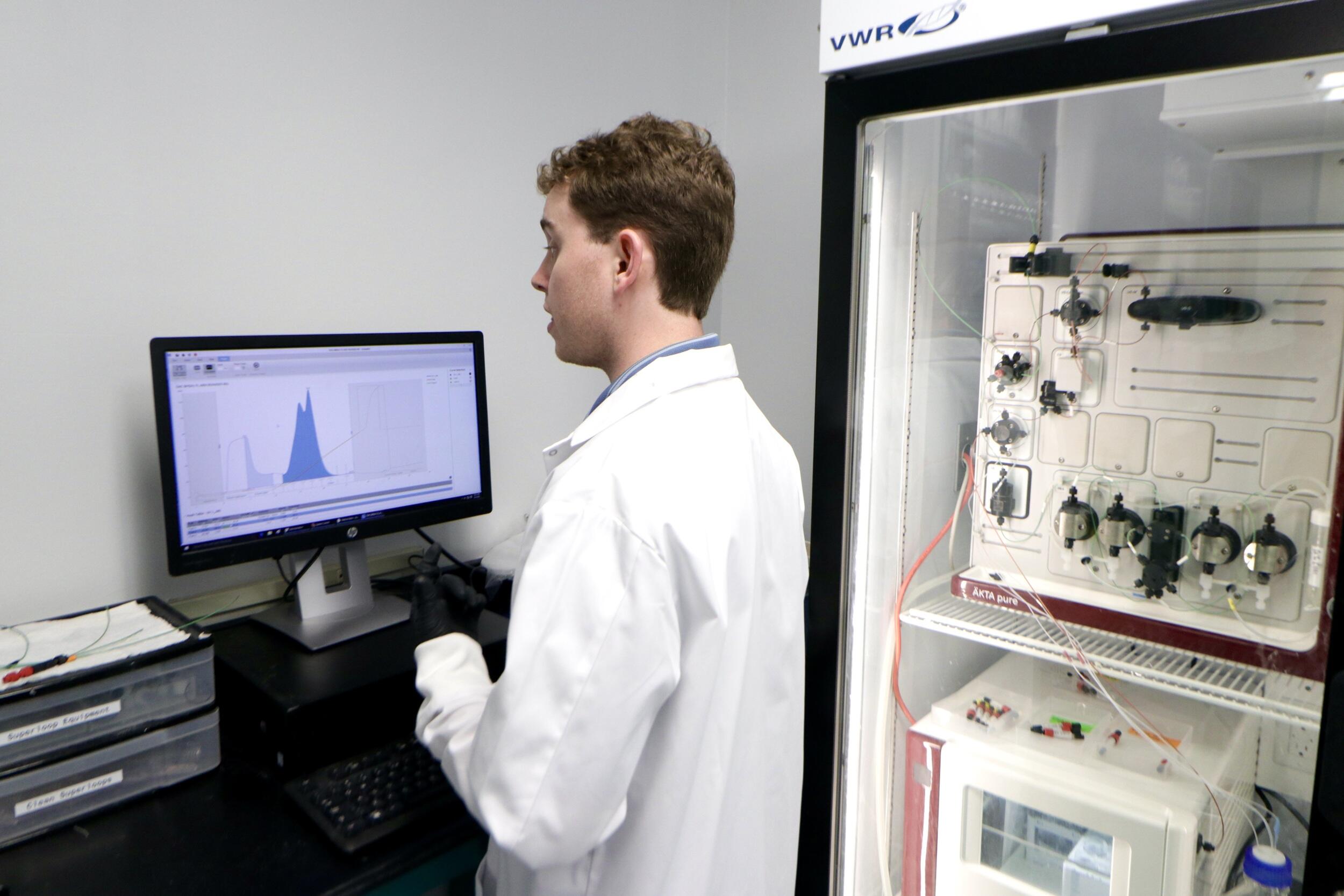
Marconi’s team includes Alex Counts, a Ph.D. student and a graduate of VCU’s Department of Medical Laboratory Sciences in the College of Health Professions. Counts contributes to assay design and validation efforts aimed at producing a test that can be reliably implemented in clinical laboratory settings.
The project recently received support from VCU TechTransfer and Ventures – part of the Office of the Vice President for Research and Innovation – which named Marconi among its latest Commercialization Fund awardees. This funding will help move the diagnostic from proof of concept toward market readiness.
Rather than pursuing regulatory approval independently, Marconi plans to license the technology to diagnostic manufacturers with established approval pathways through the Food and Drug Administration and the U.S. Department of Agriculture. This strategy accelerates adoption while reducing development risk.
“Once we validate a product, TechTransfer plays a very key role in ensuring that we obtain proper intellectual property protection, and that we can then take it to companies in a manner in which the product is protected,” Marconi said. He predicts the quickest route to market would be through veterinary medicine, which his team would pursue while honing the technology for human use.
Magdalena K. Morgan, Ph.D., director of licensing for TechTransfer and Ventures, works with Marconi’s team to align scientific milestones with commercial and regulatory considerations.
“Dr. Marconi and his laboratory staff have taken a rigorous, evidence-based approach to developing this diagnostic, which is exactly what industry partners look for,” she said. “By supporting this work through the Commercialization Fund, we’re helping to reduce technical risk and position the technology for successful licensing and downstream development.”
Marconi and his team envision a future in which babesiosis can be diagnosed quickly and accurately at the point of care. They would also like to see an assay developed that simultaneously tests patients for babesiosis and other common tick-borne diseases like Lyme disease.
“Many people who show symptoms of a tick-borne pathogen but test negative for Lyme disease have babesiosis or a similar condition,” Marconi said. “If you put it all into one test, it could really play a key role in making sure patients get treated quickly.”
Subscribe to VCU News
Subscribe to VCU News at newsletter.vcu.edu and receive a selection of stories, videos, photos, news clips and event listings in your inbox.