June 11, 2003
Pharmaceutical and biomedical industries look to VCU for ideas on how to make better medical plastics
Share this story
A unique summer course on the principles and medical applications of polymer science attracted product developers from the nation's leading pharmaceutical and biomaterials companies to Virginia Commonwealth University's School of Engineering.
The four-and-a-half day course, entitled "Polymers in Medicine: Principles and Practice," was sponsored by the American Chemical Society and organized by the Department of Chemical Engineering to share the school's expertise with industry and raise the profile of its faculty and research.
"We are the polymer-science-in-medicine course for the American Chemical Society," said co-organizer Gary E. Wnek, Ph.D.
Participants learned about the synthesis of polymers used in medicine and their biomedical applications; how polymer composition, structure morphology and molecular weight influence the choice of polymers for specific applications; and the relationship of results from surface characterization techniques to performance of polymers in medical applications.
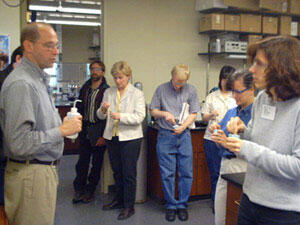
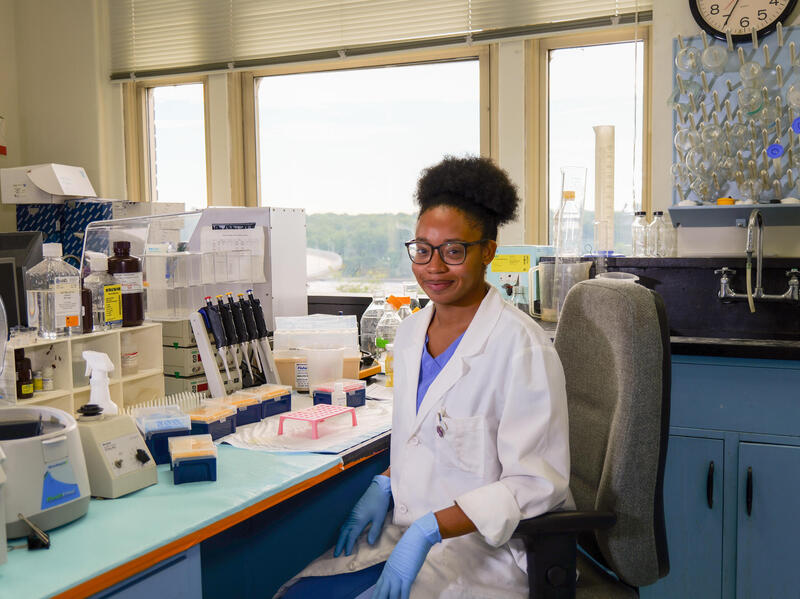
They also received hands-on experience measuring properties important to biomedical applications, along with direct interviews with principals involved in startup companies working on tissue engineering, biochips and drug discovery.
"No other short course in the United States offers more information on the applications of polymers in medicine," said Kenneth J. Wynne, Ph.D., the course organizer. "Many of the participants who took the course were professionals who wanted to learn the latest advances in polymer science."
One of them was Katherine Glasgow, Ph.D., a product developer with General Electric Plastics in Mt. Vernon, IN. "All the products I develop are for the medical market," she said. "I wanted to learn all the ways polymers could be used in medical devices, such as syringes, blood oxygenators and scalpel blade protectors; and their performance requirements to make sure I use them the right way. I've picked up some new ideas and a better understanding of polymer science from this course."
Another participant was Bill Stewart, a medical products developer for Becton Dickenson Technologies in Research Triangle Park, NC. He came to learn more about glucose monitoring and high-throughput screening research performed by course co-organizer and chemical engineering professor Anthony Guiseppi-Elie, Sc.D. "High-throughput screening allows lots of different polymers to be analyzed simultaneously, which might help me find the best formulation for materials for the biosensors I'm developing."
Organizers want to offer the course annually and host it at other locations to help spread the word about VCU's cutting-edge research and raise the School of Engineering's profile in the medical products industry. "So far, the participants are very impressed with our facilities and accomplishments," said Guiseppi-Elie.
Subscribe to VCU News
Subscribe to VCU News at newsletter.vcu.edu and receive a selection of stories, videos, photos, news clips and event listings in your inbox.