April 28, 2011
Planning Students Work in 'Gandhi’s Neighborhood'
Share this story
Graduate students from Virginia Commonwealth University teamed up with others from the University of Southern California and the Center for Environmental and Planning Technology University (CEPT) in India for a major conservation and development planning project in the area where India’s independence movement was born.
The trip was sponsored through the L. Douglas Wilder School of Government and Public Affairs and included five students from the Master of Urban and Regional Planning Program , one student in the Master of Public Administration Program and another from the Department of History Graduate Program.
For three weeks, the students worked in the Sabarmarti or Gandhi Ashram (spiritual community) in Ahmedabad, Gujarat, India. The ashram became a national shrine to the movement of Indian independence from the British in the 1930s. National freedom fighter Mohandas Gandhi lived on the site and taught his philosophies to others. These teachings became inspirational to all Indian people. Gandhi eventually left the ashram, and India, in protest of the colonization.
Guided by Gandhian philosophy and sustainable concepts, students from the three institutions worked together in mixed groups to develop a long-range vision for the area and a specific plan to guide future development and further memorialize the Gandhi Ashram.
“Over the course of three weeks, the students participated in brainstorming sessions, mental mapping exercises, stakeholder presentations, interviews with experts on relevant topics and intense daily group work sessions,” said Meghan Gough, Ph.D., assistant professor of urban studies and regional planning, who led the trip to India during VCU’s winter break.
In the end, students created seven group plans, or design solutions, for the Gandhi Ashram. In April, the participating VCU students presented their finished project, “Planning Gandhi’s Neighborhood,” to fellow students and professors at Scherer Hall.
“While all of the students were enrolled in a graduate level planning program, design or social based planning, the different cultural backgrounds, personal experiences and undergraduate disciplines contributed to the shared experience of the students, professors and stakeholders,” Gough said.
Students described the experience as a great way to learn about planning in a new way in an international setting.
“Local knowledge is the most important aspect of international planning. India has planning issues of which we have virtually no working knowledge and listening more than talking was a highly regarded asset,” said student Brian Koziol.
Students quickly learned they needed to broaden their American perspective on planning to incorporate India’s style, customs and traditions into the plan.
“It is important to never judge a culture on our own beliefs and to realize that their reality is not our own,” said student Alissa Akins.
Other students described the journey as the trip of a lifetime.
“The beautiful controlled chaos of the markets in the old city was always a reminder of how far I really was from my own world,” said student Andrea Houseman.
The trip proved that sometimes learning takes place outside of a classroom in a way that even the most advanced planning students couldn’t plan for.
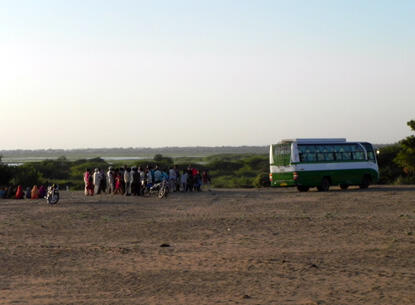
“A defining moment of the trip was standing around in the absolute middle of nowhere, drinking coconut water with village elders as the sun was going down over a concrete plant,” Koziol said.
Visit http://www.has.vcu.edu/usp/MURP/projects761/india/SummaryReport.pdf for the complete report.
Subscribe to VCU News
Subscribe to VCU News at newsletter.vcu.edu and receive a selection of stories, videos, photos, news clips and event listings in your inbox.