July 29, 2011
Spit for Science: The VCU Student Survey
Share this story
This fall, incoming Virginia Commonwealth University freshmen will have an opportunity to engage in a voluntary and confidential, university-wide research project aimed at understanding how genetic and environmental factors contribute to the development of problems related to alcohol use and emotional health.
Through “Spit for Science: The VCU Student Survey,” top researchers with expertise in alcohol use and mental health from the Virginia Institute for Psychiatric and Behavioral Genetics at VCU hope to gain insight into how genetic and environmental factors influence the development of psychiatric or substance use disorders, and how these results might be used to inform prevention and intervention programming at VCU.
“Spit for Science is the kind of project that showcases VCU’s commitment to research and discovery that advances knowledge and promotes translational applications to improve human health,” said Beverly Warren, Ed.D., Ph.D., provost and vice president for academic affairs at VCU. “This research engages our students in research, ultimately showing them how they can be involved in changing their own health choices as well as influencing the health of their community.”
Genes and environment

In the last 40 years, researchers have learned that it’s a mix of genes and environment that contribute to a person’s risk for developing a particular psychiatric or substance use disorder, and that genes aren’t deterministic.
Among those leading the way in this field are Kenneth S. Kendler, M.D., an internationally renowned psychiatrist and director of the Virginia Institute for Psychiatric and Behavioral Genetics at VCU, and Danielle M. Dick, Ph.D., associate professor of psychiatry, psychology and human and molecular genetics in the VCU School of Medicine, who are principal investigators for the “Spit for Science” study at VCU.
Kendler, Dick and colleagues at the Virginia Institute for Psychiatric and Behavioral Genetics have focused their research on the genetic and environmental influences on alcohol use and mental health by examining populations in Ireland, England, Norway, Sweden, Finland and China. The “Spit for Science” study will bring that research home to VCU in a way that can benefit its students and community.
According to Kendler, the college years are a dynamic time with many changes taking place at once - new friendships, relationships and experiences. It also tends to be a time when individuals are likely to experiment with alcohol and other substances. While some people are able to form healthy habits – knowing when enough is enough – others are not able to establish reasonable limits to their substance use. Experts estimate that one in four individuals over the age of 18 is affected with a psychiatric or substance use disorder.
|
“The study is designed to look at genes and environmental risk factors so that we can create the whole story of how humans develop over time,” said Kendler, a professor of human genetics and psychiatry in the VCU School of Medicine. “We start with genetic vulnerabilities and have a range of environmental experiences that are intertwined over time in a developmental context.”
“So it’s not a simple story of genes causing these factors. The genes are interacting with key environmental variables, and it’s that tapestry of human development in life … that we want to unweave, pull apart and understand how the pieces go together,” he said.
Spitting for science

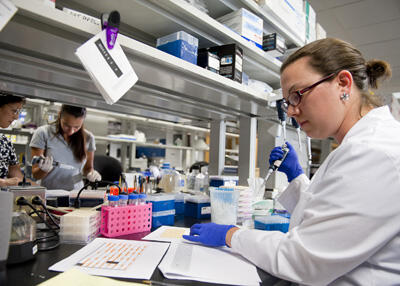
Incoming freshman who are 18 years of age and older will be invited to participate in the VCU study, which includes two parts - an electronic survey and collection of a DNA sample via saliva. Both parts of the study are completely voluntary and confidential. There are no repercussions for students who choose not to participate.
The electronic survey, which takes approximately 30 minutes to complete, will include questions about the participant’s personality and behavior, family and friends and experiences growing up. All the information gathered will be kept confidential and stored on a secure server. DNA will be collected through a saliva sample, hence “Spit for Science.” The sample is labeled with a unique random number and is connected to the survey responses only through these random code numbers. The DNA is never connected to individuals’ names or other identifying information. There will be no individual feedback, but the research team will create newsletters with overall findings from the study, which the team hopes will stimulate discussion.
There will also be opportunity for students to join an undergraduate research team with “Spit for Science” to be involved in coordinating aspects of the study and analyzing anonymous data. Through this work, they can earn research credit by being a part of the research team.
“We hope that the shared experience of engaging students in research will stimulate conversation and discussion about the research process, and about issues surrounding substance use and emotional health among college students,” said Dick.
“The findings that come out of this research project will be used to feed back into prevention and intervention programming at VCU to ultimately improve the health of our college population,” she said.
Additionally, the team will be conducting a number of educational forums focused on topics related to the study – for example, genetics in medicine, genetics in the law and ethical issues surrounding genetic research.
“Genetics is a high priority area for the National Institutes of Health, and we’re moving toward an era of personalized medicine tailored to an individual’s risk profile,” Dick said. “We want VCU students to be able to be a part of these advances and to engage in dialogue about the new era of genetics and the potential and challenges for personalized medicine.”
Last year, VCU was awarded a prestigious $20 million National Institutes of Health Center for Translational Science Award, becoming the only academic health center in Virginia to receive such an award and one of only 55 such centers around the country. The award reflects VCU’s focus on promoting cutting-edge, interdisciplinary research that has the ultimate goal of improving human health.
The study is supported by several grants from National Institutes of Health.
For more information on the project visit http://www.spit4science.vcu.edu.
Subscribe to VCU News
Subscribe to VCU News at newsletter.vcu.edu and receive a selection of stories, videos, photos, news clips and event listings in your inbox.