Aug. 7, 2012
'Spit for Science: The VCU Student Survey' Goes Back to School
Share this story
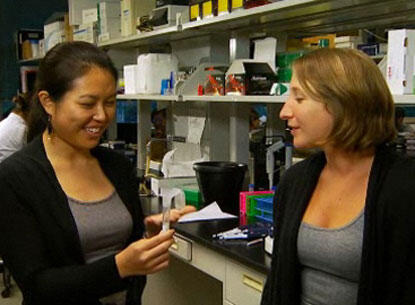
“Spit for Science: The VCU Student Survey” returns this fall for its second year, providing an opportunity for incoming Virginia Commonwealth University freshmen to engage in a voluntary and confidential, university-wide research project aimed at understanding how genetic and environmental factors contribute to alcohol use and emotional health.
The study, which launched last fall, is led by VCU experts from the Virginia Institute for Psychiatric and Behavioral Genetics at VCU. Their goal is to gain insight into how genetic and environmental factors influence patterns of alcohol use and emotional health in college students.
The field of psychiatric and behavioral genetics has grown considerably in the past 40 years. Researchers have learned that genes and environment come together to contribute to a person’s risk for developing a particular psychiatric or substance use disorder. However, they are not deterministic.
“By participating in this project, VCU students have the opportunity to be part of a project that is uniquely positioned to advance our understanding of behavioral health outcomes in college students,” said Danielle M. Dick, Ph.D., associate professor of psychiatry, psychology and human and molecular genetics in the VCU School of Medicine. Dick is a co-principal investigator for the “Spit for Science” study at VCU, along with Kenneth Kendler, M.D., director of the Virginia Institute for Psychiatric and Behavioral Genetics.
“It’s also a great way for students to learn about research on college campuses, become more aware of issues associated with alcohol use and emotional health on college campuses, and be part of an effort that will ultimately feed back into health and wellness programming here at VCU,” said Dick.
According to Dick, college-age populations are entering a high-risk period for the onset of problems related to substance use and emotional health, so the VCU research team wanted to gain further insight into this stage.
Taking part
Incoming freshman who are 18 years of age and older will be invited to participate in the VCU study, which includes two parts - an electronic survey and collection of a DNA sample via saliva. Both parts of the study are completely voluntary and confidential. There are no repercussions for students who choose not to participate.
The electronic survey, which takes approximately 15 to 30 minutes to complete, will include questions about the participant’s personality and behavior, family and friends and experiences growing up. All of the information gathered will be kept confidential and stored on a secure server. DNA will be collected through a saliva sample, hence “Spit for Science.” The sample is labeled with a unique random number and is connected to the survey responses only through these random code numbers. The DNA is never connected to individuals’ names or other identifying information. There will be no individual feedback, but the research team creates newsletters with overall findings from the study, which the team hopes will stimulate discussion.
The project launched in the fall of 2011 with an initial survey, followed by a spring survey to allow the team to check in with students and understand how they are doing after spending their first semester and a half at VCU. The students who participated will be followed with a new survey each spring – so that the researchers can study how students are doing across their college years and, hopefully, beyond. This fall the new cohort of freshman students will be invited to participate.
Preliminary findings
| Read more: Spit for Science: The VCU Student Survey Similar Projects – Studying Populations Update on ‘Spit for Science: The VCU Student Survey Student Researchers Share Results for Spit for Science |
The results from 2011-12 revealed that nearly 70 percent of the incoming VCU freshman class participated in the web-based survey for the study. Dick said that having such a high percentage of participants was a “huge success, especially compared to averages closer to 30 percent for web-based survey completion at other universities.” This year, the researchers hope that they will have even higher rates of participation among the incoming freshman class as awareness about the project grows, said Dick.
The VCU survey also was unique in that it incorporated a genetic component - and 98 percent of VCU freshman who participated in the survey also completed the DNA component. Dick said that this result may be due in part to the extensive educational efforts surrounding the genetic component of the project.
According to Dick, the early findings suggest VCU looks like colleges across the country in terms of alcohol and other drug use of our students.
Researchers will use the findings to gain insight into how genetic and environmental factors influence patterns of alcohol use and emotional health.
The plan is for the results to be used to inform prevention and intervention programming to improve the health of college populations.
The research team will continue to create a series of newsletters that provide participants with updates about the study and highlight the overall findings from the study, which the team hopes will stimulate discussion.
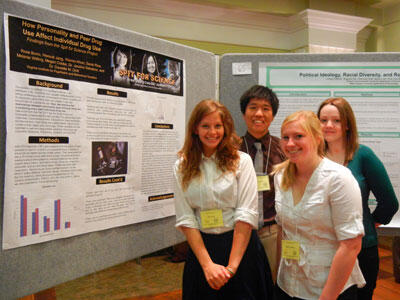
More than 25 undergraduate students were a part of the Spit for Science undergraduate research team last spring, selected from more than 50 applicants. Another 25, selected from a similarly competitive pool of applicants, will be part of the team this fall. These students are involved in coordinating aspects of the study and analyzing anonymous data. Through this work, students are able to earn research credit by being a part of the research team. Read about accomplishments of last year’s research team here.
Just as last year, educational forums will be held throughout the semester and will focus on topics related to the study, such as alcohol use and emotional health issues on college campuses, genetics in medicine, genetics in the law and ethical issues surrounding genetic research.
The study is supported by a grant from National Institutes of Health.
For more information on the project, visit http://www.spit4science.vcu.edu.
Subscribe to VCU News
Subscribe to VCU News at newsletter.vcu.edu and receive a selection of stories, videos, photos, news clips and event listings in your inbox.