Aug. 7, 2012
The Next Generation of Promising Young Scientists, Innovators
Share this story
Ten weeks ago, 47 talented young people stepped into laboratories across Virginia Commonwealth University’s campuses to get hands-on experience in the research setting, to test their own ideas to figure out how things work and to team up with some of VCU’s top experts and researchers.
These students shared the results of their dedication and hard work last week during a three-day research symposium.
For the past six years, VCU has hosted high schoolers and undergraduates, masters, doctoral and post-doctoral scholars from across the country. Their real-life science exploration is thanks to a host of programs through the VCU Center on Health Disparities designed to bring more underrepresented minorities into the biomedical sciences.
Four undergraduate programs begin in the summer months, including STEP-UP, HERO , IMSD and MARC, with some of them continuing on for a full year. The VCU Center on Health Disparities also partners with Elizabeth City State University to train additional students through the E-SPARE program.
“The goal of these programs is to spark an interest in research early in a student’s academic career,” said Suzanne Barbour, Ph.D., professor of biochemistry and director for the research training programs offered through the Center on Health Disparities.
“The opportunity to work with mentors and be in an actual research environment offers students a glimpse of what is possible. They can learn what research is all about and see if it’s something they may wish to pursue down the road. It also gives students the opportunity to see ‘real world’ applications of the subjects they are studying in their courses. We think this makes it more likely that the students will stick with their science majors.”
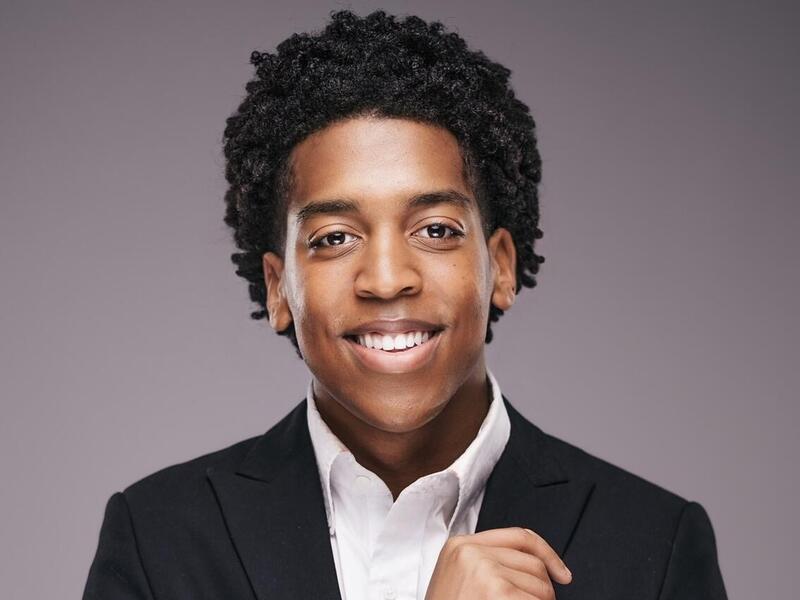
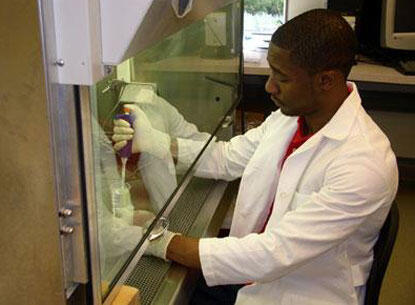
For VCU undergraduate Craig Yates, the experience has made it clear that research is the path he plans to pursue. Despite growing up with a passion for math and science, his first research experience in a lab only came this summer while participating in VCU’s Initiative for Maximizing Student Diversity Scholars Program, or IMSD. Yates presented his ongoing research during the symposium.
“I didn’t realize how many times you try and retry and work your hypothesis – you go until you have your ‘Eureka’ moment,’ said Yates, a senior studying biomedical engineering.
Earlier this summer, Yates began work in the lab of mentor Gary L. Bowlin, Ph.D., professor of biomedical engineering in the VCU School of Engineering and director of the Tissue Engineering Laboratory, investigating how to improve on proprietary products being used by clinicians and to overcome its current limitations.
“Craig came to my lab just after I met with two different clinicians who had approached me to help solve their problems with existing treatments,” said Bowlin.
“Craig was in the right place at the right time. I sent him off on developing what I considered to be a first-generation prototype to determine feasibility of my initial ideas,” said Bowlin.
With a lot of information in front of him, it would be up to Yates to put his problem-solving skills to work.
Yates became quickly acquainted with the various aspects of research and learned the importance of interdisciplinary education. Before long, the pair had a few prototypes and ideas to share with the clinicians.
“Of course, by this time Craig had taken ownership of the projects and he was off trying some things and conducting independent literature searches, etc., in an attempt to enhance the ideas I presented to him earlier,” said Bowlin.
The clinician feedback on the prototypes has provided more information for the team, and Yates is now conducting further literature searches as he attempts to develop the optimal prototype and solve the problems at hand.
“This experience has allowed Craig to work on cutting-edge research and development which has enabled him to become an independent researcher and innovator,” he said.
Additionally, Yates gained experience around the lab bench, developed study ideas and goals, as well as wrote scientific papers for progress reports and worked on his public speaking skills.
“The experience has better prepared me for graduate school … I did not realize how much I would like research,” he said.
For the next year, Yates will continue with the projects in Bowlin’s lab, with one of them representing his final senior design project to be presented just prior to his projected graduation next spring.
No doubt, Yates is looking forward to many more “Eureka!” moments to come.
Subscribe to VCU News
Subscribe to VCU News at newsletter.vcu.edu and receive a selection of stories, videos, photos, news clips and event listings in your inbox.