Oct. 20, 2003
VCU education professor speaks at National Press Club on keeping top teachers in urban schools
Share this story
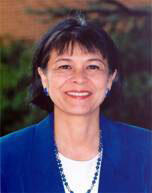
Terry Dozier didn't know how difficult it was to hold a teaching position in an urban school district until she accepted a job in Florida's largest school system in 1976. She had left her first teaching job of two years, working for a suburban school system in Gainesville, to join her husband in Miami.
After her first year in the Miami-Dade County school system, she received notice from school administrators that because of the state's late budgeting process, they couldn't guarantee her position would be funded for another year. Not willing to risk waiting to find out, Dozier left to take a teaching position in South Carolina. Eight years later she was recognized as National Teacher of the Year and in 1993 she went on to serve in the Clinton Administration as senior advisor on teaching to United States Secretary of Education Richard W. Riley from 1993-2001.
"What did Florida's late budget decision cost? A National Teacher of the Year," said Dozier.
In March 2000, Dozier and her husband started looking for teaching jobs again. They inquired in Denver, but the school system told them they wouldn't know until July if any vacancies were available. Two suburban school districts offered them jobs right away, but required them to take four tests at their own expense and would not have offered them a salary commensurate with experience. Not good incentives for two highly qualified and credentialed teaching candidates.
After finishing her tenure in Washington, D.C. in 2001, she moved with her husband to Richmond to become an associate professor in Virginia Commonwealth University's School of Education, where she is national teacher in residence and director of the Center for Teacher Leadership.
Dozier, Ed.D., is one of many highly qualified and credentialed teachers in the nation who couldn't work in urban school systems because of dysfunctional and sluggish hiring practices, according to a recent report by "The New Teacher Project," a New York-based nonprofit group dedicated to ensuring that all schools are staffed with highly qualified teachers.
"There are excellent teachers who could be teaching in urban systems and we're losing them because of these policy practices. The consequence is urban schools end up hiring last minute, weaker candidates because the good ones have already been snapped up by other school districts," said Dozier. "This is a very serious problem because inner city children are more dependant on the quality of teachers than suburban children, whose parents can provide them with more education resources and experiences at home."
Dozier shared her views and experiences during a panel discussion at the National Press Club in Washington, D.C. following the report's release. The report, "Missed Opportunities: How We Keep High-Quality Teachers out of Urban Classrooms," shows urban school districts lose many of their best teacher applicants because they hire so much later than other districts. The report (www.tntp.org/docs/execsummaryfinal3.pdf) also explains the causes of the delays and possible solutions.
"I'm thrilled to see a report that backs up what I have personally experienced and have been saying to policy makers for years," said Dozier. "It dispells the myth that large urban districts can't attract top teachers. They need to hire teachers sooner and change bureaucratic practices and policies that get in the way."
Subscribe to VCU News
Subscribe to VCU News at newsletter.vcu.edu and receive a selection of stories, videos, photos, news clips and event listings in your inbox.