May 8, 2018
VCU Health System Hospitals and Clinics CEO: ‘We are only constrained by how big we can think’
Share this story

Deborah Davis, CEO of VCU Health System Hospitals and Clinics, believes that the future of health care lies in community partnerships to compete for outcomes instead of volumes.
“Health outcomes are impacted by so much more than clinical care, and health systems that work together and connect with communities as teams are better prepared to face demands of the future,” Davis said.
Hospitals that are shifting their mindset from saving individual lives to strengthening communities have to think creatively to weather the current state of uncertainty, Davis said. She outlined major trends shaping the future of health care earlier this spring at the Osher Lifelong Learning Institute's “Aging Well” series at the University of Richmond (the full keynote address is available on YouTube). Davis believes those trends present opportunities for health service providers to rethink patient care in several areas, including:
Aging baby boomers and better access to care driving workforce demand
Measures of the Affordable Care Act that mandated health insurance coverage for almost everyone in 2010 have led to the highest number of U.S. adults with health insurance since the 1960s.
“Because of the ACA, nearly 20 million more Americans have access to health care today,” Davis said. “Dollars spent on prevention and keeping people out of emergency rooms for primary care are dollars well spent.”
Better access to health services, combined with an aging baby boomer generation, has increased the demand for health care professionals, Davis said.
“The number of adults older than 65 years will almost double by 2030,” she said. “Older adults are more likely to have chronic conditions, putting extra pressure on our workforce.”
Half of all health care job openings remain vacant today, Davis said. This trend requires health systems to think differently about what jobs to create and how to deliver care.
Community needs inform new care delivery models
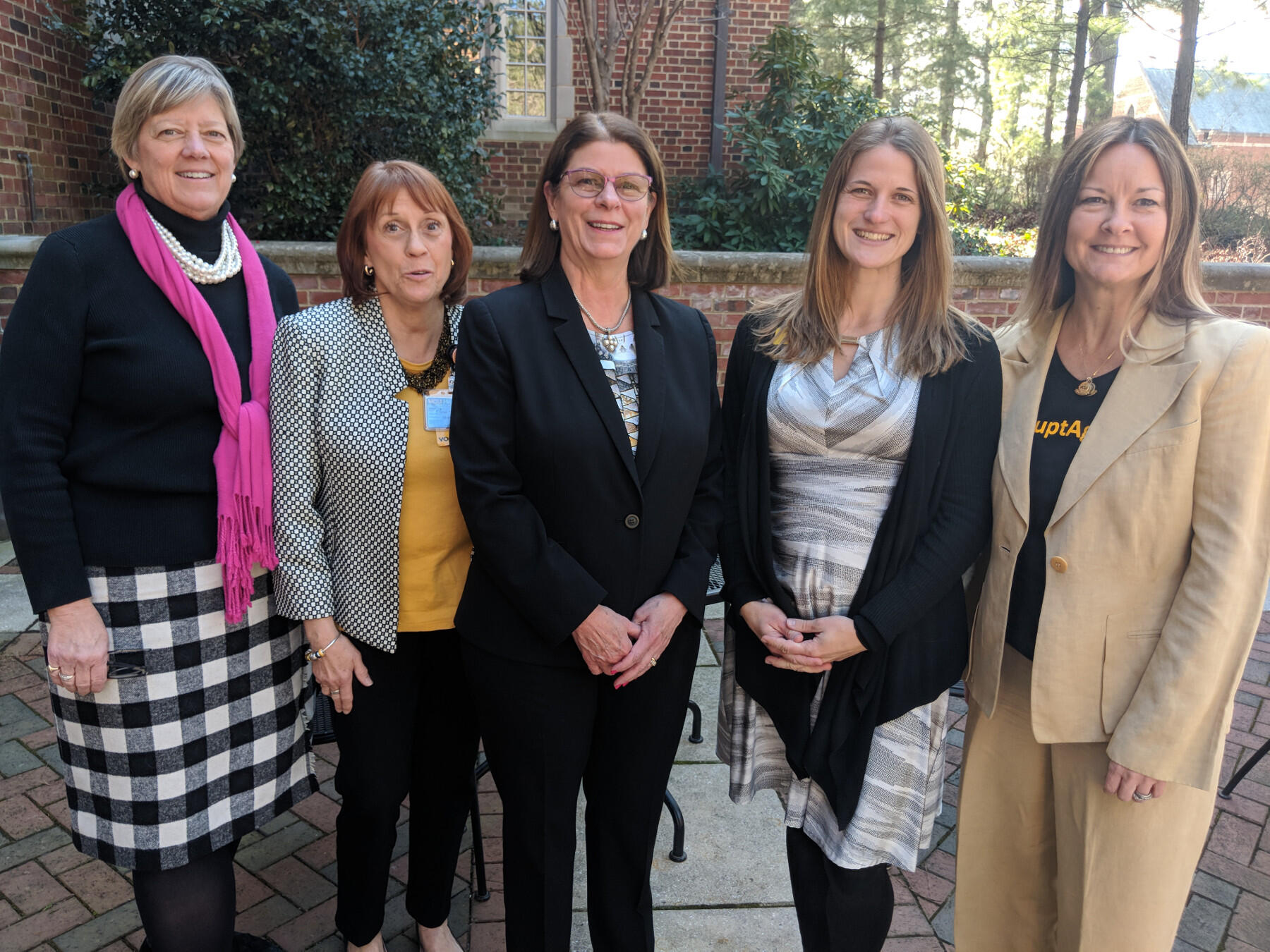
Health systems also are assuming more responsibility for patients across the care continuum, often beyond hospital walls, Davis said.
“Health systems need to be guided by what makes sense to our communities,” she said, adding that clinical care determines a mere 20 percent of health outcomes.
She cites pediatric asthma as an example. Richmond is the second-most challenging city to live in with asthma in the U.S.
“We have all seen pediatric cases in our emergency rooms for conditions that should be controlled in their communities,” Davis said.
To work on the causes of asthma beyond simply treating symptoms, Davis described how the health care community in Richmond is discussing collaboration to address socioeconomic factors, such as providing more education on disease management or offering resources for families living with mold in their homes.
Technology improves convenience, reimagines home care
Health systems are starting to integrate wearable devices in their care and take cues from retailers such as Amazon and Apple on how to improve the customer experience, but Davis predicts it may take years for full integration and interoperability.
“Until my iPhone can automatically get the step count from my Fitbit and upload the data to my electronic medical records, we have a long road ahead,” Davis said.
The connected care model of the future is centered on patients who expect the same convenience and responsiveness from their health care provider as they do from big retailers.
“We are using technology to reinvent house calls and care at home as we know it,” Davis said.
VCU Medical Center has one of the oldest house-call programs in the country, Davis said, but it has been cost prohibitive to expand the service. Technology would allow health systems to provide quality care more affordably to more people, she said. VCU Health is piloting a virtual visits initiative called VCU Health Anywhere that connects patients with providers from their mobile device or computer. At-home programs of the future could complement telemedicine to keep patients out of the hospital.
We are only constrained by how big we can think.
“One of the biggest factors for readmissions into acute care is a lack of understanding of medications,” Davis said. “Home visits are especially helpful to go over new prescriptions, and make sure that existing medications in the patients’ homes work safely with the new ones.”
Davis has a positive outlook: “I am very optimistic about the future,” she said. “We are only constrained by how big we can think. The future of health care is integrating services in the community, and moving away from competing for volume to competing for outcomes.”
Subscribe to VCU News
Subscribe to VCU News at newsletter.vcu.edu and receive a selection of stories, videos, photos, news clips and event listings in your inbox.