June 10, 2005
VCU Medical Center offers 24/7 cath-lab access to improve recovery of heart attack patients
Share this story
Patients who come to the VCU Medical Center for treatment of a heart attack now have the benefit of around-the-clock access to the cardiac catheterization laboratory, where doctors can quickly open blocked coronary arteries.
“Time is muscle,” said George Vetrovec, M.D., chairman of cardiology at the VCU Medical Center. “The seriousness of a heart attack is related to how much heart muscle the patient loses, so the sooner we can open a blockage and restore blood flow to the heart muscle, the less muscle damage there is and the better the patient does.”
A heart attack occurs when an artery that carries blood to the heart muscle becomes blocked by a blood clot and portions of the heart begin to die.
For years, thrombolytics, or clot busters, have been the first line of attack against blood clots. They work by dissolving clots in an attempt to restore blood flow. But doctors have found that opening blockages with tiny balloon catheters – a procedure called an angioplasty – and placing stents – tiny mesh tubes that prop open arteries – more thoroughly restores blood flow to the heart.
“Clot busters work well, but often they don’t completely open a blockage,” said Vetrovec. “We have found that if we open blocked arteries with a balloon catheter we get much improved blood flow over clot busters alone and improving blood flow as soon as possible seems to provide a better preservation of heart muscle and a better overall outcome.”
Patients who manage to survive a heart attack that resulted in a significant amount of heart muscle damage are more prone to develop irregular rhythms, and are at greater risk of heart failure and sudden death, according to Vetrovec. By offering round-the-clock access to the cath lab, doctors hope to limit heart muscle damage and improve long-term outcomes for patients.
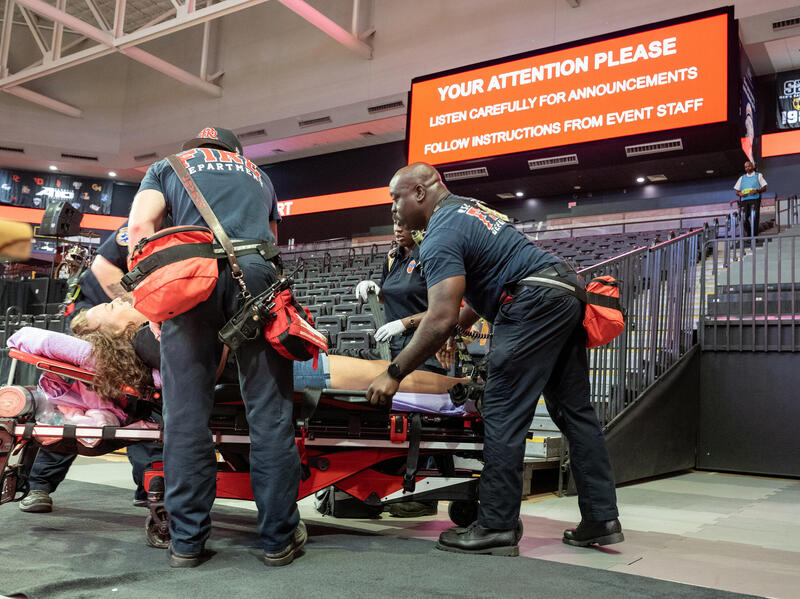
At the VCU Medical Center, Central Virginia’s only Level I Trauma Center, the process of treating heart attack patients begins before the patient arrives at the hospital.
“We talk with the helicopter or ambulance crews as they are bringing the patient to us so when they arrive, we already have a plan in place,” said Vetrovec. “It takes a dedicated, capable staff to make this work. ”
But Vetrovec said medical personnel can only help patients who first help themselves.
“Patients experiencing chest pain shouldn’t wait to see what happens next, they need to call 911 and get to a hospital as quickly as possible,” said Vetrovec. “It’s so dramatic when we can take a patient into the cath lab who is doing poorly, open their blockage with a balloon, and almost immediately see them improve.
“Being able to provide 24/7 urgent reopening of arteries is another step forward to improving outcome for heart attack patients,” he said.
Subscribe to VCU News
Subscribe to VCU News at newsletter.vcu.edu and receive a selection of stories, videos, photos, news clips and event listings in your inbox.