Oct. 22, 2007
VCU pediatric surgeon races in memory of former cancer patient
Share this story
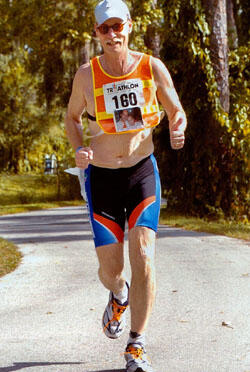
Competing in the recent 2007 Walt Disney World Triathlon in Florida was about more than crossing the finish line for Charles Bagwell, M.D., professor and chairman of the Virginia Commonwealth University Division of Pediatric Surgery.
A seasoned marathon runner and triathlete, Bagwell raced the event to memorialize Whitney Farrell, one of his former patients.
After a years-long battle with neuroblastoma, a childhood cancer of the sympathetic nervous system, 15-year-old Farrell died June 10.
“Many people, myself included, find it’s really helpful if you have something you can dedicate that race to,” said Bagwell, who has a photograph in his office of him and Farrell with the name and date of the triathlon inscribed on it. “It gives you a focus for your race that makes you feel like you’re not just doing this for yourself; you’re doing this for a worthy purpose.”
While preparing for the triathlon, Bagwell raised more than $1,000 for a fund in Farrell’s name that will go to Children’s Medical Services International. The nonprofit organization, which he co-founded, donates medical supplies and sends volunteer medical professionals to developing countries, primarily Jamaica.
According to Bagwell, donations are ultimately expected to exceed $10,000, which would surpass his original goal of raising $5,000 for the fund. The fund would go mostly toward creating a CMSI Web site. The money additionally would cover some costs of upcoming volunteer trips to Jamaica, where despite its reputation as a tourist hotspot, “medical care is very, very primitive and needs are huge,” he said.
Bagwell hopes the fund also will generate attention to Farrell’s unique case of neuroblastoma, which is not well understood and is difficult to treat.
According to Bagwell, Farrell’s case proved to be peculiar from the very beginning when she was diagnosed with the cancer at age 10, as it develops usually in infants ages 1 to 3.
After diagnosis, Farrell endured an intense sequence of surgery, chemotherapy, radiation and bone marrow transplantation – through which “she had an amazing amount of spunk,” Bagwell said.
By the end of all the treatment, he and the interdisciplinary team of pediatric specialists who had been caring for Farrell thought she was cured.
Whitney’s mother, Bonnie Farrell, was relieved.
“Most of the time with this particular disease, if you relapse, you relapse within the first three months after transplant,” Bonnie said. “We felt confident the longer she went (without relapsing) and her health returned.
“It took a long time, but she finally started getting energy back. We were leading a fairly normal life.”
Several years passed without any significant developments, and then the cancer reappeared – an outcome Bagwell said seemed untenable.
“Generally at five years you can pretty much figure somebody is tumor-free by that time, especially with this tumor,” he said.
The tumor was much more aggressive than the first one, leaving Whitney’s care providers with limited treatment options. Confounding matters, she developed an uncommon neurological dysfunction that gave her frequent seizures, which eventually put her in a coma.
Physically and mentally diminished, Whitney died shortly thereafter.
“I’ve been doing this business for a long time,” Bagwell said. “All of our patients are memorable – every one of them – but there are very few patients because of the uniqueness of the clinical situation that have affected me as much as Whitney. She was really a memorable character.”
Bonnie said her daughter fought her pain until the very end, staying optimistic the whole time.
“I feel the only thing we can do now is keep her memory alive, to do things for other people, to make people aware that these kids are going through living hell,” she said.
Bonnie said she would like to see her daughter’s experience with neuroblastoma bring about more national funding for pediatric cancer research, which might someday pave the way to a cure.
“If we can’t find a cure, [we need to] at least make life better for the children going through it,” she said.
Subscribe to VCU News
Subscribe to VCU News at newsletter.vcu.edu and receive a selection of stories, videos, photos, news clips and event listings in your inbox.