Sept. 5, 2014
VCU School of Pharmacy sets ‘wall breaking’ for compounding center
Share this story
Virginia Commonwealth University leaders and Virginia legislators will lend a hand Sept. 8 when VCU School of Pharmacy hosts a ceremonial wall breaking for its new state-of-the-science Center for Compounding Practice and Research.
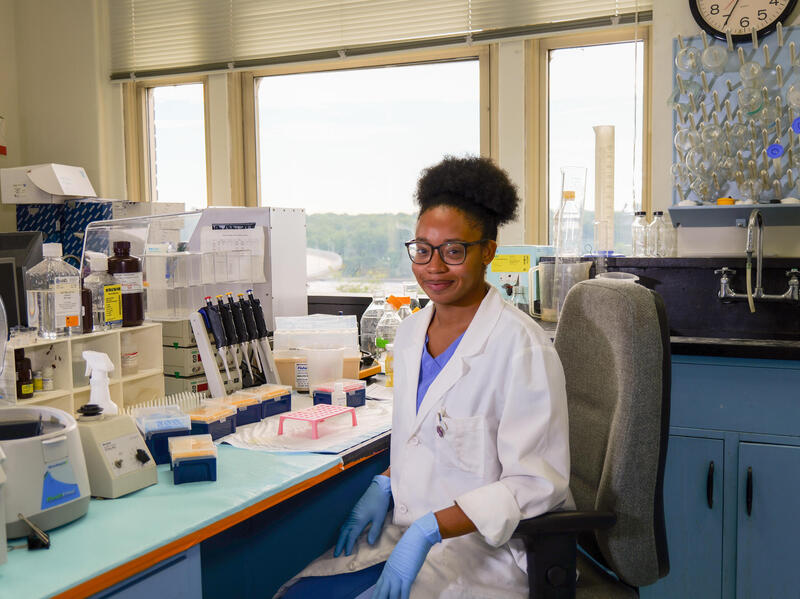
The CCPR will be constructed in three phases on the fifth floor of the R. Blackwell Smith Jr. Building, the School of Pharmacy’s primary teaching facility. The center will be dedicated to advancing the safe and effective use of sterile, extemporaneously compounded medications and personalized medicine via classroom and certificate training, continuing education programs and research.
Compounding fills an invaluable need for patients who must have personalized medications or patients who cannot use commercially available medications. Potential applications vary widely, from the treatment of fertility and blood disorders to veterinary medicine. Practicing pharmacists who train at the center and have sterile compounding facilities can be key players to address parenteral drug shortages?.
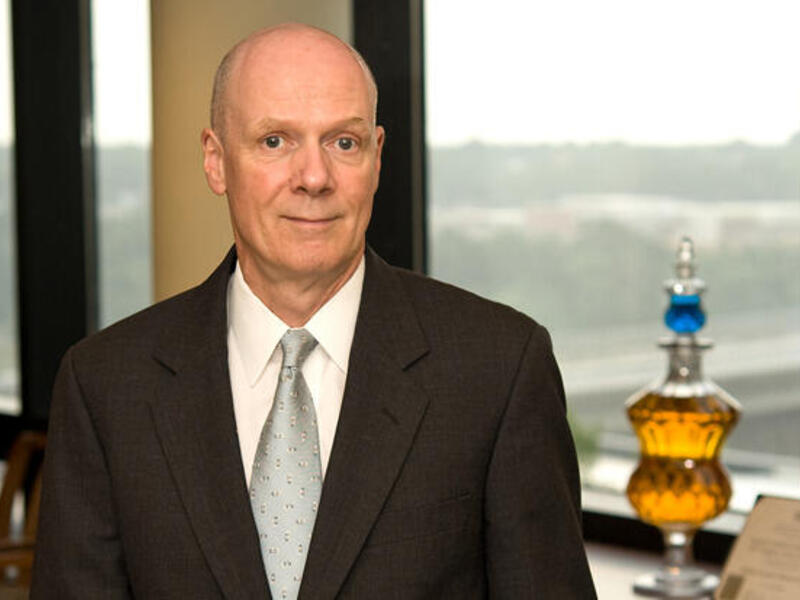
On hand for the wall breaking ceremony with Joseph T. DiPiro, Pharm.D., dean of the School of Pharmacy, will be VCU President Michael Rao, Ph.D.; Sheldon Retchin, M.D., CEO of the VCU Health System and senior vice president for health sciences; Victor Yanchick, Ph.D., former dean of the School of Pharmacy; School of Pharmacy alumnus Del. S. Chris Jones, R-Suffolk, chairman of the House Appropriations Committee; School of Pharmacy alumnus Del. Keith Hodges, R-Middlesex; and Del. Kirk Cox, R-Colonial Heights, House majority leader.
“We are very excited to begin construction,” said DiPiro. “We think that in the future our students will be better prepared in the art and science of compounding than most students around the country.”
The Virginia legislature approved $500,000 in its 2014-15 budget for Phase I of the compounding center, to be matched by private funds. Phase I — the teaching component to be integrated into the School of Pharmacy’s doctor of pharmacy (Pharm.D.) curriculum — is slated to begin by the end of October and to be completed next spring.
“The plan is that sterile compounding would be part of the core curriculum for pharmacy students,” said associate professor Laura Morgan, Pharm.D., who teaches non-sterile compounding as part of the school’s Foundations Lab. “It will enhance what we’re already doing. And possibly an elective, aseptic technique sterile compounding, will be added.”
The Wall Breaking Ceremony will symbolize the School of Pharmacy’s commitment to the CCPR, including its two additional phases: Phase II to provide continuing education and certification to pharmacy practitioners, technicians and others working in pharmaceutical industry, and Phase III to offer analytical testing services. Phases II and III also have received commitments of financial support from the state.
The completed CCPR, as designed by BCWH and Ellensweig, will encompass 5,108 square feet.
A nationwide search is under way for a compounding center director, who will lead teaching, research and other scholarly efforts in sterile compounding and have significant knowledge of the field as well as industry standards and regulations affecting the practice.
Subscribe to VCU News
Subscribe to VCU News at newsletter.vcu.edu and receive a selection of stories, videos, photos, news clips and event listings in your inbox.